
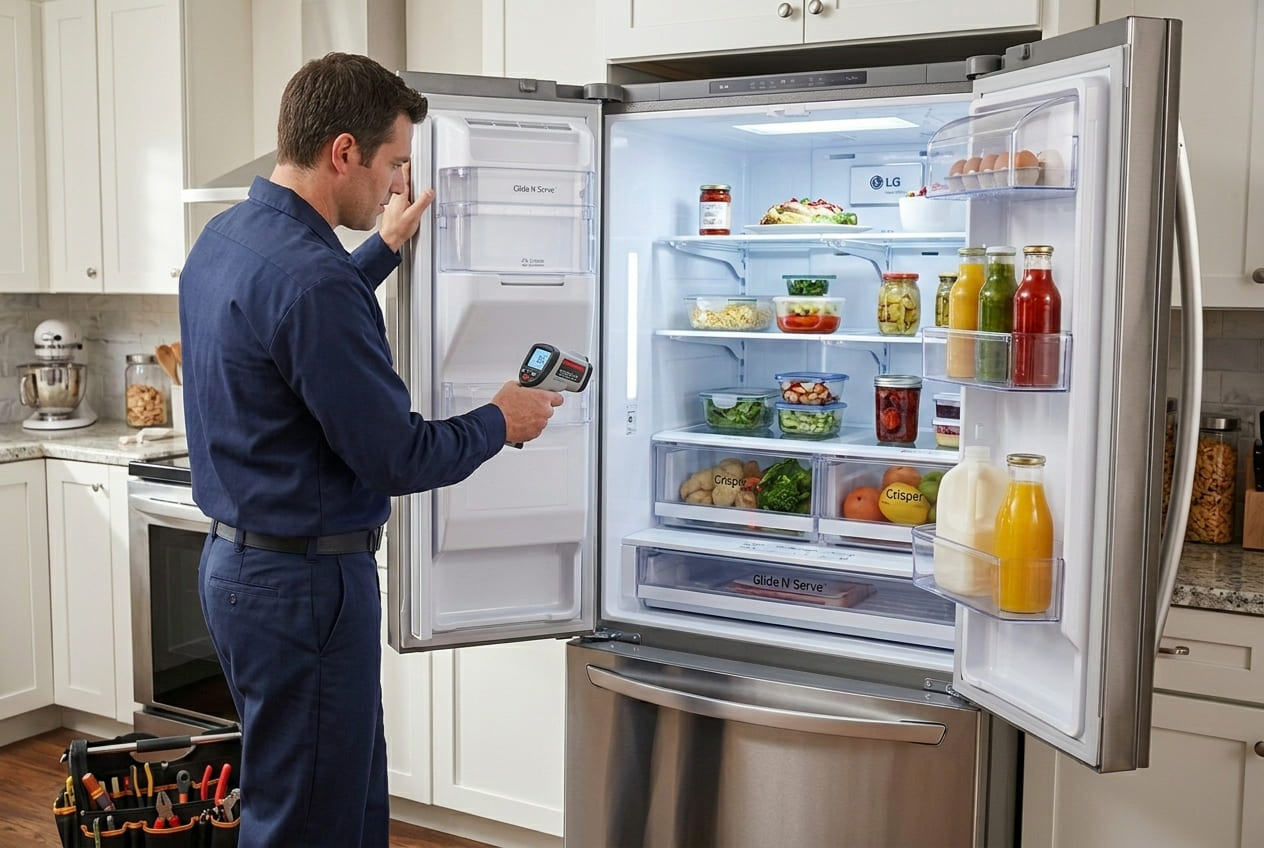
Let’s call it what it is: when your LG refrigerator is not cooling, your whole day goes sideways.
Same symptom turns up on other brands too – start with our full write-up on Frigidaire not cooling.
You open the door expecting that clean blast of cold air… and instead you get a sad little puff of room temperature regret. The fridge warm, not cold, the milk is suspicious, the leftovers are questionable, and you’re standing there thinking, “Is this a setting… or am I about to buy a new refrigerator?”
We’re Appliance Repair Master, based in Atlanta, Georgia, and we’ve been fixing refrigerators for 15+ years. This article is our straight-talk, step-by-step guide to help you:
- figure out what’s actually happening when your LG is not cooling,
- try the safe, smart checks that work (without breaking anything),
- recognize the red flags for compressor failure, a refrigerant leak, or other sealed system issues,
- and know exactly when it’s time to stop guessing and call a pro before the problem gets worse.
We’ll keep it simple, practical, and real. And not forcing you to become a refrigerator technician just to save your groceries.
If you get halfway through and think, “I’m done messing with this,” call us. We provide immediate refrigerator repair in Atlanta and surrounding areas whenever scheduling allows.
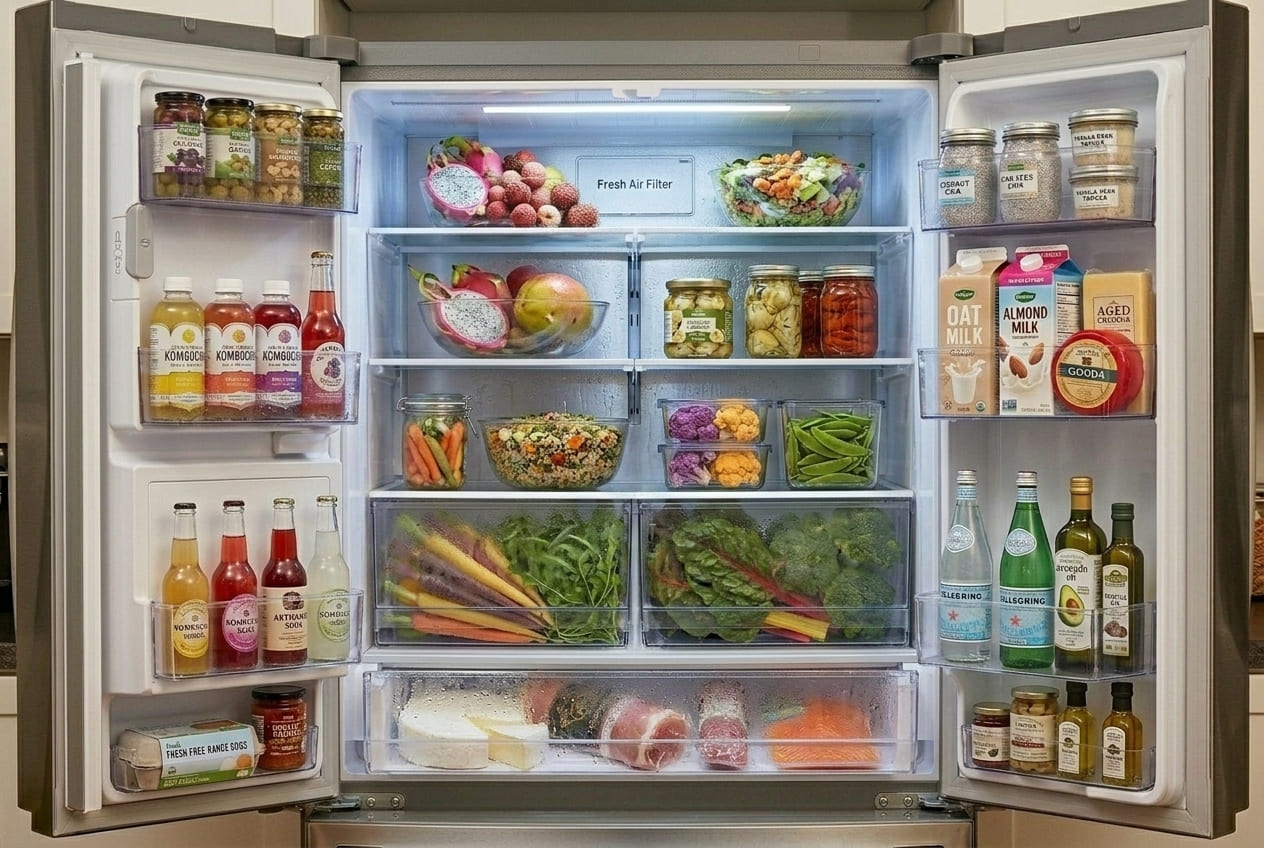
Before we troubleshoot: protect your food
We are appliance repair technicians, but we are also humans who’ve thrown out expensive groceries as well as you. So here’s the quick safety rule:
If your fridge is above safe temp and has been warm for a while, don’t gamble on “sniff tests.” When in doubt, toss it.
Fast moves right now:
- Keep the doors closed as much as possible.
- Move essential perishables into a cooler with ice.
- If the freezer is still solid-cold, you can temporarily move some items there (as appropriate).
- If you have an appliance thermometer, use it — it ends the guessing game.
Now let’s fix the problem.
What LG not cooling means
When customers call us, they often say “it’s not cooling,” but that can mean three totally different situations:
Situation | What it usually means |
Freezer is cold, but the fridge is warm | This is commonly airflow. Cold air is made in one place and moved to another. If the airflow gets blocked (ice, fan issue, vents packed with food), the fridge section warms up first. |
Both fridge and freezer are warm | Now we’re thinking bigger: demo mode, electrical/control problems, a fan not running, or the cooling system itself (compressor / sealed system). |
It cools sometimes… then it doesn’t | Intermittent cooling can be a control issue, sensor issue, defrost problem building up over time, or early sealed system symptoms. |
Bottom line: where the warmth shows up first helps us narrow the cause faster.
Start here: the 10-minute “don’t overthink it” checklist
This section is intentionally basic — because most expensive appliance headaches start with something simple that got overlooked.
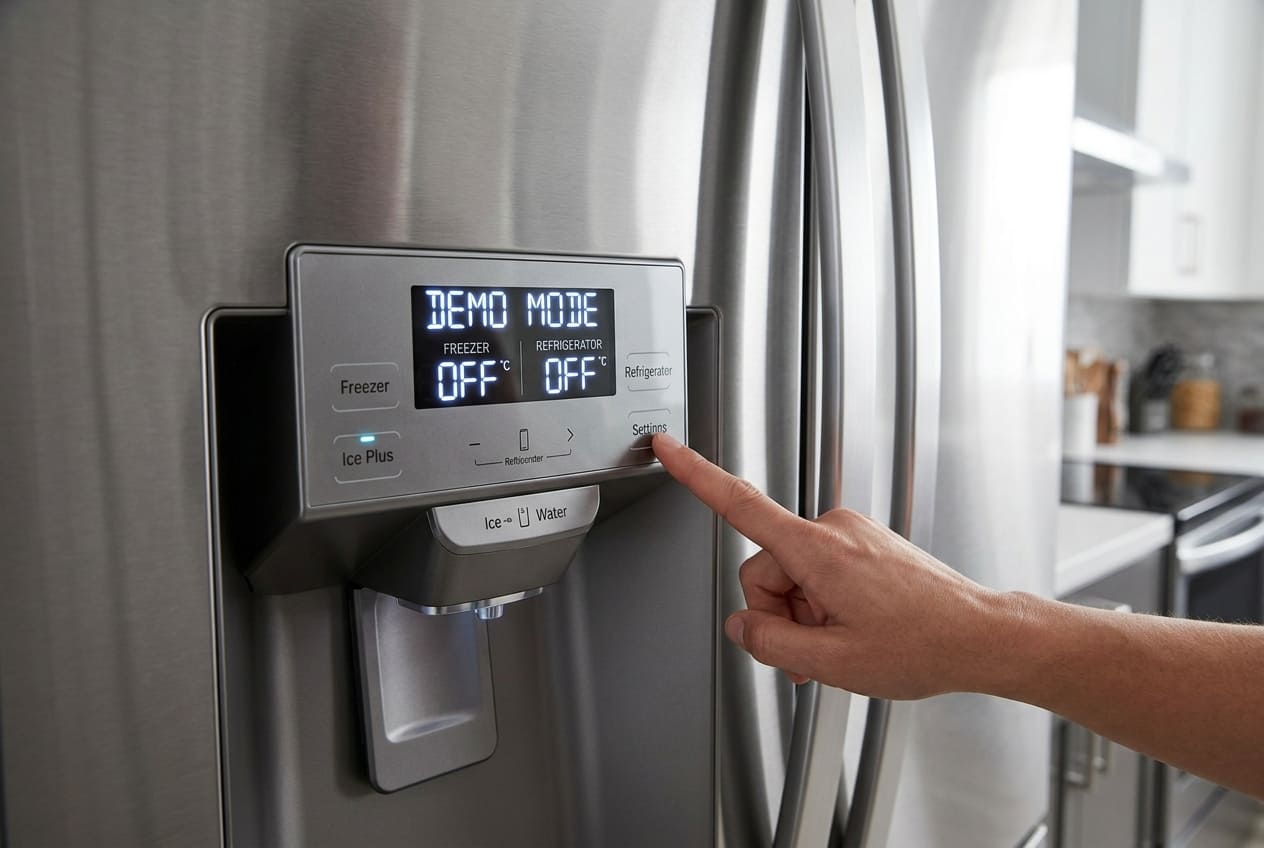
Step 1 — Confirm it’s not in Demo Mode (Display Mode)
This one makes people feel silly… but it happens every week.
In demo mode, the lights and display look normal, but cooling is off. You basically have a fancy cabinet with LEDs.
What you might notice:
- The fridge looks “on,” but it’s not getting cold
- The control panel may show “OFF” or behave oddly
- It often happens after a move, install, power event, or button presses
If your LG is in demo mode, you can usually turn it off using the control panel button combination (varies by model). If you’re not sure, call us — we’ll help you identify your model and the right method quickly.
Step 2 — Check the temperature settings (then stop touching them)
We see this all the time: someone keeps lowering temps every hour hoping it’ll “kick in.”
That usually backfires. Set the fridge/freezer to normal recommended temps and leave it alone. Refrigerators don’t respond instantly — they stabilize over time.
Step 3 — Make sure the doors are sealing (and actually closing)
You’d be shocked how often the door is slightly ajar:
- a crisper drawer not seated right
- a tall bottle keeping the door from shutting
- a gasket folded, dirty, or torn
Quick check: close a dollar bill in the door and pull. If it slides out with zero resistance, that seal might not be doing its job.
Step 4 — Stop blocking the vents (your fridge needs airflow)
If the fridge section is packed tight like a cooler on a road trip, airflow suffers.
Do this:
- Find the vents (usually back wall area)
- Keep a few inches clear around them
- Don’t stack containers directly in front of vent openings
Step 5 — Listen for normal fridge sounds
Put your ear near the unit:
- Do you hear a gentle fan sound inside?
- Do you hear a steady low hum from the bottom/back (compressor running)?
- Do you hear clicking every few minutes (trying to start)?
Those sounds matter. Silence matters too.
If you’ve done these steps and it’s still fridge warm / not cold, keep going.
LG common problems that look scary but usually aren’t
We call these common problems — not issues… because they feel like a disaster, but they’re often fixable without major parts.
Demo mode
If cooling is off because demo mode is enabled, turning it off can solve the problem immediately.
Bad airflow from overpacking
Clear vents. Give cold air a path. This alone has saved a lot of “I thought it was dead” fridges.
Dirty door gaskets
A gasket can look fine but still leak. Warm air sneaks in, moisture builds up, and cooling performance drops.
Simple fix: warm soapy water and a cloth. Clean the gasket and the mating surface on the cabinet.
The fridge is shoved too tight to the wall
Refrigerators dump heat out of the back/bottom. If the unit can’t breathe, it can’t cool well — especially in Atlanta summers.
Give it space. Not a foot — just enough for airflow.
For the wider picture on this brand, see the LG LFXS Series problems troubleshooting guide.
If your LG is still not cooling properly, we move into the most common performance killer in the real world.
The #1 performance killer: dirty condenser coils
If you have pets, carpet lint, or a busy household — this one is huge.
Your refrigerator doesn’t make cold. It moves heat from inside the box to outside the box. The condenser coils are part of how it dumps that heat. When they’re clogged with dust and hair, the system struggles, runs longer, and cools worse.
What you’ll notice:
- fridge not cold enough
- freezer weak or inconsistent
- compressor running longer than normal
- sometimes the fridge feels warm on the sides
Safe DIY cleaning
- Unplug the refrigerator
- Remove the front toe grille (if applicable)
- Vacuum dust and debris carefully
- Use a soft coil brush if you can reach coils safely
- Plug back in and give it time to stabilize
Important: don’t smash a vacuum into wiring or fan blades. Gentle is the name of the game.
Why this matters in Atlanta
Heat + humidity + dust + pet hair = coils clog faster. And when the home is warmer, your fridge already has to work harder. Dirty coils push it over the edge.
If the freezer is cold but the fridge is warm: airflow is your prime suspect
This is one of the most common LG calls we get.
Cold air is typically produced at the evaporator (usually in the freezer area) and then moved through vents/dampers to cool the refrigerator section.
So when the fridge is warm but the freezer is still cold-ish, we look at:
- blocked vents
- evaporator fan problems
- damper problems
- ice buildup choking airflow
Quick airflow test you can do without tools
Open the fridge door and feel for airflow at the vents. Is it strong? Weak? None?
Now, here’s the trick: many fridges stop the internal fan when the door is open. Press and hold the door switch (the little button the door presses when closed). If the fan kicks on and airflow becomes noticeable, that’s a clue.
If you get no airflow, we start thinking fan, ice blockage, or control issues.
Evaporator coil ice buildup: the “it was fine… then slowly got worse” problem
This is the classic hidden issue.
Behind the back panel of the freezer, the evaporator coil can turn into a solid ice block if the defrost system isn’t doing its job. Once that happens, air can’t pass through the coil, and the refrigerator section warms up.
Signs of evaporator coil ice buildup
- heavy frost on freezer back wall
- fridge warms first
- freezer eventually struggles too
- you may hear the fan hitting ice
- sometimes it “temporarily improves” after unplugging (then fails again)
Why it happens
Usually it’s a defrost system problem:
- a heater not heating
- a sensor giving wrong readings
- a control board not initiating defrost
- drainage issues creating re-freezing
The big DIY temptation
People unplug the fridge, leave doors open, melt the ice, restart… and celebrate.
But if the cause isn’t fixed, the ice comes back. Then you do it again. And again.
That’s not repair — that’s fridge babysitting.
What we do professionally: diagnose which defrost component failed and fix the cause so the evaporator doesn’t ice up again.
Fans matter more than most people realize
Your LG depends on fans to move air and to move heat away from the system.
Common fan-related issues:
- evaporator fan not running (poor cold air circulation)
- condenser fan not running (poor heat rejection → weak cooling)
- fan blades obstructed by ice or debris
- fan motor failing intermittently
What you might hear when a fan is failing
- squealing
- scraping
- pulsing / uneven fan noise
- fan stops and starts randomly
If you suspect a fan issue, don’t ignore it. A cooling system that can’t move heat properly often leads to bigger stress on major components.
The “don’t DIY this” zone
Now we’re in the serious section — and this is where we save customers from turning a repair into a replacement.
Compressor failure (the heart of the cooling system)
When people search “LG not cooling”, this is usually what they fear.
A compressor can fail outright, or it can struggle to start, or it can run but not actually pump effectively.
Clues that raise our suspicion:
- both compartments are warm
- compressor is silent (no hum, no vibration)
- repeated clicking (attempting to start)
- runs constantly but can’t reach temperature
Here’s the key: compressor symptoms can overlap with electrical/control problems. That’s why professional diagnosis matters.
We don’t just say “Hey, we know, it’s a compressor.” We test before confirming.
Refrigerant leak (slow cooling loss)
A refrigerant leak often shows up like this:
- it cools a little, but not enough
- it gets worse gradually over days/weeks
- freezer might still make some ice, then stops
- you notice inconsistent temps
Leaks are not a “top-off” situation. Refrigerant doesn’t get used up — if it’s low, something is wrong in the sealed system.
Sealed system issues
Sealed system issues include the compressor, evaporator, condenser, drier/filter, internal restrictions, and the refrigerant charge itself.
This work requires specialized tools and procedures. It’s not a YouTube weekend project.
Why professional repair prevents worse things here:
- prevents contamination inside the system
- prevents repeat compressor failure
- prevents wasting money on the wrong part
- prevents “band-aid fixes” that fail again
If you suspect a sealed system problem, call us. We’ll tell you honestly what we find and what makes sense.
About LG LFXS Series and lawsuit searches
We get a lot of calls that start with:
“I read about the LG LFXS series lawsuit… does that mean my fridge is done?”
Here’s our professional, practical answer:
Some LG owners have reported “no-cooling” events and compressor-related complaints in certain model families over the years — and yes, there’s been public legal and consumer coverage around those complaints.
But as repair pros in Atlanta, we focus on what matters today:
- Is your unit actually in demo mode?
- Is airflow blocked or iced up?
- Are fans running?
- Is the compressor starting and operating correctly?
- Are there signs of a refrigerant leak or restriction?
In other words: we diagnose the refrigerator in front of us — not the internet rumor.
If your LG is in the LFXS family and not cooling, we’ll approach it the same way: fast triage → accurate diagnosis → repair options that prevent repeat failures.
A real Appliance Repair Master troubleshooting path
Here’s what we do on an LG not cooling service call in Atlanta — and why it’s different from guessing.
- Confirm the complaint with real temps (not “feels cold”)
We measure temperatures and compare them to setpoints. “Feels kinda cool” is not a diagnostic method.
2. Check easy killers first
- demo mode behavior
- settings
- door sealing
- airflow blockage
- obvious frost patterns
- condenser airflow and coil condition
3. Identify whether the issue is airflow, defrost, or sealed system
This step prevents replacing random parts.
4. Explain what we found in plain English
No tech babble. We tell you:
- what failed
- why it caused your LG to stop cooling
- what the repair involves
- what it costs
- and what we recommend (and why)
If we can save the fridge economically, we do. If the repair doesn’t make sense, we’ll tell you that too.
DIY Do’s and Don’ts
Do:
- Check demo mode
- Clean accessible condenser dust carefully
- Clear vents and stop overpacking
- Make sure doors seal and close
- Use a thermometer to confirm temps
Don’t:
- Don’t chip ice with knives/screwdrivers (punctures can cause a refrigerant leak)
- Don’t keep power-cycling the fridge all day (it can stress components)
- Don’t remove sharp metal panels unless you’re confident and careful
- Don’t mess with sealed system components — that’s professional territory
My LG fridge is warm — what should I do RIGHT NOW?
If you want the shortest version:
- Protect food (cooler, minimize door openings)
- Check demo mode
- Confirm temperature settings
- Clear vents and check door seal
- Clean accessible condenser dust
- Look for frost buildup / ice symptoms
- If still not cooling, call us
We’ll schedule same-day service when possible in Atlanta, GA and nearby areas.
Prevention: how to avoid another not cooling week
You don’t need a maintenance plan. You need a few habits:
- Every 3–6 months: vacuum dust from front grille area (more often with pets)
- Monthly: quick wipe of door gaskets
- Always: keep vents clear inside the fridge
- After power outages: confirm cooling resumed and temps are safe within a reasonable window
This is the boring stuff that prevents expensive surprises.
When to call Appliance Repair Master
Call us if:
- your LG is not cooling after the basic checks
- you see heavy frost buildup or suspect evaporator coil ice buildup
- both sections are warming
- you hear repeated clicking or suspect compressor failure
- you suspect a refrigerant leak or other sealed system issues
Conclusion
When your LG refrigerator is not cooling, the fastest way to avoid wasted groceries and money is to troubleshoot in a smart order: start with the simple stuff (settings, Demo Mode/Display Mode, door seals, airflow/vents), then move to the most common real-world performance issue (dirty condenser coils), and watch for the bigger patterns like evaporator coil ice buildup, fan problems, or inconsistent cooling.
If your freezer is cold but the fridge is warm, airflow or defrost issues are often the culprit. If both the fridge and freezer are warm, or you’re hearing repeated clicking, seeing worsening temps, or suspecting compressor failure, a refrigerant leak, or other sealed system issues, that’s the “stop guessing” moment—because the wrong DIY move can turn a repair into a replacement.
If you’re in Atlanta, Georgia or surrounding areas and your LG is not cooling, call Appliance Repair Master. We’ll help you get a clear diagnosis and a repair plan that makes sense—so you can get back to a cold fridge (and a normal day).
Related guides
FAQ
1. Why is my LG refrigerator not cooling but the lights are on?
Because “power on” doesn’t always mean “cooling on.” Demo mode, airflow issues, fan failure, defrost failure, or sealed system trouble can all cause this.
2. Why is my LG fridge warm but the freezer is still cold?
Most often airflow (fan, damper, blocked vents) or evaporator ice buildup choking circulation.
3. Can dirty condenser coils really stop cooling?
They can absolutely reduce cooling performance enough to feel like a “no-cool,” especially during warm weather.
4. How do I know if it’s compressor failure?
Clicking, both compartments warming, and the compressor failing to start are signs — but diagnosis should be confirmed, because other problems can mimic compressor failure.
5. What are sealed system issues?
Problems inside the refrigeration loop — compressor, refrigerant charge, restrictions, leaks, or heat-exchange components. This is pro-only territory.