
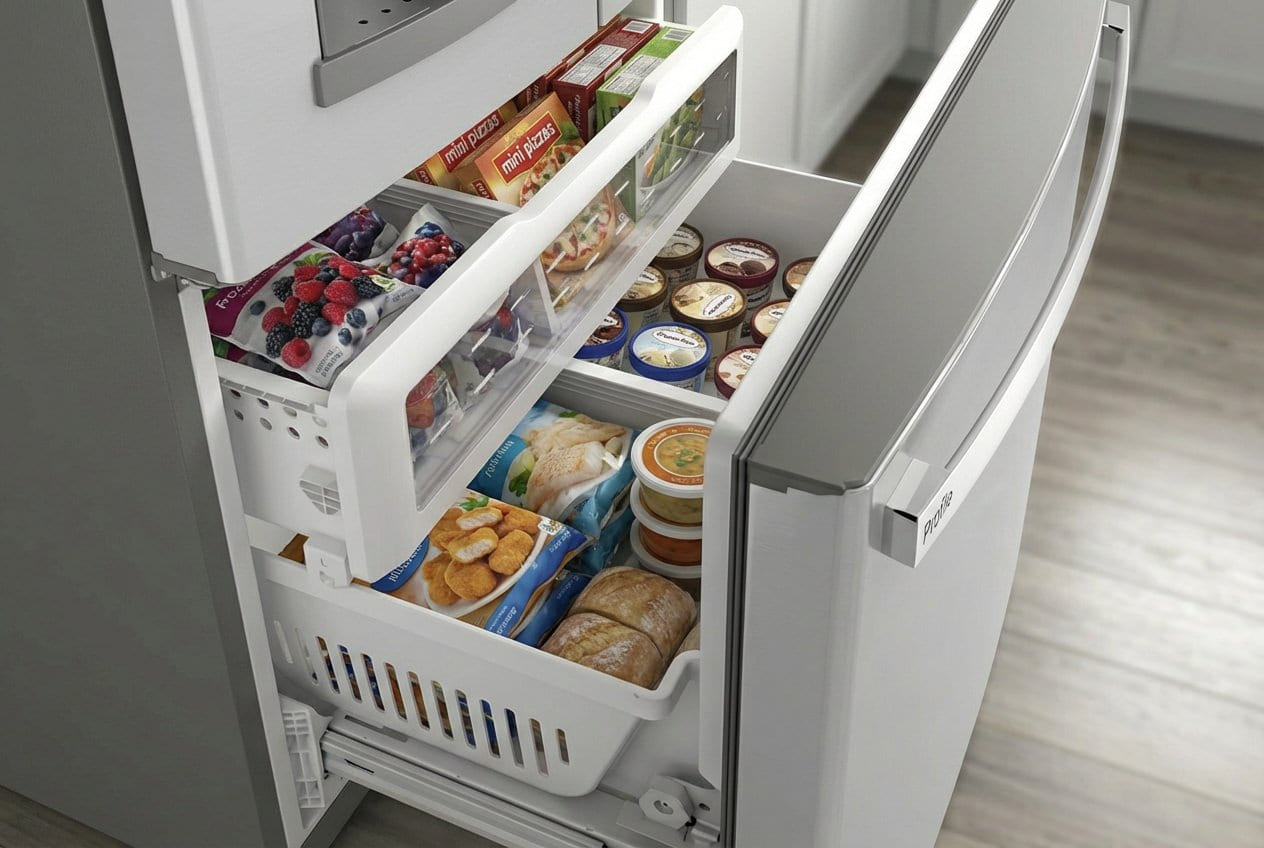
A GE freezer running too warm is one of those problems that sneaks up on you — one day your ice cream is still scoopable, the next it’s soft and starting to melt at the edges. At Appliance Repair Master, we’ve seen this happen in countless Atlanta homes over the last 15+ years, and it’s almost always something we can pinpoint and fix before you lose a whole load of food.
Same symptom turns up on other brands too – start with more on Bosch temperature problems.
GE freezers — especially the bottom-drawer models in French-door refrigerators — are designed to keep steady cold with automatic defrost and precise sensors. But Atlanta’s sticky summers, power flickers, and garage placements can throw them off fast: dust builds on coils, fans get blocked, or defrost cycles skip.
In this guide, we’ll explain:
- why temperature too warm happens in GE units,
- the early signs to catch,
- the most common causes we see,
- the models that struggle most,
- simple checks you can do yourself,
- and when it’s time to call in a pro.
Early Warning Signs — How to Spot Temperature Trouble
A GE freezer that’s running too warm rarely goes from perfect to disaster overnight — it usually gives you clues first. Here are the signs we tell Atlanta customers to watch for, based on thousands of calls:
- Ice cream gets soft or melty at the edges, even though the display reads 0°F.
- Frozen packages feel squishy or have frost crystals on the outside (thawing and refreezing).
- Food in the freezer compartment starts to thaw in spots, like meat edges or veggie bags.
- The freezer runs constantly (compressor humming non-stop) but never gets as cold as it should.
- Uneven temps: top shelves colder than bottom, or one side warmer than the other.
- Visible defrost system ice buildup on the back wall or evaporator cover inside.
- Strange noises: weak fan sound, clicking, or the evaporator fan not spinning at all.
- Temperature fluctuation — display shows 0°F one hour, 10°F the next, then back down.
Catch these early and you can often avoid bigger damage. If your freezer is just a little off, it’s usually dirty condenser coils or a blocked evaporator fan. But if it’s consistently warm and the signs stack up, it’s time to dig deeper.
Models Where Warm Temps Happen Most
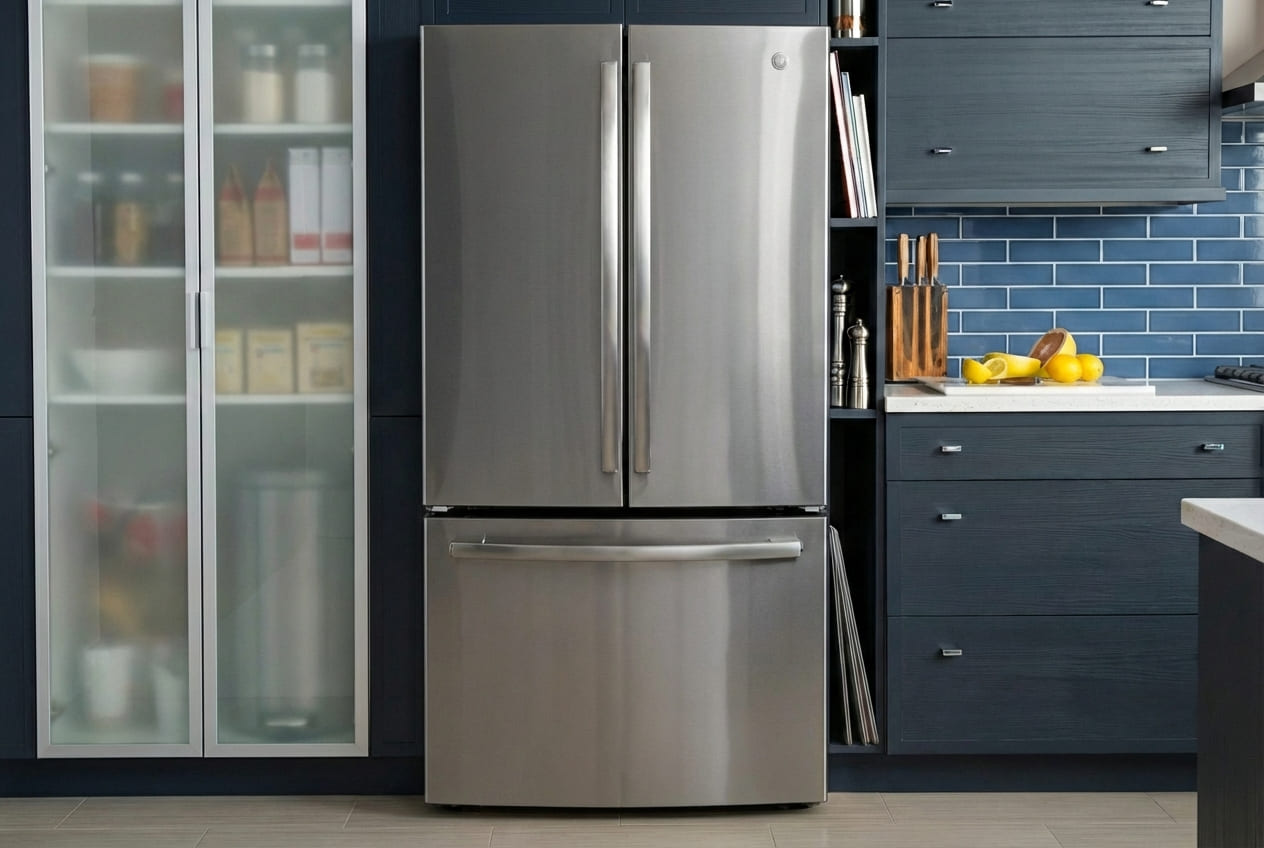
Not every GE freezer has the same risk of running warm — some models see it more because of their layout or features. Here’s what we notice in Atlanta:
- GFE28GYNFS— French-door bottom freezer; evaporator fan obstruction and defrost system ice buildup are common from drawer use and humidity.
- PYE22KYNFS — Profile series; dirty condenser coils build up fast in kitchens with cooking grease.
- GNE27JYMFS— French-door; temperature sensor thermistor drift or damper control issues cause uneven cooling.
- PFE28KYNFS— Profile with dispenser; defrost cycle fluctuation from door opens and Atlanta heat.
- Profile series — premium models; same problems, but more electronics make control board reset fixes more frequent.
We also see warm temps on GFD28GELDS and GYE22GENDS (Profile) — all share the bottom-drawer and dispenser design that stresses fans, coils, and sensors in our climate.
Step-by-Step Checks You Can Do at Home
Before calling us, there are a few safe things you can try that often bring the cold back or at least show us where the trouble is.
- Run the door seal paper test. Close a dollar bill in the door all the way around. If it pulls out easily anywhere, the door seal is weak — warm humid air sneaks in and raises temps. Clean the gasket first; if it still fails, it may need replacement.
- Clean the condenser coils. Pull the freezer out (or remove the bottom grille) and vacuum dust/pet hair from the dirty condenser coils. In Atlanta kitchens, grease and dust build up fast — clean coils can drop temps 5–10°F in a day.
- Check for evaporator fan obstruction. Open the freezer door and listen for the fan (quiet hum at the back). No sound? Something may be blocking the evaporator fan — rearrange food or check for ice.
- Do a control board reset. Unplug the freezer for 10–15 minutes (or flip the breaker), then plug back in. This clears temporary glitches and can stop temperature fluctuation in about 20% of cases.
- Monitor defrost cycle fluctuation. Listen for the defrost cycle (hiss or fan stop every 8–12 hours). If it runs too long or skips (causing defrost system ice buildup), note the pattern — that’s a clue for us.
- Check damper control. Feel for cold air coming from vents in the freezer. If one area is colder, the damper control may be stuck — gently move food away from vents.
For the wider picture on this brand, see our GE refrigerator freezer compartment not freezing properly guide.
If temps improve after these, monitor for 24–48 hours. If the freezer still runs warm, temperature sensor thermistor or deeper issues are likely — that’s when we step in with tools.
What Happens If You Let Your GE Freezer Run Warm
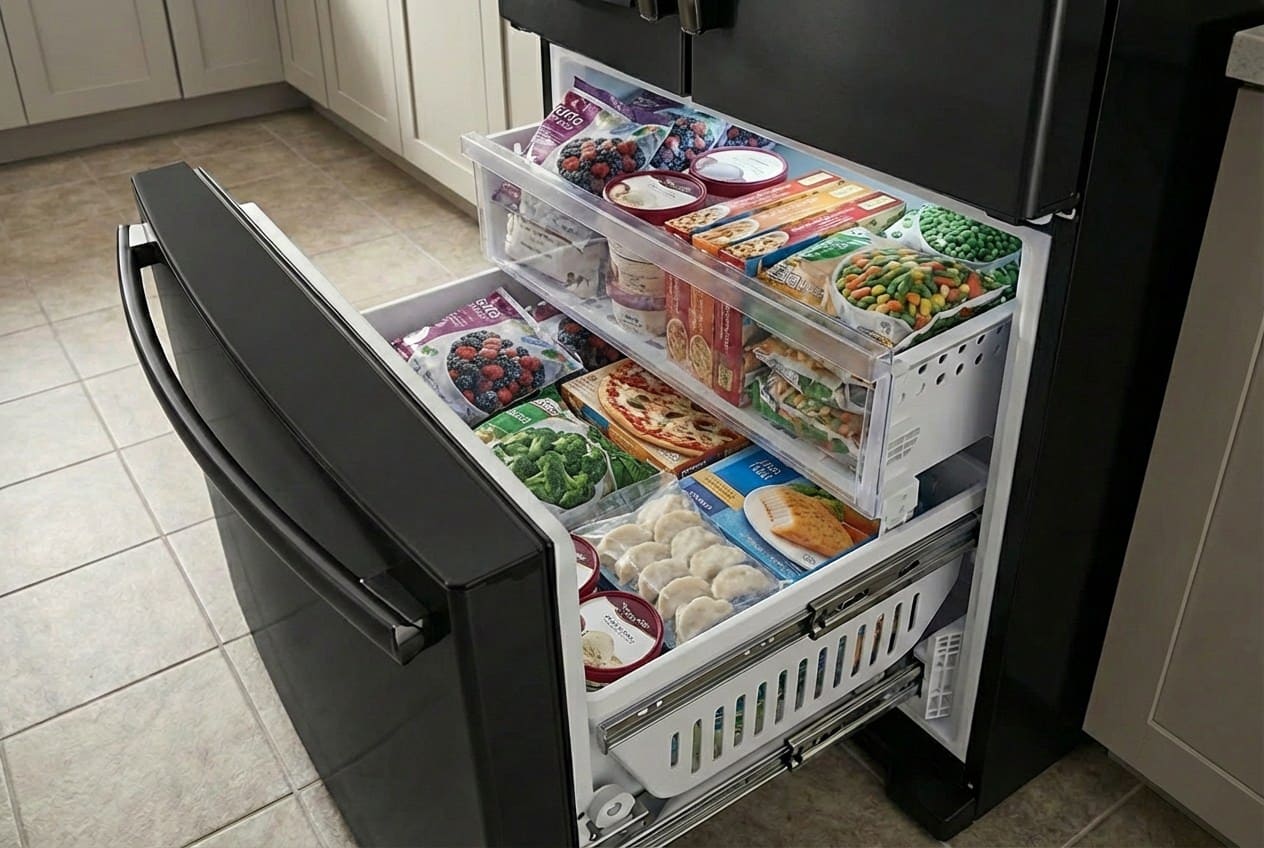
A freezer that’s consistently too warm doesn’t stay “just a little off” for long. Here’s what we’ve seen happen when people wait too long:
- Ice cream turns to soup, meat edges thaw → hundreds of dollars in food lost.
- Frozen packages refreeze with ice crystals → texture and taste ruined.
- Compressor runs nonstop trying to catch up → higher electric bills and early burnout.
- Temperature fluctuation stresses components → bigger repairs like control board or fan replacement.
- Mold or bacteria growth in thawed spots → health risks and cleanup hassle.
In Atlanta’s heat, a warm freezer can go from “manageable” to “emergency” in a weekend. We’ve had customers replace entire units because they hoped it would “cool itself.”
When to Bring in the Experts
If the home checks don’t drop temps or the signs keep stacking up, it’s time for professional diagnostics. These are the red flags we tell customers to watch for:
- Temperature too warm persists after reset and coil cleaning.
- Heavy defrost system ice buildup on the back wall that manual defrost doesn’t clear.
- No evaporator fan sound or weak airflow from vents.
- Temperature fluctuation swings wildly (0°F to 15°F and back).
- Door seal paper test fails repeatedly after cleaning.
When we arrive, we:
- Test the temperature sensor thermistor resistance.
- Check evaporator fan and damper control operation.
- Run a full defrost cycle test.
- Inspect for dirty condenser coils or obstruction.
We carry the sensors, fans, and boards for the models listed above, so most warm-temp repairs are done in one visit with the freezer back to steady cold.
Conclusion
A GE freezer that’s running too warm doesn’t fix itself — it usually gets worse, and fast. From dirty condenser coils to defrost system ice buildup, or a failing temperature sensor thermistor, the signs we covered give you plenty of warning. Atlanta’s heat and humidity make these issues more common, but they’re also what make quick fixes so worth it.
The home checks — paper test, coil cleaning, reset, fan listen — often drop temps and save food. But when the freezer stays warm, fluctuates wildly, or ice keeps building, it’s time for professional tools and parts. We’ve been cooling down GE freezers across Atlanta for over 15 years — we know the layouts, carry the fans, sensors, and boards, and get things steady cold in one visit.
FAQ
Here are the temperature questions we hear most from GE freezer owners in Atlanta:
Related guides
1. My freezer is only slightly warm — is it really a problem?
Yes — even 5–10°F above 0°F can start thawing food edges. Temperature fluctuation like this often points to dirty condenser coils or evaporator fan obstruction.
2. Why does my GE freezer run warm after a power outage?
Outages can glitch the control board or cause defrost cycle fluctuation — do a control board reset first, but if it persists, the temperature sensor thermistor may have drifted.
3. Is a warm freezer common in garages during Atlanta summers?
Very common — heat stresses the evaporator fan and damper control. We see temperature problems spike in unconditioned spaces.
4. How do I know if it's the door seal?
Run the door seal paper test — if the dollar bill slides out easily, warm air is getting in, causing the freezer to work harder and run warm.
5. What's the average cost to fix a warm GE freezer?
It depends. Сoil clean and fan fix is cheaper; temperature sensor thermistor or board replacement is higher. We diagnose first and quote exact.