
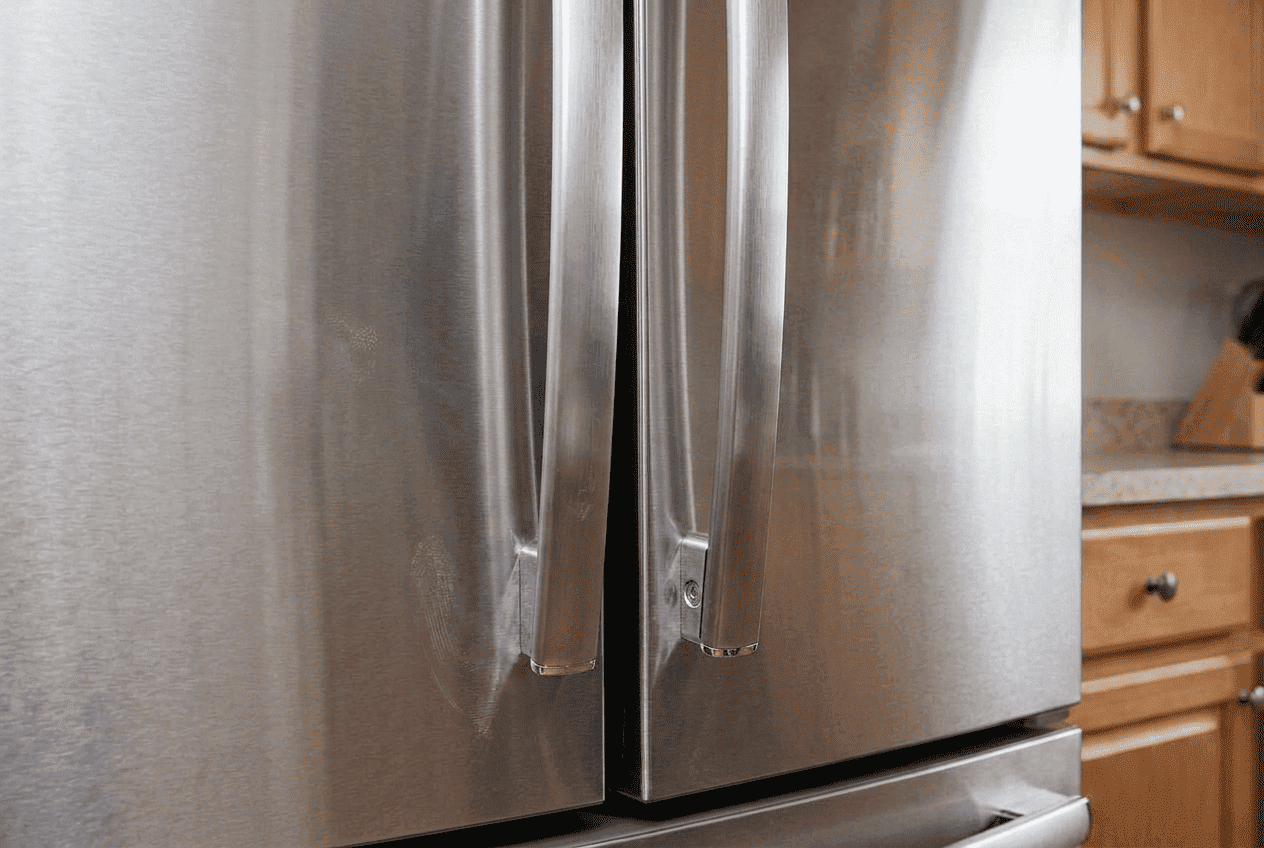
A GE freezer door that refuses to seal properly isn’t just annoying — it’s quietly turning your kitchen into an energy-wasting, food-spoiling disaster. Every time it pops open or stays cracked, cold air escapes, the compressor works overtime, and your frozen groceries slowly thaw. At Appliance Repair Master in Atlanta, we see this issue weekly, and in most cases, it’s a fixable problem that homeowners can catch early.
Same symptom turns up on other brands too – start with what we’ve seen with GE freezer door not sealing.
GE freezers — whether French-door models with heavy bottom drawers or standalone uprights — are built to last, but daily use, humidity, and Atlanta’s sticky summers put real stress on the door system. In this guide, we’ll break down why your door fights to close, the models that struggle most, simple checks you can do yourself, and when it’s time to call in a pro before the consequences pile up.
The Culprits: Why Your GE Freezer Door Is Fighting You
That stubborn GE freezer door refusing to latch? In our daily repair runs across Atlanta, we’ve fixed this issue hundreds of times. The root cause almost always boils down to one of these four offenders, specific to GE’s design and our local climate.
- A worn-out or compromised door gasket. The soft rubber seal around the door is your freezer’s first defense. Over years of slamming and Atlanta’s heat, it hardens, loses its grip, gets twisted or develops torn gaps. Even a small tear or invisible gap breaks the vacuum seal, letting warm air in and causing the door to spring back open.
- A sagging door from hinge wear. Heavy French doors put constant stress on the lower hinge. On models like the GE ZIS420NM or ZISS420NN, this can cause the entire door to rotate out of alignment. You’ll see a misaligned door that scrapes, doesn’t sit flush, and needs a firm shove to catch.
- A frosty barricade. In our humid Georgia air, ice buildup is a frequent guest. When frost blocking door forms a thick ridge along the liner or gasket, it physically blocks the door from closing all the way. You might hear a “crunch” as it tries to seal.
- Failing self-close mechanics. Many GE freezers have gentle closing hinges or rollers. If these door mechanics get dirty, gummed up, or worn, they lose their gentle pull. The door stops halfway, and you’re left doing the final push yourself.
What Makes It Worse?
Atlanta’s high humidity swells the gasket and promotes frost buildup, while frequent opening in busy kitchens wears hinges faster. Lack of regular cleaning lets debris jam the closing mechanism, and garage placement adds heat cycles that expand/contract metal parts.
Models That Struggle with Door Closure
GE freezers hold up well, but certain models land in our Atlanta shop more often with doors that just won’t stay shut. The trouble usually comes down to heavy doors, daily wear, or our humidity messing with seals and hinges. Here’s the lineup we see most:
- Premium Monogram built-in side-by-sides. Tall, heavy doors put real strain on the door mechanics and closing hinges. Over time, the lower hinge wears down, causing the door to rotate out of alignment — it sags just enough to miss the catch and pops back open.
- GFE28GYNFS / GNE27JYMFS — French-door bottom freezers. The heavy drawer gets yanked open constantly. That repeated force leads to misaligned doors and lower hinge rotating — especially noticeable on floors that aren’t perfectly level.
- PYE22KYNFS / PFE28KYNFS — Profile series French-doors. Extra weight from dispensers and glass shelves accelerates door gasket twisted areas and torn gaps — slamming stretches the rubber and leaves weak spots.
- FUF17SMRWW — standalone upright freezer. Garage placement + daily opens mean ice buildup often blocks the door along the seal. Humidity freezes moisture right where the door meets the frame.
These models count on gravity, cam rollers, and a tight gasket to self-close. When hinges loosen, gaskets tear, or frost builds a ridge, that self-close quits — and you’re left pushing or propping. In our experience, French-door bottom freezers like GFE28GYNFS and built-ins like ZIS420NM top the list because of door weight and tight cabinet fits.
Can You Fix It Yourself? A Quick Diagnostic Flowchart
Don’t call a pro just yet — many GE freezer door issues start small and can be resolved (or at least diagnosed) in under 10 minutes with no tools beyond a dollar bill and a flashlight. Follow this step-by-step checklist. Work from top to bottom — stop when you find the culprit or hit a red flag.
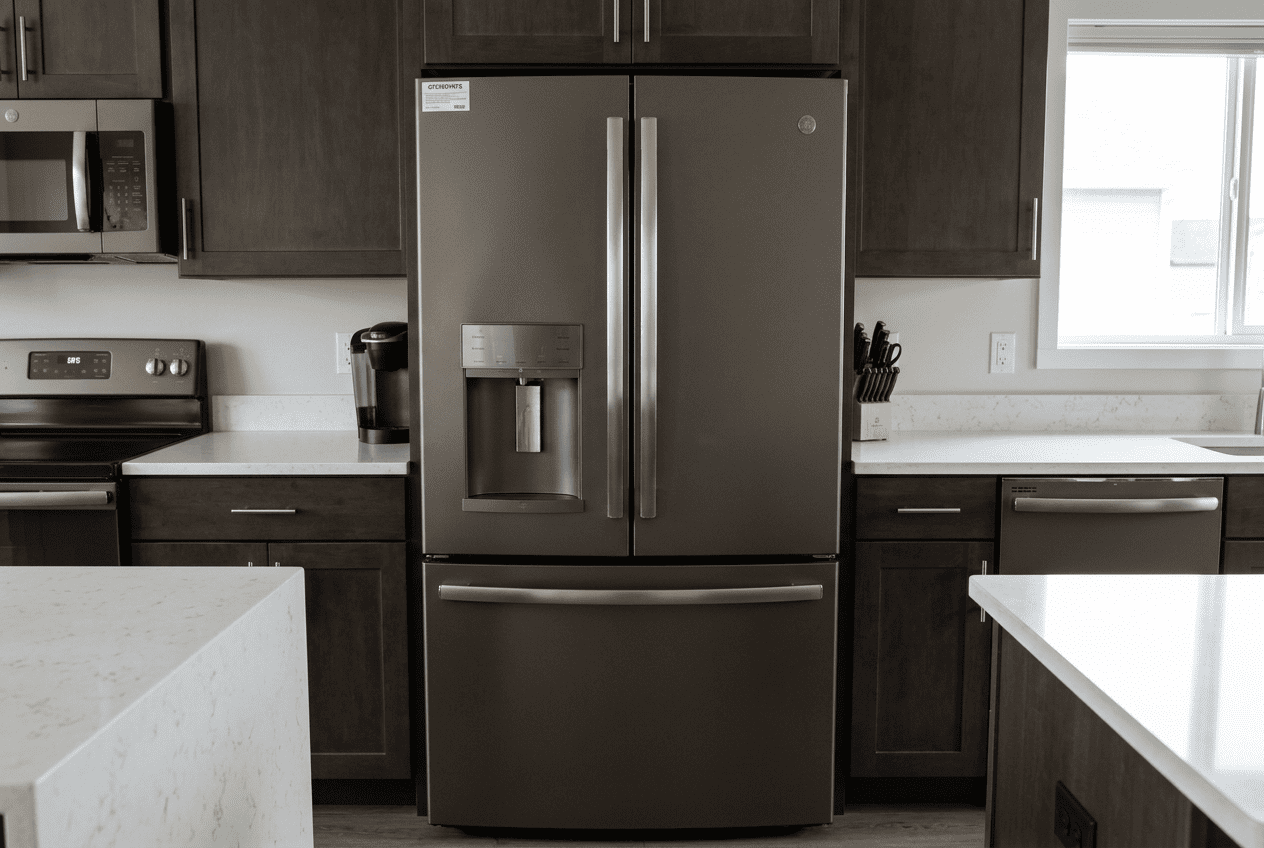
- Look for obvious frost or ice. Open the door and run your hand along the gasket and frame. Feel any ridge of ice? That’s frost blocking the door — it physically stops the seal. Unplug the freezer, empty it, leave doors open for 8–12 hours to melt everything, dry thoroughly, and restart. If the door closes after this, ice was the blocker.
- Run the dollar bill test on the gasket. Close a dollar bill (or any thin paper) in the door all around the edges. Tug gently — if it slides out easily in any spot, the door gasket is compromised (twisted, torn, or has gaps). Clean it first with warm soapy water and a soft cloth, getting into every fold. Retest. Still loose? The gasket likely needs replacement.
- Check door alignment and hinge play. Open and close the door slowly. Does it wobble, scrape, or sit uneven? Look at the lower hinge — if the door sags or the hinge feels loose, you’ve got misaligned doors from lower hinge rotating wear. Gently lift the door slightly while closing — if it latches easier, the hinge is the problem.
- Test the self-close mechanism. Open the door about 30–45 degrees and let go. Does it swing shut on its own? If it stops halfway or barely moves, the door mechanics or closing hinges are dirty or worn. Clean rollers/cams with a damp cloth (no spray lubricants — they attract dust). Retest.
For the wider picture on this brand, see read our breakdown of GE refrigerator freezer compartment not freezing properly.
When It's Time to Call the Pros: Signs of a Serious Issue
Some door problems are quick home fixes, but others are screaming for professional tools and parts. In our Atlanta calls, these are the clear signals that DIY has run its course and you need to stop before you make things worse:
- The door wobbles noticeably or feels loose even when you push it closed — this almost always means the lower hinge is worn or the mounting is loose.
- After cleaning and testing, the door gasket still has visible torn gaps or stays twisted — the rubber is shot and needs exact replacement.
- Frost or ice keeps building along the seal or frame after a full manual defrost — the issue is deeper (usually evaporator-related or air leak).
- The door scrapes or grinds when opening/closing, or it requires a hard slam to latch — door mechanics or closing hinges are failing internally.
- You see daylight around the edges or feel strong cold air leaking from one corner constantly — alignment is off beyond simple adjustment.
- The problem started after moving the unit or a recent bump — misaligned doors or bent hinge components are likely.
These signs mean parts replacement, precise realignment, or access to hidden fasteners — things that can damage the door or cabinet if done wrong at home. We’ve seen DIY attempts bend hinges further or tear gaskets beyond repair.
When we arrive, we:
- Pull the door for full hinge inspection and adjustment.
- Test door mechanics and closing hinges for tension.
- Replace worn door gasket with match.
- Shim or realign for misaligned doors lower hinge rotating.
- Clear any hidden frost blocking door and check evaporator.
We carry hinges, gaskets, and shims for all the models we mentioned, so most door closure repairs are done in one visit with the door sealing like new.
Why Trust Appliance Repair Master With Your GE Freezer?
We’re not just another repair company — we live and work in Atlanta, and GE freezers are one of the most common units we see every week. Over 15+ years, our technicians have repaired hundreds of these doors, from Monogram built-ins in Buckhead kitchens to uprights in Marietta garages. We know exactly how the hinges wear on a ZIS420NM, why the gasket twists on a GFE28GYNFS, and how humidity here turns small gaps into constant leaks.
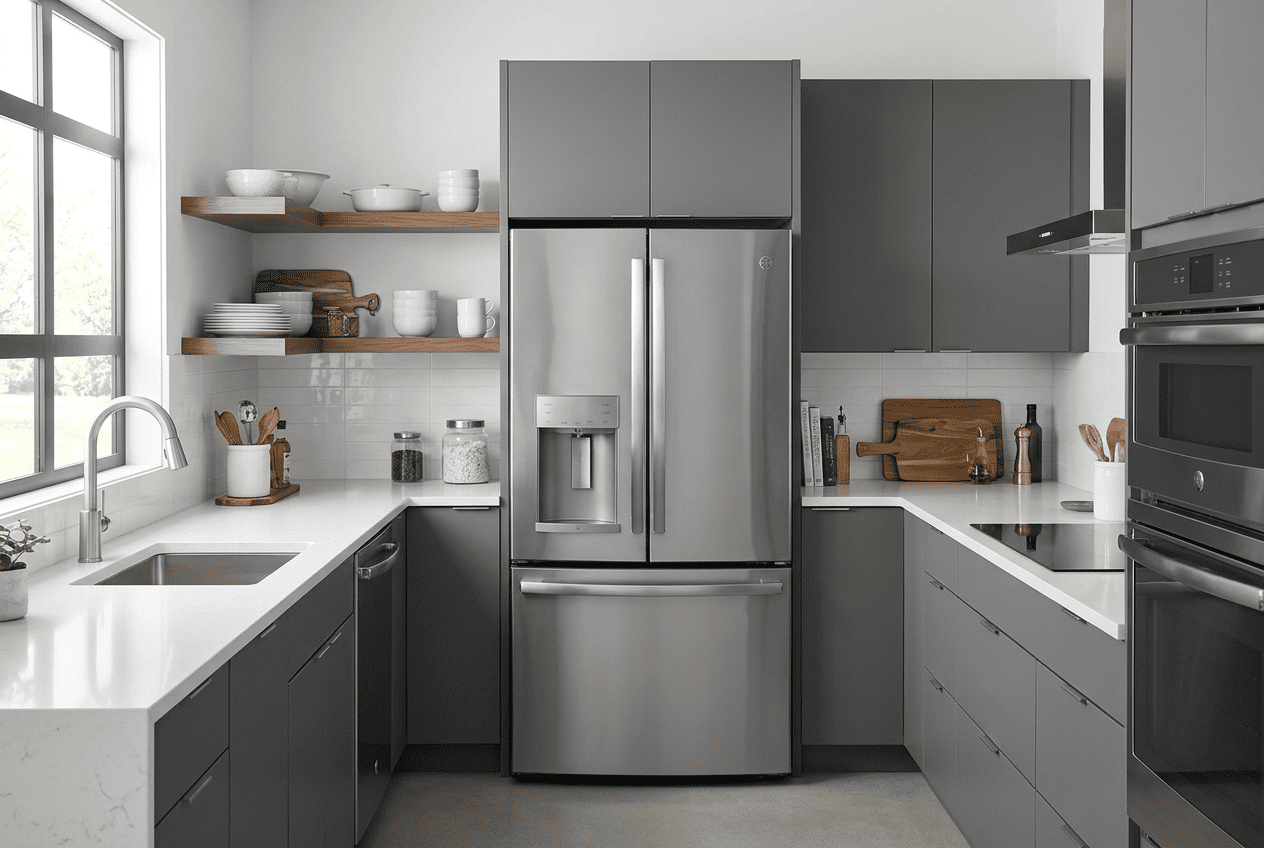
What sets us apart:
- We stock gaskets, hinges, and rollers for all the models we mentioned — no waiting on backordered parts.
- We come prepared: full hinge kits, alignment shims, and torque tools so we can realign misaligned doors or replace closing hinges in one visit.
- We don’t guess — we test door swing, seal pressure, and hinge play on-site before touching anything.
- We explain everything in plain English: no jargon, no upselling, just “this hinge is worn, here’s what it costs to fix it right.”
- We stand behind every job — if the door doesn’t seal perfectly after we leave, we come back.
We’ve seen doors that looked hopeless — sagging, scraping, frost everywhere — seal like new after proper hinge work or gasket swap. And we’ve saved customers from replacing entire units because someone tried DIY and bent the frame.
Conclusion: Don't Let a Bad GE Door Spoil Your Groceries
A GE freezer door that won’t close properly is more than a minor hassle — it’s quietly wasting energy, risking food spoilage, and stressing the compressor. GE freezers are tough machines, but hinges wear, gaskets tear, and frost builds — especially here in Atlanta where humidity and heavy use take their toll.
The good news? Most of these issues are straightforward fixes. Start with the simple checks we outlined:
- clear frost,
- clean and test the gasket,
- look for hinge play.
If those don’t solve it, don’t force it — that’s when worn parts need professional attention.
We’ve been getting GE freezer doors to seal perfectly across Atlanta for over 15 years. We carry the right parts, know the exact torque specs, and leave every unit closing smoothly — no more propping with a chair or waking up to warm food.
Related guides
FAQ
1. Can a damaged door gasket on my GE freezer cause it to run constantly?
Yes — a twisted door gasket lets warm air in constantly. The compressor runs harder to compensate, driving up your electric bill and wearing it out faster.
2. How do I know if the hinge on my French Door GE freezer is broken, not just misaligned?
If the door wobbles, scrapes, or sags even after you try to lift it while closing, the lower hinge rotating is likely worn or loose. Misalignment from uneven floors usually fixes with leveling; broken hinges need replacement.
3. Is it safe to use my GE freezer if the door doesn’t seal perfectly?
Short-term, yes — but not for long. Ice buildup or torn gaps let cold air escape and humidity in, leading to frost, higher energy use, and eventual food spoilage.
4. Why does my GE freezer door pop open after I close it?
Most often it’s because of a twisted door gasket or lower hinge rotating — the door can’t create a vacuum seal or the self-close mechanism isn’t pulling it shut fully.
5. Can I temporarily fix a door that won’t close until the repair guy comes?
You can tape it shut or prop it with something heavy, but don’t rely on that long — it wastes energy and risks thawing food. Better to call sooner.
6. Does moving the freezer often cause door problems on GE models?
Yes — shifting the unit can knock hinges out of alignment or twist the door gasket, especially on heavy French-doors or built-ins.