
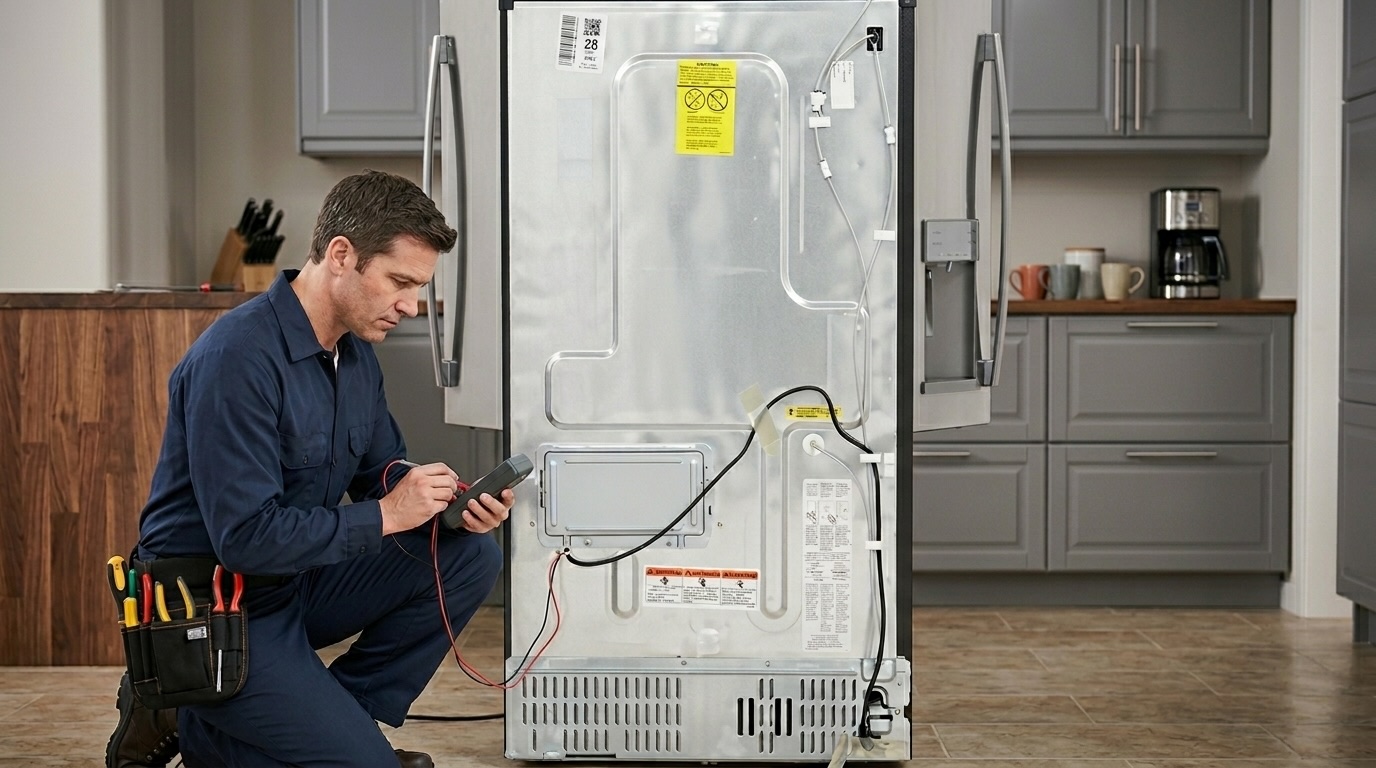
There’s a sinking feeling when you open the freezer and find your ice cream soft, your frozen veggies starting to thaw, or that bag of chicken looking suspiciously wet around the edges. It’s not just inconvenient — it’s a quiet emergency. Every hour your GE freezer runs too warm, food safety drops, energy bills creep up, and you’re one step closer to a bigger breakdown. At Appliance Repair Master in Atlanta, our technicians see this every week: what starts as “it’s only a little soft” often turns into a full compressor failure if ignored.
GE freezers — especially the popular French-door bottom freezers and standalone uprights — are reliable when maintained, but Atlanta’s heat, humidity, and power flickers love to push them past their limits. In this guide, we’ll walk you through how these freezers make cold, the most common reasons they stop freezing properly, the signs to catch early, simple things you can check at home, and when it’s time to call us before you lose a whole freezer’s worth of groceries.
How Your GE Freezer Makes Cold: A 60-Second Briefing
Let’s quickly walk through how a GE freezer actually keeps things frozen — it’s simpler than it sounds, but knowing the basics helps you spot trouble early.
The heart of the unit is the sealed system: a closed loop of copper tubing filled with refrigerant. The compressor (that humming motor at the back bottom) squeezes the refrigerant, making it hot and high-pressure. It then flows to the condenser coils (under or behind the unit), releases heat, cools down, and turns into a cold liquid.
That cold liquid moves to the evaporator coils inside the freezer wall. There, it expands, absorbs heat from the air, and turns back into gas — pulling warmth out of your food and making everything icy cold.
Key players that keep this loop working right:
- Evaporator fanmotor— pushes cold air from the coils throughout the freezer compartment. If it’s blocked or dead, cold air just sits in one spot.
- Defrost system — a heater and timer that melt frost off the evaporator coils every 8–12 hours. If it skips or fails, ice builds up and blocks airflow.
- Thermistor— a small temperature sensor on the evaporator. It tells the control board when to defrost or adjust cooling. If it lies, the whole system gets confused.
In Atlanta, we see two big enemies: humidity makes frost build faster (overloading the defrost system), and dust/grease quickly coats the condenser coils, forcing the compressor to work harder and run hotter.
Understanding this flow helps you connect the dots when things go wrong. Next, let’s look at how “not freezing properly” actually shows up in real life.
The Symptom Checker: What "Not Freezing" Really Looks Like
When a GE freezer isn’t freezing properly, it doesn’t always go from “perfect” to “room temperature” in one dramatic step. Most of the time, it creeps up with patterns we see over and over in Atlanta. Use this quick checker to match what you’re experiencing — it’ll help narrow down the cause before you start poking around.
Scenario | What You Notice | Urgency Level (1–5) | Likely First Suspect |
Completely not freezing | Food is soft or thawed, ice cream is liquid, meat packages are squishy, freezer feels room temp | 5 — Emergency | Compressor failure or sealed system leak |
Weakly freezing | Frozen items are cold but not rock-hard, ice cream is scoopable but grainy, packages have frost crystals from partial thaw/refreeze | 3–4 — Act soon | Dirty condenser coils, evaporator fan obstruction or weak evaporator fan |
Cycles between cold and warm | Freezer hits 0°F for a few hours, then climbs to 10–20°F, then drops again — food has ice crystals and soft spots | 4 — Urgent | Defrost system ice buildup, defrost cycle fluctuation, bad thermistor |
One section warm, rest okay | Bottom drawer or back wall warmer than top shelves, or one side colder than the other | 3 — Check soon | Damper control stuck, blocked vents, or partial evaporator fan failure |
These patterns are the most common we hear from customers. If your freezer matches “completely not freezing” or has wild fluctuation, don’t wait — unplug it to avoid compressor damage and call us. For the milder cases, the home checks in the next section often make a big difference.
The Root Cause Investigation: Why Your GE Freezer Is Losing Its Cool
Once you’ve matched your symptoms, the next step is figuring out what’s actually going wrong. In our Atlanta shop, these are the top causes we see day in and day out on GE freezers — ranked roughly by how often they show up.
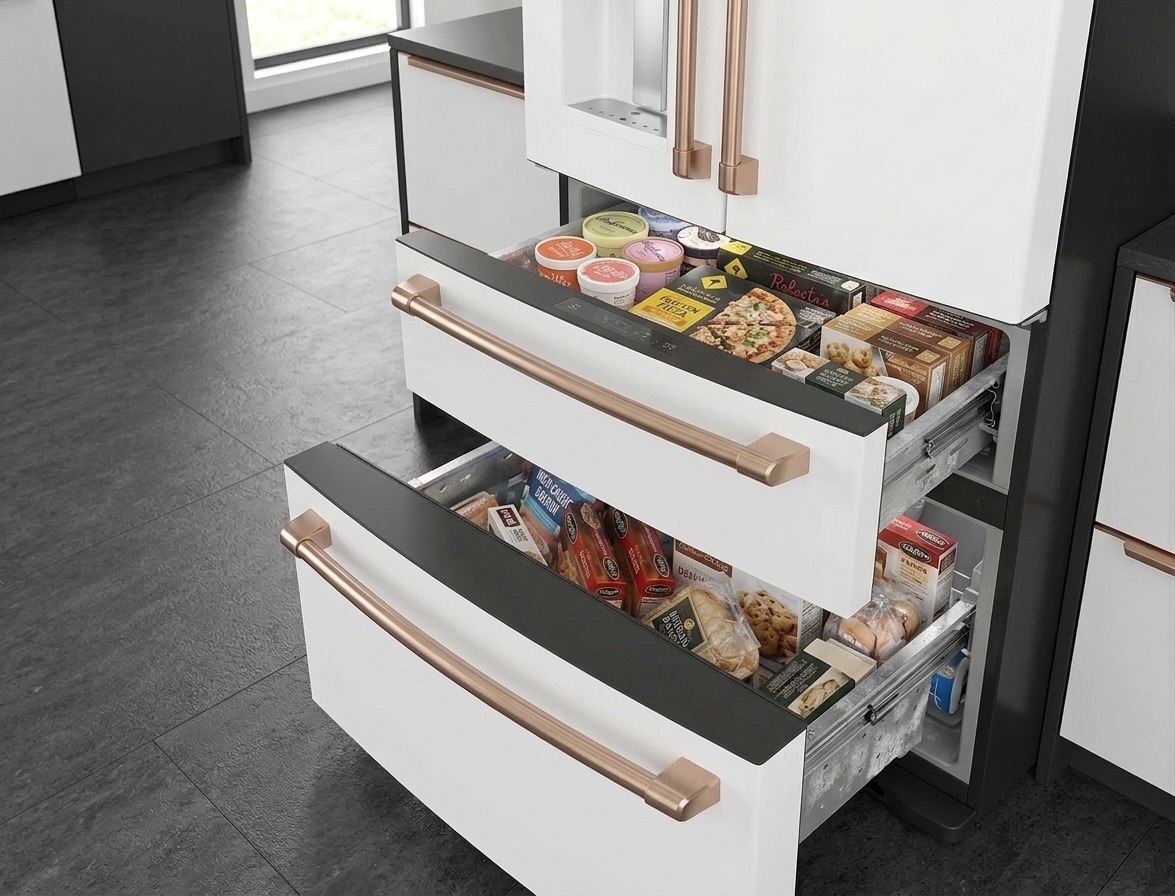
- Dirty condenser coils. Dust, pet hair, and kitchen grease coat the coils under or behind the unit. The compressor can’t shed heat, refrigerant doesn’t cool properly, and the whole system runs warm. In Atlanta kitchens, this is one of the easiest and most common fixes — a quick vacuum drops temps fast.
- Evaporator fan obstruction or failure. The evaporator fan pushes cold air from the coils throughout the freezer. If food blocks it or the motor dies, cold stays trapped near the coils — back wall freezes solid while the front stays warm. Listen for a quiet hum; no sound = big red flag.
- Defrost system ice buildup. The defrost system melts frost off the evaporator coils every 8–12 hours. When it fails (heater, timer, or thermistor bad), ice grows thick, blocks airflow, and turns the freezer into a weak cooler. You’ll see frost on packages or the back wall.
- Temperature sensor thermistor gone bad.The thermistor tells the board what the coils feel like. If it reads wrong, defrost skips or runs too long, causing temperature fluctuation or weak freezing. Common after power surges.
- Door seal failure. Warm humid air sneaks in through gaps, overworks the system, and raises temps. Run the dollar bill test — if it slides out easily, seal is the issue.
- Damper control stuck. In multi-zone models, the damper control directs cold air. If stuck closed, freezer stays warm while fridge is fine.
- Glitches from surges or age cause fluctuation. Reset often helps; persistent issues mean board replacement.
What Makes It Worse? Atlanta's Climate & Your Habits
Atlanta doesn’t just have hot summers — it has sticky, humid summers that love to team up with everyday freezer habits to create trouble. Here’s what turns small issues into big “not freezing properly” problems faster here than in cooler places.
- High humidity overloads the defrost system. Moisture in the air freezes on the evaporator coils quicker. The defrost system has to work harder and more often — if the heater or timer is even slightly off, ice builds up fast and blocks airflow.
- Heat stresses the condenser coils. Summer temps push the compressor harder. If the dirty condenser coils are coated with dust or kitchen grease (common in Atlanta), heat can’t escape, refrigerant doesn’t cool enough, and the freezer runs warm.
- Garage or unconditioned space placement. Outdoor garages hit 90°F+ in summer and drop low in winter. That fluctuation confuses the temperature sensor thermistor and makes the evaporator fan work overtime — many of our worst cases come from garage units.
- Frequent door opens + poor habits. Kids grabbing snacks, leaving the door ajar, or overloading the freezer blocks vents. Warm air sneaks in, door seal starts failing, and the system can’t recover.
- Lack of regular maintenance. No coil cleaning for 2–3 years? Dust turns into insulation. No manual defrost on older models? Ice grows thick. Small neglect snowballs into temperature problems that could have been avoided.
Atlanta’s weather doesn’t cause these failures — it just accelerates them. Keep coils clean, doors closed quick, and vents clear, and most GE freezers stay happy.
Which GE Models See "Not Freezing" Most Often?
Not every GE freezer struggles equally with freezing issues — some models show up in our Atlanta shop more often because of their design, features, or how people use them.
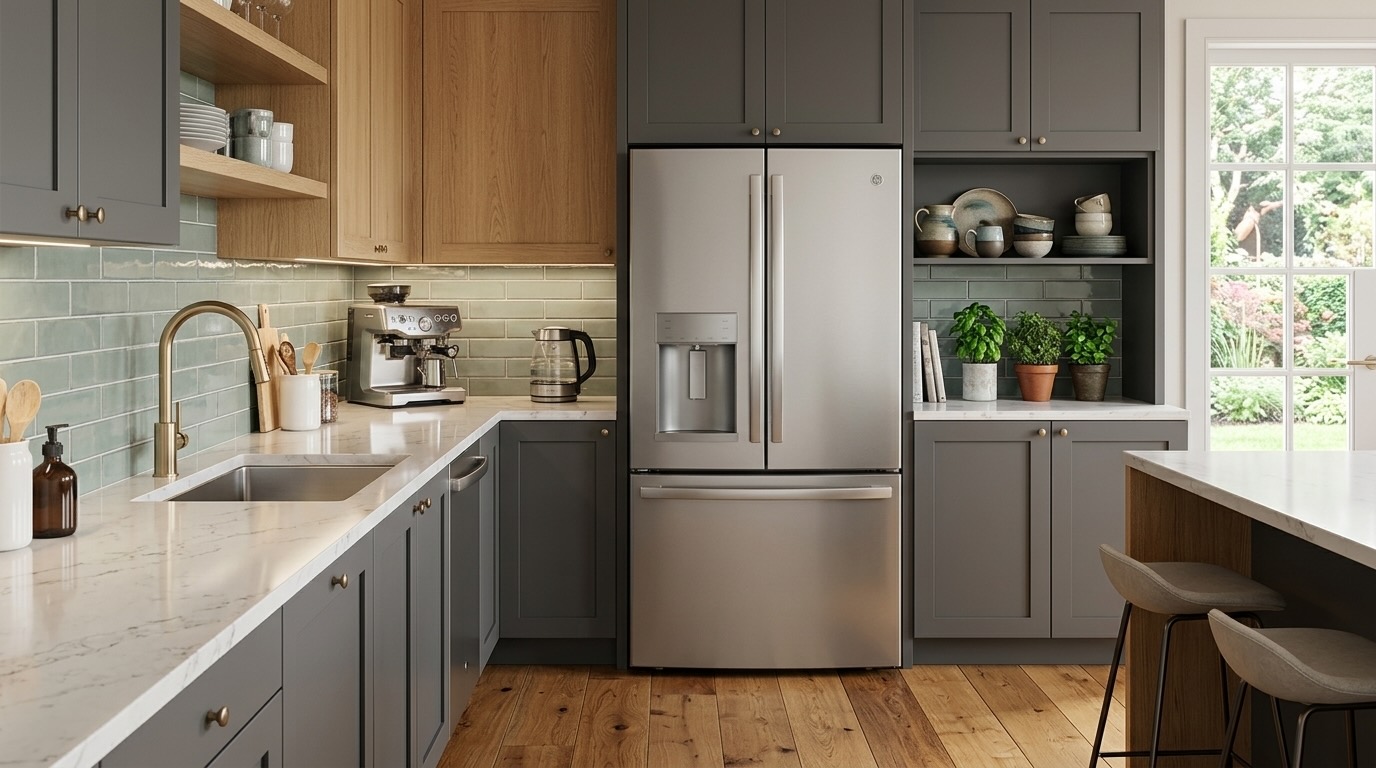
Here are the ones we see most frequently with temperature problems:
- GFE28GYNFS — French-door bottom freezer. One of the most common culprits. Heavy drawer use + Atlanta humidity often leads to evaporator fan obstruction or defrost system ice buildup — cold air stops circulating properly.
- PYE22KYNFS — Profile series. Profile models like this get a lot of “freezer not cold enough” complaints. Dirty condenser coils build up fast in kitchens with cooking, and dispenser features add extra tubing that can restrict flow.
- Profile series overall. Premium French-door refrigerators (PYE, PFE, GFD lines) have more complex air-flow systems and electronics. Temperature sensor thermistor drift or damper control sticking causes uneven or weak freezing more often than in basic models.
- Monogram series (built-in columns like ZIS/ZWE). These high-end units are sealed tightly in cabinetry — poor ventilation means condenser coils overheat quickly, and defrost cycle fluctuation shows up when humidity gets inside.
- Café series (luxury French-doors). Similar to Profile but with fancier dispensers — extra water lines and electronics make temperature fluctuation and fan issues more noticeable when maintenance is skipped.
In our experience, French-door bottom freezers (especially GFE28GYNFS and PYE22KYNFS) top the list because the bottom drawer gets opened constantly, vents get blocked, and humidity hits the defrost system hard. If your model is in one of these families, you’re not alone — and most of these are fixable when caught early.
Can You Fix It? A Safe DIY Action Plan
Most mild “not freezing properly” cases in GE freezers respond well to some basic at-home troubleshooting — no special tools needed beyond a vacuum, a dollar bill, and patience. We give this exact checklist to customers every day in Atlanta. Go step by step — stop if you hit a red flag.
- Start with the door seal paper test. Close a dollar bill (or any thin paper) in the door all around the edges. Tug gently — if it slides out easily anywhere, warm air is leaking in. Clean the gasket with warm soapy water and a soft cloth, getting into every fold. Retest. Still loose? The seal is likely the main issue.
- Clean the condenser coils. Pull the freezer out or remove the bottom grille and vacuum dust/pet hair from the dirty condenser coils. In Atlanta kitchens, grease and dust build up fast — clean coils can drop temps 5–10°F in 24 hours. Do this every 6 months.
- Listen for the evaporator fan. Open the freezer door and listen near the back wall for a quiet hum — that’s the evaporator fan pushing cold air. No sound? Rearrange food to clear vents or check for ice blocking it. Blocked evaporator fan obstruction = cold trapped in one spot.
- Do a control board reset. Unplug the freezer for 10–15 minutes (or flip the breaker), then plug back in. This clears glitches and can fix temperature fluctuation or defrost cycle fluctuation in many cases.
- Manual defrost if you see iceю If there’s thick defrost system ice buildup on the back wall or packages, unplug, empty the freezer, leave doors open 8–12 hours to melt everything, dry thoroughly, and restart. This often restores airflow.
These steps fix or diagnose 40–60% of the “weak freezing” cases we see. If you hit a red flag, stop — you’re looking at parts like temperature sensor thermistor or deeper issues that need our tools.
Red Flags: When It's Time to Call Appliance Repair Master
You’ve done the safe home checks — cleaned coils, tested the seal, reset the board — and the freezer is still not freezing properly. That’s when you need to stop DIY and let us take over. Here are the clear red flags we tell Atlanta customers to watch for:
No improvement after 48 hours
- Temps stay warm or keep fluctuating even after cleaning and resetting. This usually means a deeper issue like a failing temperature sensor thermistor or evaporator fan motor.
Heavy or recurring ice buildup
- Thick defrost system ice buildup returns quickly after a manual defrost. The defrost system isn’t cycling right — heater, timer, or thermistor needs replacing.
No evaporator fan sound
- You open the door and hear silence from the back — no hum, no air movement. A dead or obstructed evaporator fan is trapping cold air, and that’s not a DIY fix.
Compressor runs constantly or clicks but doesn’t cool
- Non-stop humming (overworked compressor) or repeated clicking without starting means a bad start relay, capacitor, or sealed system problem.
Oil stains, hissing, or unusual smells
- Any sign of refrigerant leak (oil spots under the unit, hissing sounds) points to a sealed system breach — that’s major and requires EPA-certified handling.
Uneven freezing with one section completely warm
- Back wall or top is cold, but front/bottom drawer stays soft — damper control stuck or blocked vents.
These signs mean parts replacement, pressure testing, or sealed system work — things that can damage the freezer or void warranties if done wrong at home. We’ve seen DIY attempts bend coils or tear wiring, turning a $300 fix into a full replacement.
When we arrive, we:
- Test thermistor resistance and evaporator fan operation.
- Run a full defrost cycle check.
- Inspect damper control and vents.
- Check compressor and sealed system pressures if needed.
- Replace faulty components with parts.
We carry the fans, sensors, heaters, and boards for all the models we mentioned, so most “not freezing” repairs are done in one visit with the freezer back to rock-solid cold.
The Cost of Waiting: What Happens If You Ignore the Problem
Letting a GE freezer run too warm might feel like “it’s only a little off,” but in our experience, it snowballs quickly — especially in Atlanta’s heat.
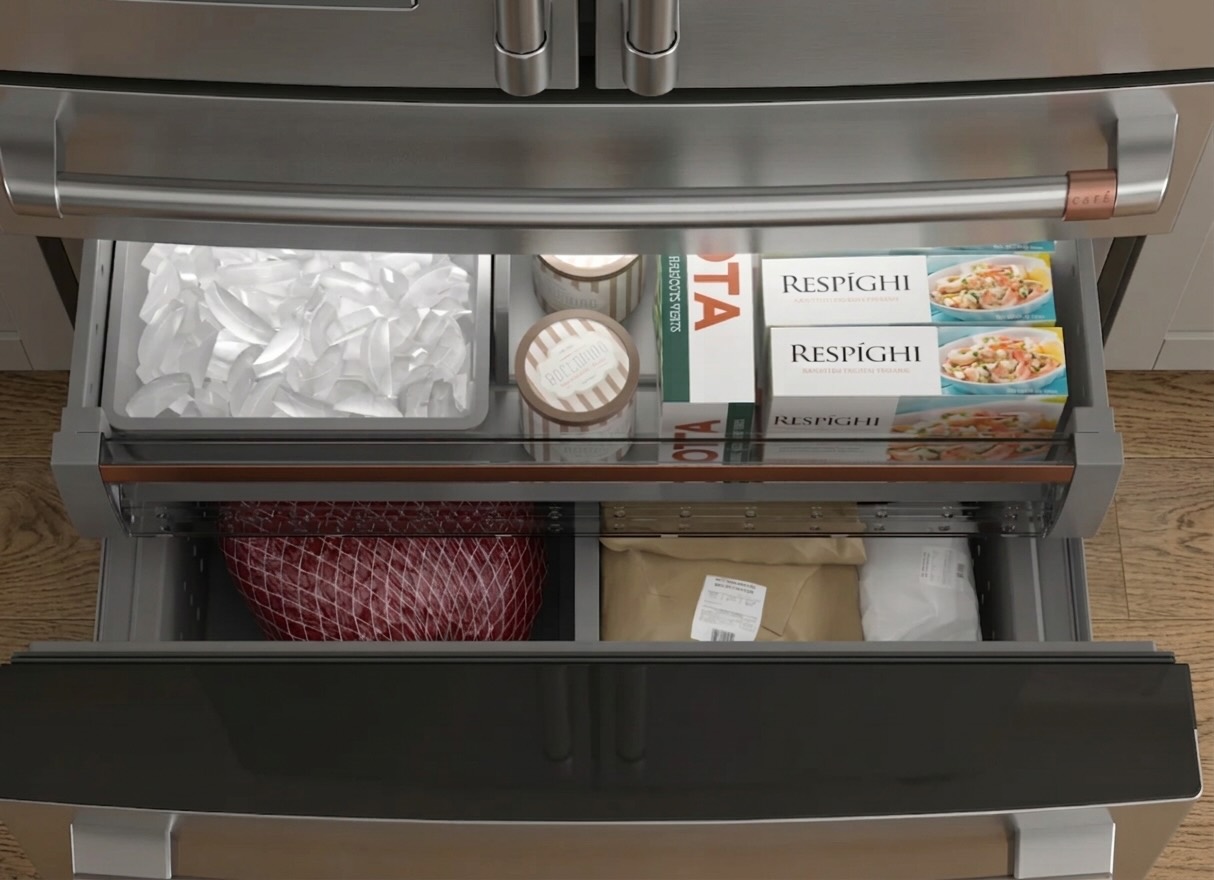
Here’s what we’ve seen happen when people wait too long:
- Food starts spoiling faster — ice cream melts into soup, meat edges thaw, frozen meals get freezer burn or bacteria risk. A single weekend can wipe out hundreds of dollars in groceries.
- Energy bills climb — the compressor runs nonstop trying to catch up, sometimes adding 20–30% to your monthly electric cost.
- Temperature fluctuation stresses the system — parts like the temperature sensor thermistor or evaporator fan wear out faster from constant cycling.
- Ice buildup gets worse — defrost system ice buildup blocks airflow completely, turning a weak freezer into a total loss.
- Compressor burnout becomes likely — overworked compressor fails, and replacing it (or the whole sealed system) jumps repair costs from hundreds to $800+ (or a new unit).
- Mold or odor issues start — thawed spots + humidity create perfect conditions for mold behind panels, turning a simple fix into a deep clean or health hazard.
We’ve had customers lose entire freezers full of holiday prep or bulk buys because they hoped “it’ll cool down on its own.” In Atlanta summer, that rarely happens — the heat just makes it worse.
Conclusion
A GE freezer that’s not freezing properly is more than a minor headache — it’s a ticking clock on your food, your wallet, and your sanity. What starts as slightly soft ice cream or a few thawed packages can quickly turn into spoiled groceries, skyrocketing energy bills, and a burned-out compressor if left unchecked.
The good news is that most of these issues — from dirty condenser coils to defrost system ice buildup or a faulty temperature sensor thermistor — are completely fixable when caught early. Atlanta’s heat and humidity speed things up, but they also make quick action worthwhile. The simple checks we walked through handle a surprising number of cases. When those don’t cut it, though, professional tools and parts make all the difference.
We’ve been getting GE freezers back to rock-solid cold across Atlanta for over 15 years. We know the exact layout of these models, carry the right fans, sensors, heaters, and boards, and leave every unit freezing like new — no more guessing or hoping.
FAQ
Here are the most common questions we get from Atlanta homeowners when their GE freezer isn’t freezing properly:
Browse our full library of repair guides for more step-by-step fixes.
Related guides
1. My GE freezer is only slightly warm — is it really a problem?
Yes — even 5–10°F above 0°F starts thawing food edges and risks spoilage. Temperature fluctuation like this often comes from dirty condenser coils or a blocked evaporator fan.
2. Why did my GE freezer suddenly stop freezing after a power outage?
Outages can glitch the control board or cause defrost cycle fluctuation. A control board reset fixes many cases, but if it persists, the temperature sensor thermistor may have drifted.
3. Is this common in freezers kept in garages during Atlanta summers?
Very common — summer heat stresses the evaporator fan and damper control, while humidity promotes defrost system ice buildup. We see temperature problems spike in unconditioned spaces.
4. How do I know if the door seal is causing the warm temps?
Run the door seal paper test — if the dollar bill slides out easily, warm air is getting in, forcing the freezer to work harder and run warm.
5. Can a dirty filter or coils really make the freezer not freeze?
Absolutely — dirty condenser coils prevent heat release, and a clogged filter restricts airflow. Both make the compressor struggle and temps rise.
6. My freezer freezes some things but not others — what’s going on?
Uneven freezing usually means blocked vents or a stuck damper control — cold air isn’t reaching all areas properly.