
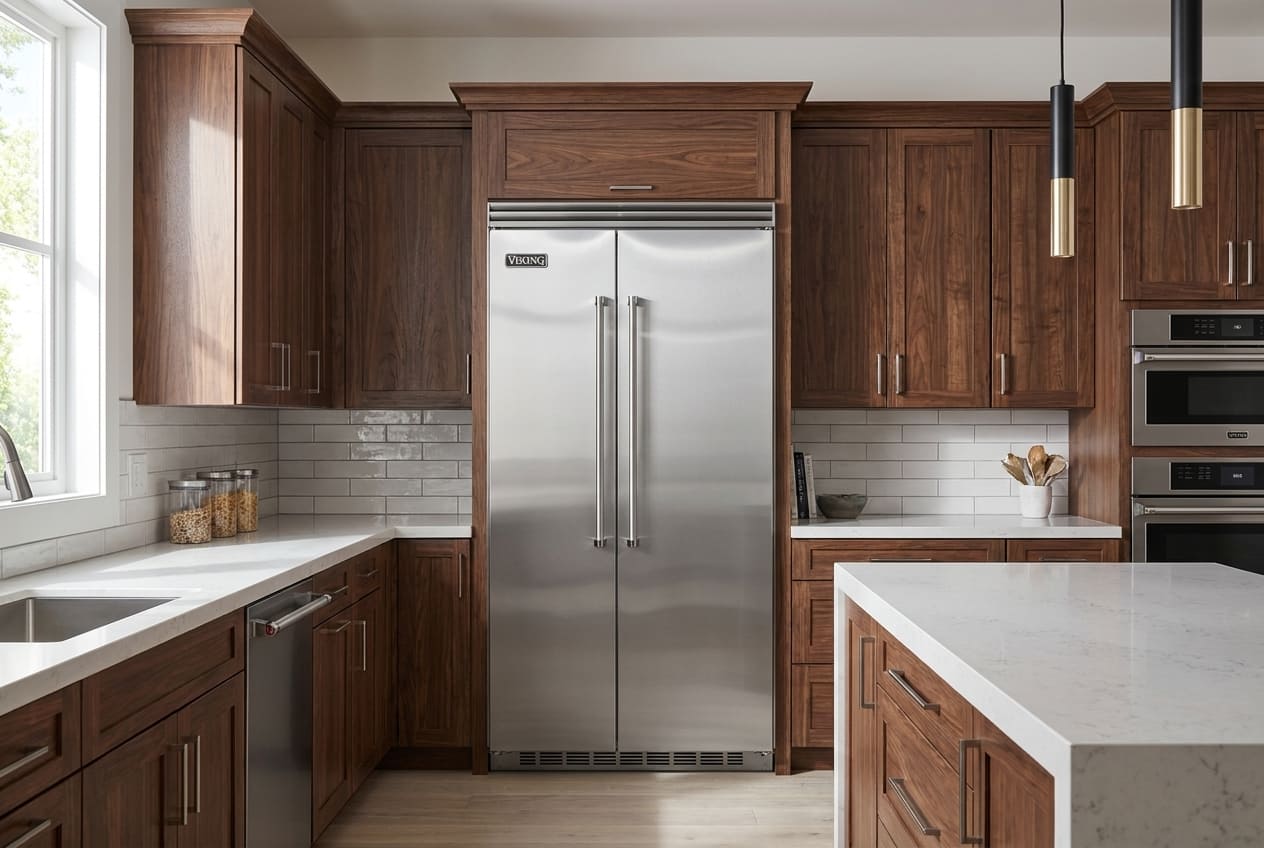
Hey there, if you’ve opened your Viking freezer to find ice cream that’s more soup than scoop or frozen dinners thawing out, you’re not alone — it’s a common headache we hear from Atlanta folks all the time. The freezer should be the cold heart of your fridge, keeping everything solidly frozen at 0°F or below, but when it starts warming up, it throws off the whole kitchen routine.
Same symptom turns up on other brands too – start with our step-by-step on GE refrigerator freezer compartment not freezing properly.
Viking refrigerators come with a few freezer setups:
- side-by-side (balanced for easy access but sensitive to fan issues),
- French door bottom-freezer (convenient pull-out drawers but reliant on seals),
- built-in columns (customizable panels but tight insulation).
They’re generally reliable workhorses — many last 12–18 years with steady performance — but humidity, heavy use, or overlooked care can hit the freezer hard first.
We get calls on these models often: VCSB side-by-sides for compressor strain, RVFF for airflow blocks, VCFB columns for seal wear. The good news? Most Viking freezer not freezing problems are fixable without swapping the whole unit, and catching it early keeps things simple.
In the sections ahead we’ll chat about:
- the signs to watch for (and differences by series),
- possible causes (what wears or glitches),
- how door design plays a role (and which models see it more),
- easy self-checks you can try,
- when to call us (and why not ignore it),
- our fix approach, plus pro tips to avoid repeats.
We’re EPA-certified for refrigerant work when needed, aim for same-day or next-day service on cooling emergencies, and stand behind our labor and parts with a solid warranty.
If your Viking freezer feels warm or food is softening, stick around — or give us a call if it’s urgent. Let’s get that chill back.
What's the Deal with Viking Freezers? Types and How Reliable They Are
Viking freezers are the powerhouse section of their refrigerators, designed to keep everything from ice cream to steaks solidly frozen without drama. They come in a few main styles:
- side-by-side like the VCSB series, where freezer is a tall column next to the fridge for quick grabs,
- freestanding — RVFF models, pull-out drawer for easy organization,
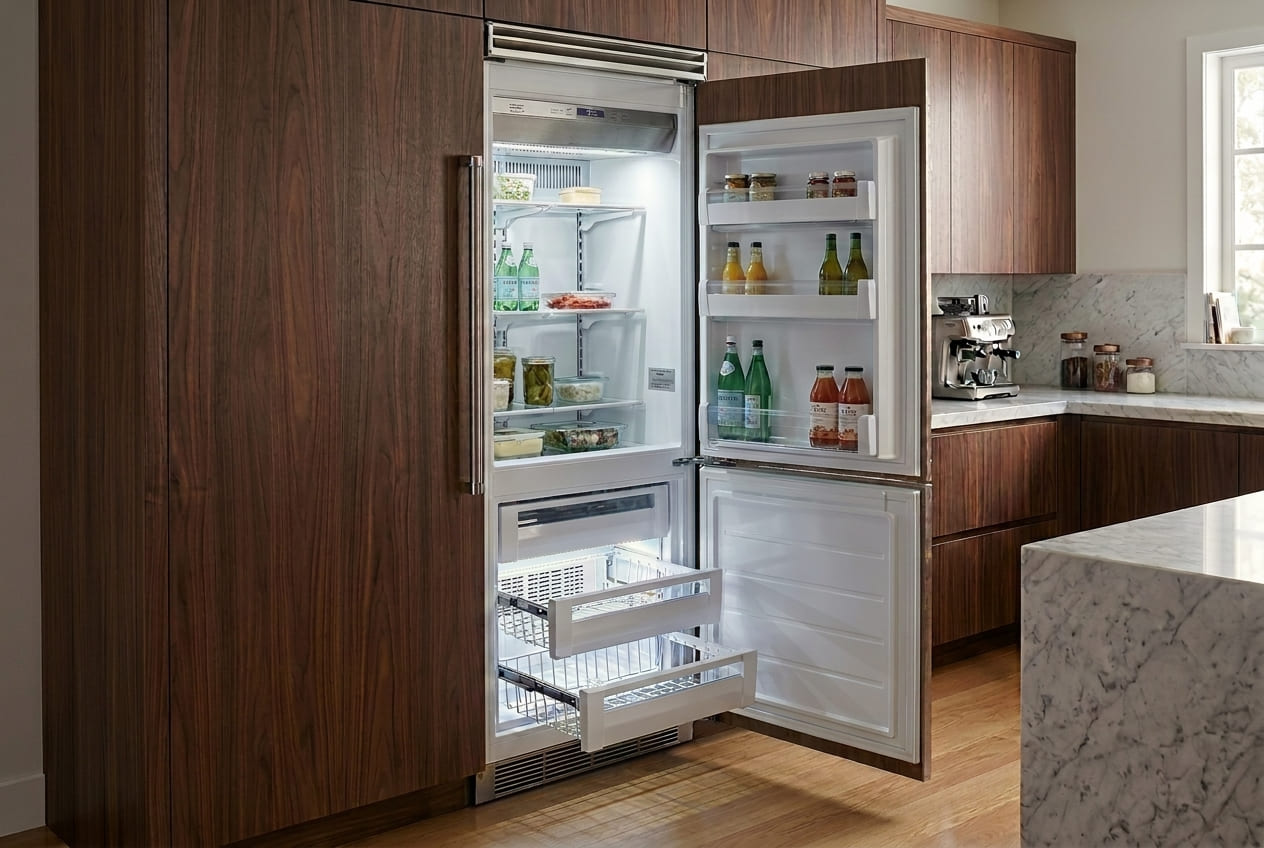
- and built-in all-freezer columns — VCFB lines, standalone or paired with fridge columns for custom setups.
That said, they’re not invincible. In Atlanta’s humid climate, seals can dry faster, fans work harder against moisture, and dust buildup on coils stresses the system. Side-by-sides are solid for even temps but sensitive to door seals; French doors offer convenience but airflow issues if drawers jam; columns insulate great but tight fits can trap cold spots. Overall, they’re dependable if cared for, but heavy use or skipped upkeep can lead to warm pockets sooner than expected.
If your freezer is holding steady at 0°F, that’s the sweet spot. If not, let’s look at the signs that something’s off.
How Can You Tell if Your Viking Freezer Is Acting Up?
It’s easy to miss the early signs that your Viking freezer is struggling — after all, it might still feel cold to a quick touch. But if things are off, you’ll notice patterns that add up fast. Here’s a simple numbered list of the most common clues we hear from Atlanta folks, with a bit on how it differs by series.
- The freezer feels warm to the touch or a thermometer reads above 0°F (stick one in overnight for accuracy). If your steaks are soft after a day or ice cream is mushy around the edges, that’s a big red flag — freezing isn’t happening like it should.
- Food starts thawing or getting freezer burn unevenly — veggies turn limp, meat gets icy crystals on top while soft inside. This shows temps aren’t holding steady, often starting subtle before full thaw.
- The compressor runs almost constantly without cycling off — listen for that steady hum that never quits, or check your electric bill for a spike. It’s working overtime to compensate.
- Frost patterns are uneven or missing — too much ice in spots (like back wall) or none at all where you’d expect some buildup. This hints at circulation or defrost glitches.
The signs can vary by series:
- side-by-sides often show warm spots from fan blocks (cold bottom, warmer top);
- French doors with bottom freezers get uneven due to drawer seals letting air in;
- columns slow to freeze from insulation wear, starting with soft edges on items.
If a couple of these ring true, it’s worth digging deeper — next we’ll chat about what could be causing the trouble.
What's Going Wrong Inside? Common Causes of Freezer Problems
When a Viking freezer stops pulling its weight, it’s usually one of a few suspects — parts that wear out, glitch, or get obstructed from everyday use. Let’s break it down casually: think of the freezer as a cold storage vault; if the seals leak, fans quit, or compressor slacks, temps rise and food thaws.
For the wider picture on this brand, see read our breakdown of Viking not cooling.
Common culprits we see:
- Worn door seals or gaskets: Rubber dries/cracks over time, letting warm air sneak in — freezer has to work harder, but temps still climb.
- Fan failure: The evaporator fan (circulates cold air) seizes from dust or wear; no airflow means uneven freezing or warm pockets.
- Compressor weakness: The “heart” pumping refrigerant loses efficiency from age or overload, failing to hit low temps.
- Thermostat or sensor glitch: These read temps and signal the compressor; if they drift or fail, the freezer “thinks” it’s colder than it is and stops chilling.
- Low refrigerant from tiny leaks: Sealed system loses pressure slowly; freezer can’t reach 0°F without it.
Things that wear: Seals from door traffic, fans from constant spin, thermostats from cycles, compressor from heat/dirt. In Atlanta humidity, seals and fans take a bigger hit — moisture speeds corrosion, dust clogs faster.
If your freezer’s acting up, these are likely why — next we’ll talk about how door design plays into it and which models see more trouble.
Does Door Design Matter for Freezer Issues? Which Models See It More?
Absolutely — how the doors are set up plays a big role in how well the freezer stays cold. Different Viking layouts handle air and seal integrity differently, and some end up more prone to Viking freezer not freezing problems because of it.
Here’s the quick scoop:
- Side-by-side models have the freezer as a full-height door next to the fridge.
- Pros: easy access, less air loss per open.
- But cons: more door opens mean more warm air entry, and fans have to push cold air across a wider space — if the evaporator fan struggles, warm spots show up fast (often upper shelves first).
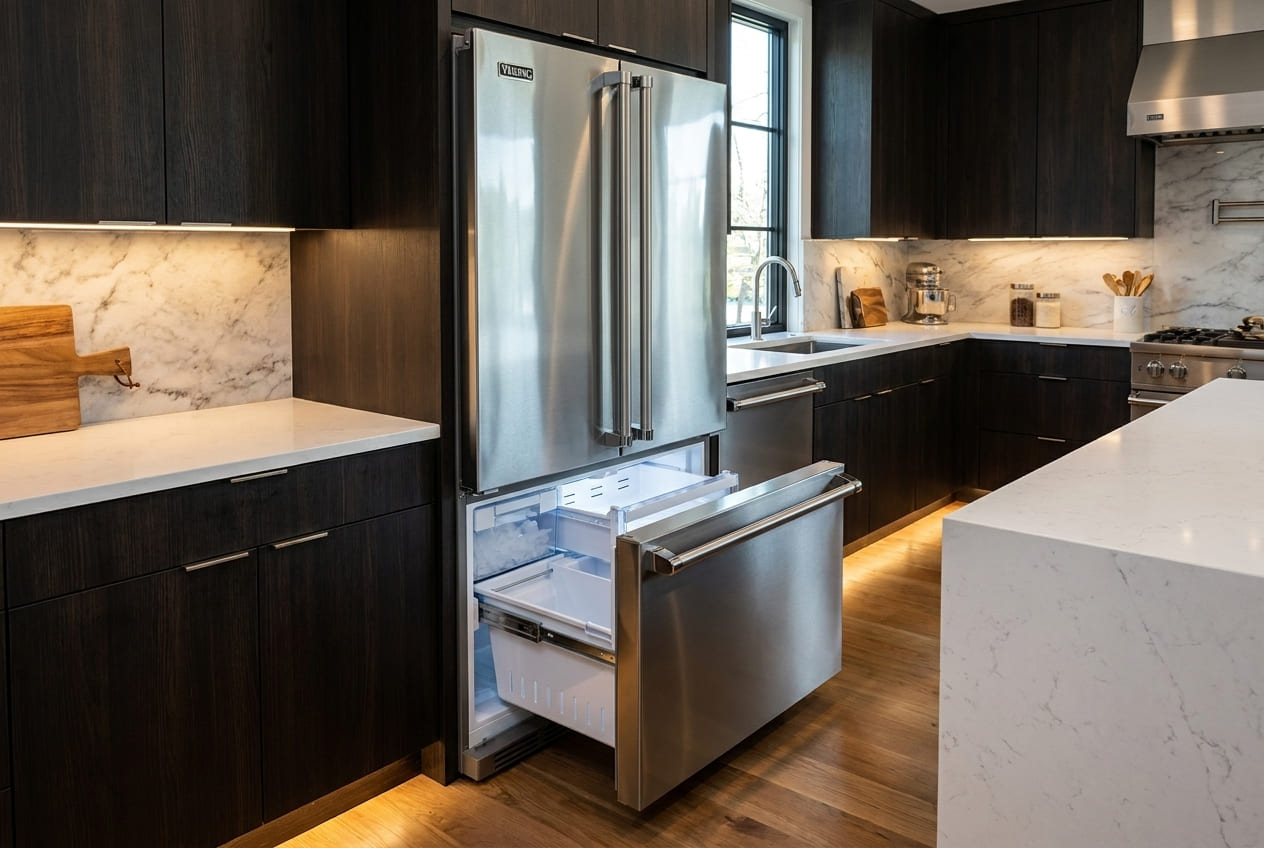
2. French door with bottom freezer puts the freezer as a pull-out drawer below two fridge doors.
- Pros: big freezer access when open.
- Cons: drawers don’t seal as tightly as vertical doors — frequent pulls let humidity in, seals wear quicker from weight/pulling, and airflow can get blocked if items pile against the back. These see more freezer warm calls in busy households.
3. Built-in columns are standalone freezer columns (often paired with fridge columns).
- Pros: excellent insulation, custom fit.
- Cons: tight spaces make airflow sensitive — if seals compress or fans clog, cold air doesn’t circulate evenly, leading to slow freeze or uneven temps (edges soften first).
From our calls, French door bottom-freezers pop up most often for seal/airflow issues — drawers get tugged a lot. Side-by-sides follow close for fan strain. Columns show fewer but more stubborn cases from insulation settling.
Bottom line: door design influences how easily warm air sneaks in and how hard the fan works — next we’ll cover what you can safely check and try yourself if your freezer’s acting up.
Easy Self-Checks: What Can You Try at Home?
Before calling anyone, there are a few safe, no-tools steps you can run through to see if it’s a quick fix or something deeper. These won’t solve major breakdowns, but they often catch simple issues and give you clearer clues.
Here’s a step-by-step you can do right now:
- Grab a cheap freezer thermometer (or use one from the fridge drawer) and place it in the middle of the freezer for 4–6 hours. Check if it’s holding 0°F or below. If the freezer is warm (above 5°F), note the reading — it’s your best baseline.
- Power cycle the fridge: Unplug it (or flip the breaker) for 10–15 minutes, then plug back in. This resets the thermostat/sensor and can kick-start a stuck cycle. Give it 24 hours to stabilize and recheck temps.
- Inspect door seals: Close the door on a dollar bill around the edges — tug gently. If it pulls out easily anywhere, the seal isn’t tight (warm air leaking in). Clean seals with mild soap/water to remove gunk that might be preventing a good seal.
- Check for blocked vents or overload: Make sure nothing’s stacked against the back wall or blocking internal vents — cold air needs to circulate freely. Pull out drawers/shelves to see if food is blocking airflow.
- Listen and feel: Put your ear near the back or bottom — compressor should hum steadily when running. Feel the coils under/behind (if accessible) for dust; vacuum gently if dirty.
- Quick filter glance: If your model has a water filter, check if it’s overdue (light on or 6+ months old) — clogged filter can affect overall system pressure indirectly.
These are low-risk and often reveal the easy stuff (dirty coils, bad seal, glitchy reset). If temps stay warm after this or you spot heavy frost/constant run, it’s time for pro eyes — don’t dig deeper yourself (no panel removal or wiring tests).
When to Call a Pro (and Why Not to Wait It Out)
You’ve tried the easy stuff — thermometer check, reset, seal clean — and your freezer’s still not hitting those solid freeze temps. Or maybe the signs are clear enough (constant compressor run, heavy frost, food thawing) that DIY feels risky. That’s when it’s time to call us.
Here’s when to skip self-fixes and get help:
- Temps stay warm (above 5°F) after reset and checks — likely compressor, sensor, or refrigerant issue.
- Heavy frost or ice buildup blocks airflow — could be fan, heater, or drain; poking around risks damage.
- Compressor runs nonstop with no off cycles — overwork means bigger strain; don’t wait for burnout.
- Odd smells, water leaks inside, or gurgling sounds — points to refrigerant or drain problems.
- Any electrical hum/buzz or burning smell — safety first, unplug and call immediately.
Why not ignore it or drag your feet?
- Food spoilage adds up fast — $100–$300 in groceries lost in a day or two.
- Constant run spikes your electric bill ($30–$70 extra/month) and stresses parts, leading to bigger failures (compressor swap = thousands).
- Small leaks or blocks can cascade into sealed-system damage or mold from moisture.
- The longer it runs warm, the more energy wasted and the higher risk of full breakdown.
Top scenarios to call ASAP:
- Food thawing + constant compressor — cooling is failing fast.
- Heavy frost blocking vents — airflow gone, temps dropping unevenly.
- New smell or leak inside — could be refrigerant or drain overflow.
Don’t try refrigerant work or panel removal yourself — safety and warranty risks are high.
How We Fix Viking Freezer Problems at Appliance Repair Master
We take these freezer issues seriously because we know how much a reliable freezer means for meal prep, groceries, and peace of mind. When we get called for a Viking that’s running warm or not freezing properly, here’s how we usually tackle it.
- We start with a full diagnostic check — testing compressor pressure, fan operation, seal integrity, thermostat readings, and airflow through vents.
- We look for the root cause first (leaky seal, weak fan, low refrigerant, bad sensor) instead of just throwing parts at it.
- Then we replace whatever’s worn or failed — seals, fans, thermostats, or valves — using genuine-spec parts that match the model exactly.
- We test everything again after the fix: run a cycle, monitor temps, check for leaks or frost patterns, and make sure it’s holding steady at 0°F.
We’re EPA-certified for any refrigerant work if a leak shows up, and we always back our labor and installed parts with a solid warranty — no questions if something doesn’t hold up.
We get it sorted without the hassle — same/next-day in most cases — so your freezer is back to rock-solid freezing before food starts going bad. No upsells, no runaround — just clear explanations and a quiet, cold unit when we leave.
Pro Tips: How to Avoid Freezer Troubles and Keep Your Viking Going Strong
The best repair is the one you never need, right? Here are some simple, everyday habits that help Viking freezers stay cold and reliable longer — especially in Atlanta’s sticky weather.
- Routine service once a year. A quick pro check catches small wear (seals, fans, sensors) before it turns into a Viking freezer not freezing problem.
- Cleaning coils every 3–6 months. Dust under or behind traps heat — vacuum gently with a brush; it keeps the compressor from overworking.
- Filter replacement every 6 months. Clogged water filter affects overall pressure and can indirectly stress cooling — easy swap, big payoff.
- Preventive maintenance basics: Wipe seals monthly with mild soap to keep them soft and airtight; check vents aren’t blocked by food; monitor temps weekly with a thermometer.
- Avoid overloads. Don’t cram the freezer — leave space for air to move; blocked airflow is a top cause of warm spots.
- Set and verify freezer temp at 0°F. Too warm melts things; too cold wastes energy — use a thermometer to confirm, not just the dial.
Think of it like regular oil changes for your car—these small things keep everything humming smoothly and can add years to the freezer’s life. We’ve seen owners who started this routine go 3–4 years without a single warm-freezer call.
Conclusion
A Viking freezer that’s not freezing properly can throw your whole week off — soft ice cream, thawing meats, and that nagging worry about spoiled groceries. The good news is these problems are usually straightforward to sort once we pinpoint the cause, whether it’s worn seals, a struggling fan, weak compressor, glitchy thermostat, or low refrigerant.
We’ve handled hundreds of these across side-by-sides, French doors, columns, and other models — starting with a full diagnostic check (temps, pressure, airflow, seals), replacing what’s worn, testing cycles, and making sure it’s holding 0°F steady before we leave. With same/next-day availability on cooling emergencies and a warranty on our work, we aim to get your freezer back to reliable, deep-freeze performance without the hassle.
If your Viking freezer feels warm, food’s softening, or the compressor never stops, don’t wait for it to get worse. Give us a call — we’ll figure it out fast, explain everything clearly, and have things frozen solid again before you know it.
Related guides
FAQ
1. My Viking freezer is cold at the bottom but warm at the top — why?
That’s classic airflow block — often the evaporator fan struggling or vents covered by food. Check for blocked returns; if it persists, fan or circulation issue needs a look.
2. How can I tell if my Viking freezer thermostat is bad?
If temps are inconsistent (freezer warm in spots) or the compressor runs constant without reaching 0°F, the thermostat/sensor might be drifting. A thermometer test confirms — display can lie.
3. Does a clogged water filter affect my Viking freezer?
Indirectly yes — filter replacement keeps pressure steady; a clogged one can reduce overall system efficiency, making the freezer work harder to stay cold.
4. My Viking freezer has frost buildup but isn't freezing food — what's up?
Excess frost blocks air — likely a defrost glitch or fan failure. Clean vents and check seals; if frost keeps coming back, it’s time for a pro diagnostic check.
5. Can overloading the freezer cause it to run warm?
Definitely — packed shelves block air to the evaporator coils, creating hot spots. Leave space for circulation; reorganize and monitor temps to see improvement.
6. Is it normal for a Viking freezer to take a while to freeze after a power outage?
A few hours to recover is normal, but if it’s still warm after 24 hours, something’s off — reset and check seals/vent; persistent issues need attention.