
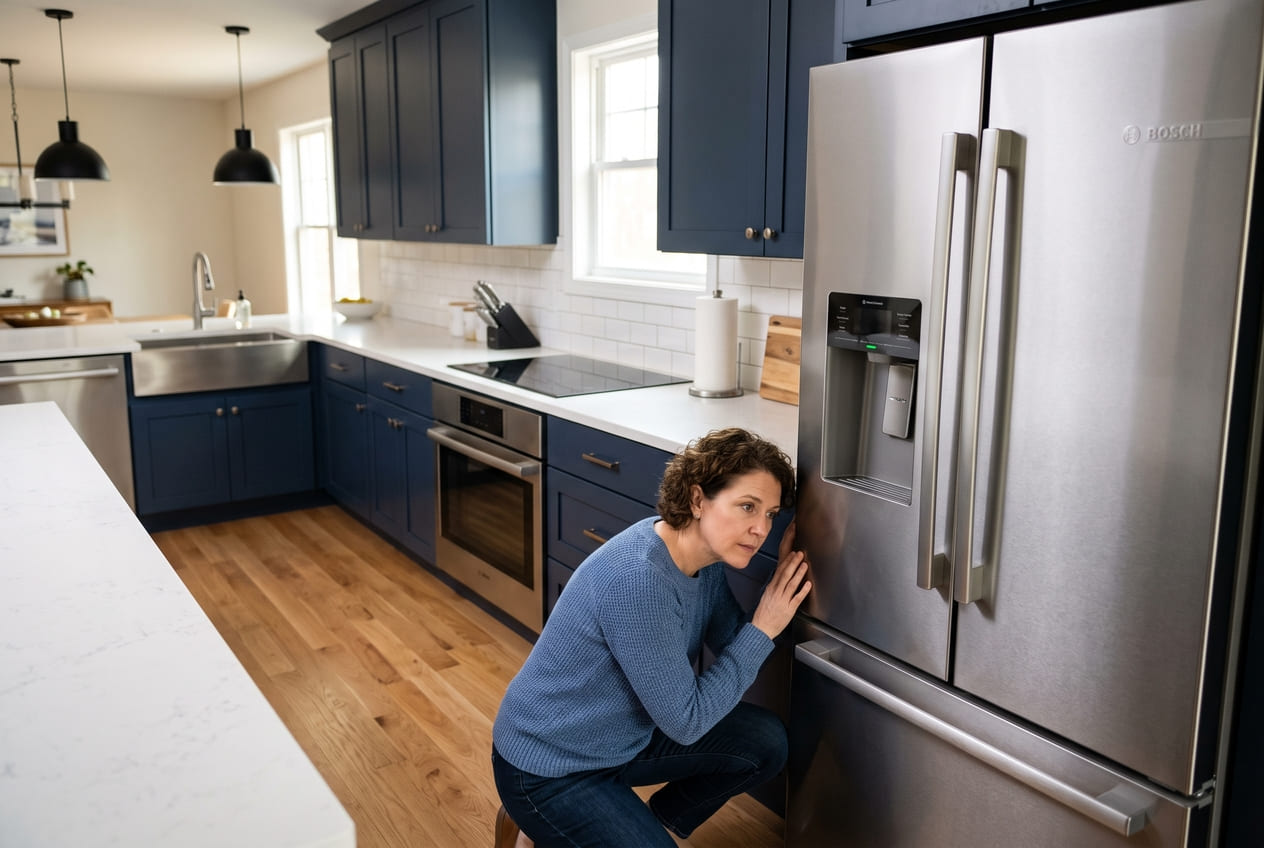
Bosch Making Noise in Atlanta, GA: Let’s Pin Down the Sound
Bosch fridges aren’t silent. Soft humming, light clicking, brief airflow, and gentle gurgling can belong to normal cooling cycles. Trouble begins when sound shifts from background noise to something you keep noticing: louder hum, sharp buzz behind fridge, rattle near bottom grille, scraping from freezer wall, or high-pitched compressor noise that keeps returning.
Same symptom turns up on other brands too – start with our guide to LG making noise.
Most often, noise points toward airflow, fan wear, dust buildup, loose hardware, cabinet vibration, tubing contact, or normal R600 refrigerant noise moving through system.
Sound can also travel through the fridge cabinet and fool your ear. Compressor area may seem guilty while real culprit sits nearby:
- condenser fan blade brushing debris,
- loose rear cover buzzing against frame,
- drip tray rattling, harness vibrating,
- or copper line tapping metal during cooling cycle.
So, if your Bosch 800/500 Series refrigerator sounds louder than usual, don’t rush into part guesses. Start with pattern:
- where noise begins,
- how it sounds,
- whether cooling changed,
- and whether sound fades when door opens.
Appliance Repair Master handles Bosch refrigerator noise diagnosis across Atlanta and Georgia. We inspect fan areas, compressor section, airflow, leveling, loose panels, tubing contact, and sealed-system clues before recommending repair.
Quick Sound Scan: What Are You Hearing?
Noise diagnosis starts with plain listening. No tools needed. Just location, sound type, and timing.
Sound | Likely direction |
Soft humming | Normal cooling cycle, compressor, fan |
Loud humming | Fan strain, dust buildup, airflow restriction, vibration, compressor area |
Buzzing from back | Condenser fan motor, loose rear panel, wiring, tubing, compressor area |
Rattling near bottom | Toe grille, drip tray, loose cover, copper wire vibration, tubing contact |
Scraping from freezer | Evaporator fan hitting ice, debris, or cover |
Repeated clicking | Start component, inverter, compressor start issue, normal cycle sound |
Gurgling or bubbling | Refrigerant movement, often normal during cooling |
High-pitched whine | Compressor, inverter, fan motor, vibration point |
Hissing | Refrigerant movement, valve sound, or sealed-system concern if cooling drops |
Reader check
Use this as a quick self-check before calling. No tools, no panels, no risky troubleshooting.
Checkpoint | Yes / No |
Noise started recently | |
Sound comes from back or bottom | |
Refrigerator still cools normally | |
Freezer sound changes when door opens | |
Hum gets louder during long cooling cycles | |
Noise started after moving, cleaning, or power outage | |
Rattle changes when cabinet or grille is touched lightly |
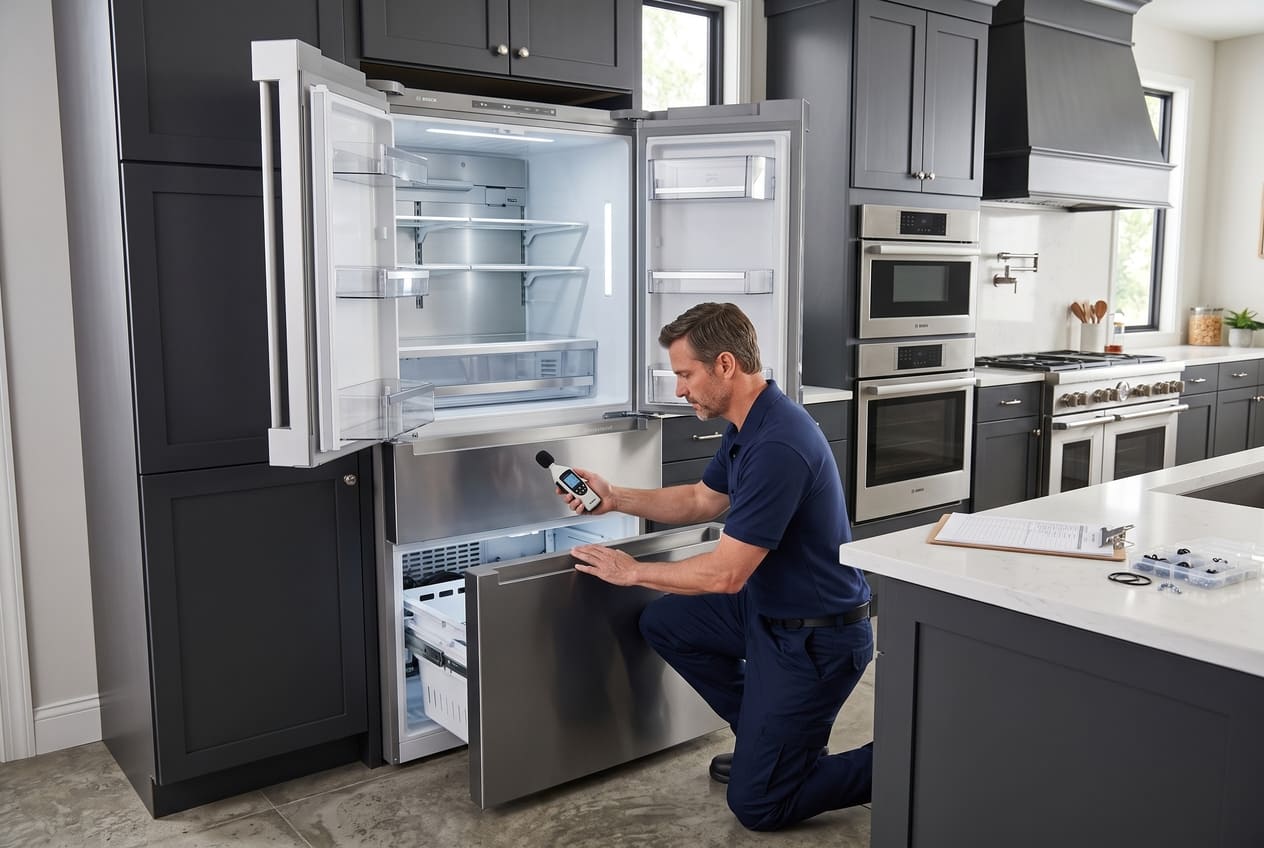
Bosch Humming: Normal Background Sound or Repair Clue?
A little humming doesn’t automatically mean trouble. Fridge has motors, fans, compressor, and airflow. Some low sound belongs to normal operation.
You better learn to recognize change.
If hum grows louder, runs longer, or starts carrying rough vibration, something may be making the fridge work harder. Dust can choke condenser area. Fan blades can brush debris. Loose panels can amplify small movement. Cabinet fit can turn mild vibration into annoying buzz. Compressor area can sound louder when airflow drops.
- Dust around condenser section
- Condenser fan motor cleaning overdue
- Fan blade touching debris
- Rear panel vibration
- Drip tray movement
- Uneven floor or poor leveling
- Fridge pressed against wall or cabinetry
- Tubing contact or copper wire vibration
- Compressor mount vibration
- Longer runtime from weak airflow or warm kitchen
Pro tip
Many humming problems aren’t major repairs. Cleaning, leveling, securing loose panel, or clearing fan area may quiet fridge fast. Loud humming plus weak cooling deserves service before compressor and fan work harder than they should.
What you notice | What it may suggest |
Hum stays soft and cooling looks normal | Likely normal operation |
Hum grows louder over several days | Airflow restriction, dust, fan strain, vibration |
Hum comes from lower back | Compressor area, condenser fan, rear panel |
Hum pairs with clicking | Start/inverter/compressor issue may need testing |
Hum pairs with poor cooling | Book service sooner |
High-Pitched Compressor Noise: Don’t Blame Compressor Too Fast
High-pitched compressor noise can sound expensive. Thin whine, electrical buzz, ringing tone, sharp vibration near lower rear — sure, it’s hard to ignore.
Still, sound alone doesn’t prove compressor failure.
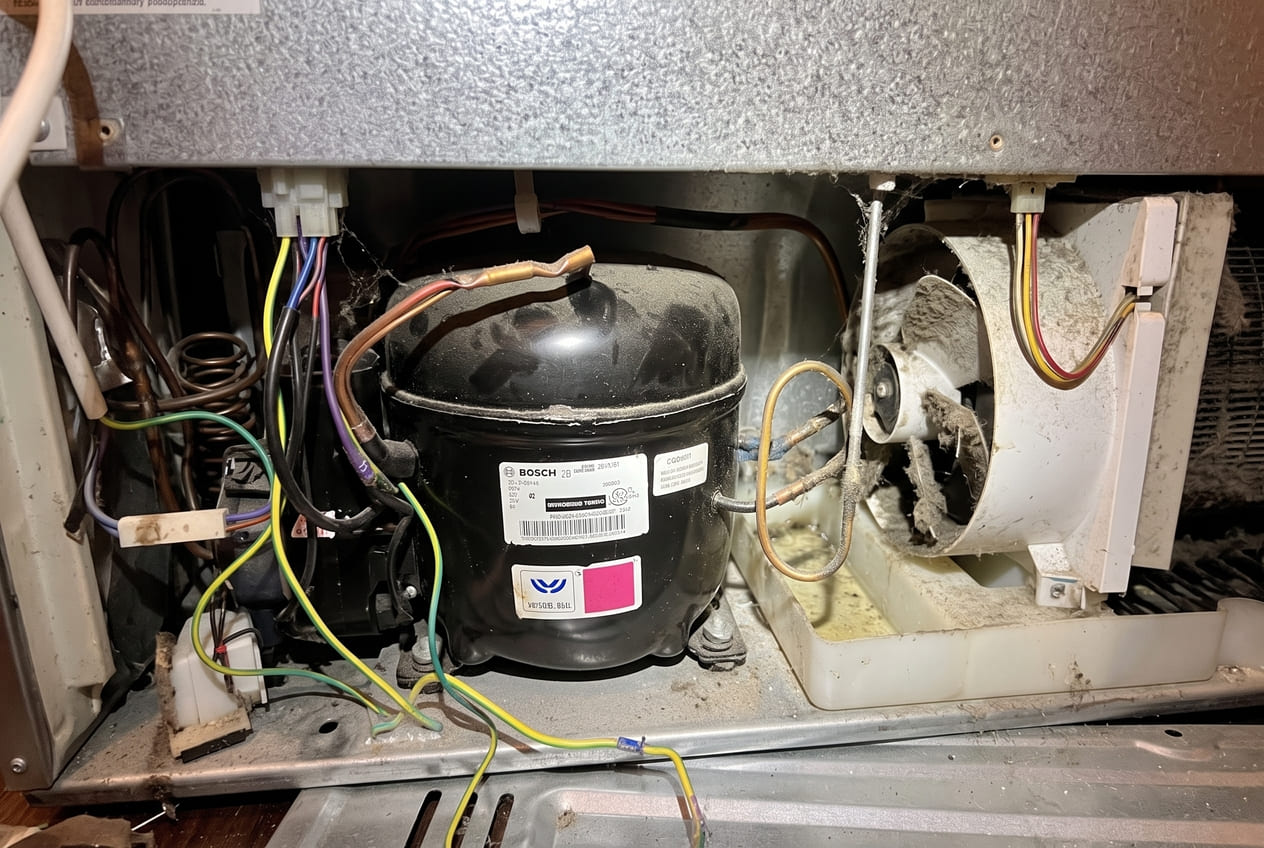
Compressor sits near fan, wiring, rear cover, tubing, inverter, and vibration points. Any of those can create sharp sound and throw it through cabinet. Fridge may make noise near compressor area while actual source is fan motor, loose harness, tubing contact, or airflow restriction.
- Compressor operating under load
- Inverter or start-control issue
- Condenser fan motor wear
- Fan blade brushing debris
- Loose rear access cover
- Copper tubing touching cabinet
- Wire harness vibration
- Compressor mount vibration
- Dust causing longer runtime
Smart move
Isolate sound before replacing parts. Technicians should listen during cycle, inspect fan movement, check airflow, evaluate compressor operation, examine tubing contact, and confirm cooling performance.
Checkpoint | Yes / No |
New | |
Getting louder | |
Paired with clicking | |
Paired with weak cooling | |
Coming from lower rear | |
Loud enough to hear from another room | |
Returning during each cooling cycle | |
Started after move, cleaning, outage, or repair |
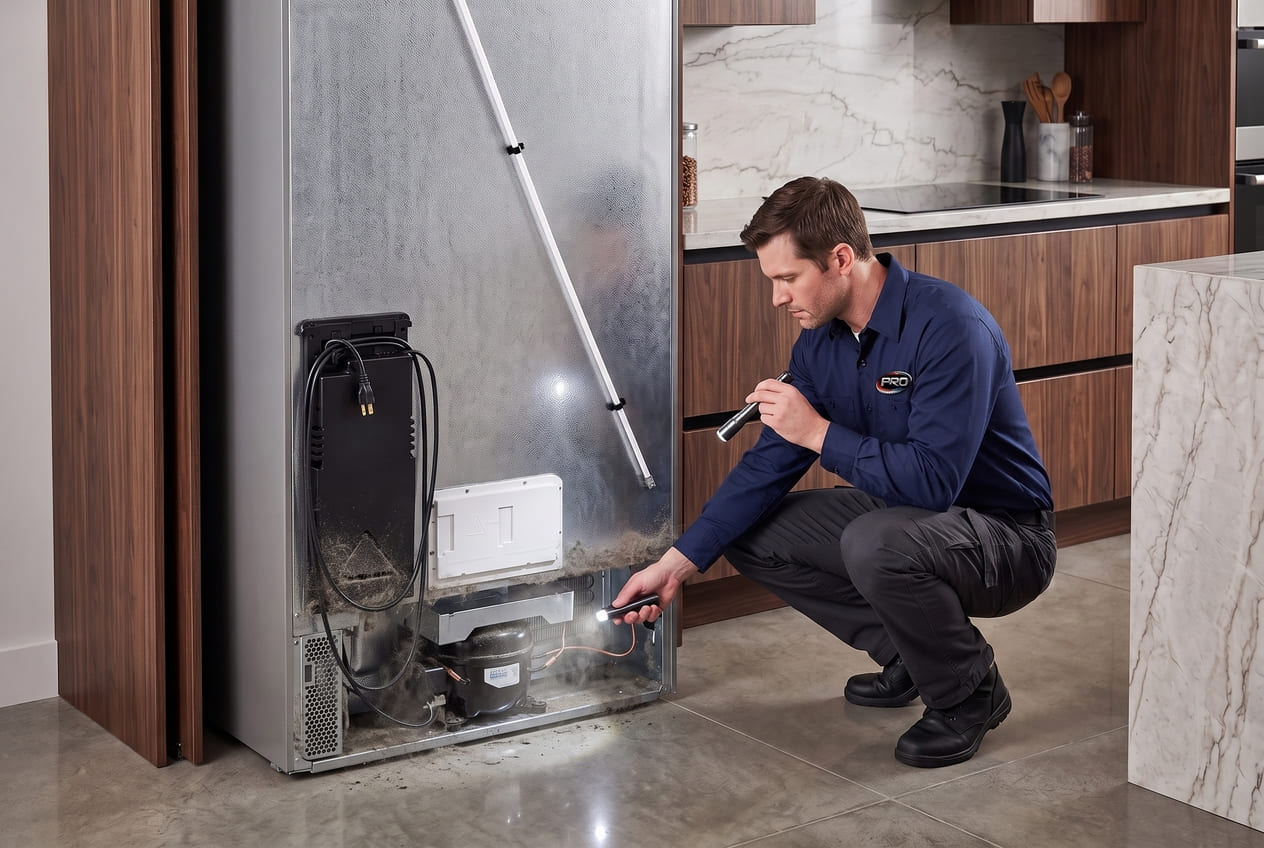
Condenser Fan Motor Cleaning: Small Maintenance, Big Noise Payoff
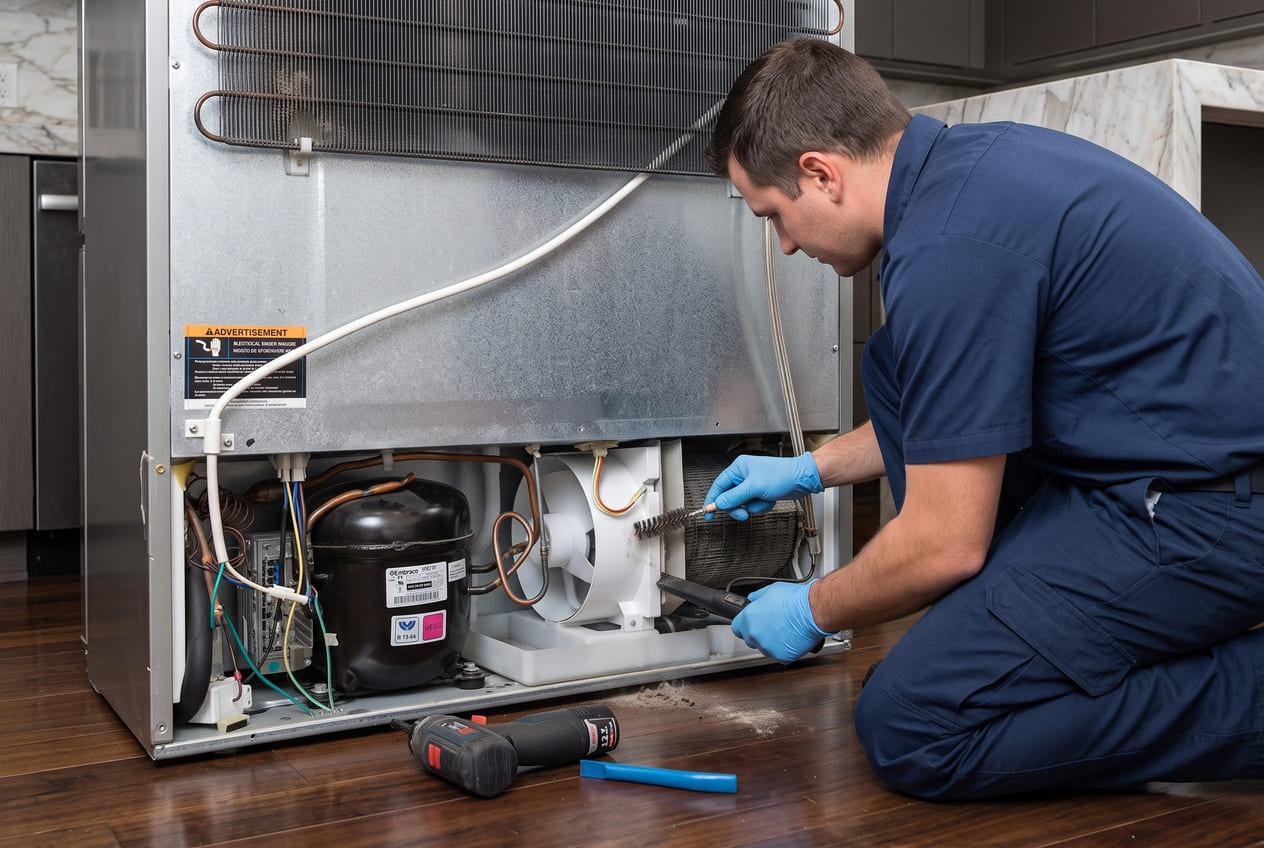
Condenser fan area collects dust, lint, pet hair, and kitchen debris. Once airflow gets crowded, fan can buzz, scrape, tick, or hum louder. Fridge may run longer too, because heat can’t move away smoothly.
That’s where condenser fan motor cleaning earns its place. It isn’t glamorous, but it can cut noise and help cooling system breathe.
- Buzzing from lower rear
- Louder hum after fridge runs for a while
- Ticking or scraping behind unit
- Noise changes with fan speed
- Warm air around back of fridge
- Pet hair or dust behind appliance
- Longer cooling cycles
- Cooling seems weaker than usual
Pro tip
Don’t spray water into machine compartment.
Don’t bend fan blades.
Don’t reach into rear area while fridge has power.
If basic exterior cleaning doesn’t quiet sound, technicians should inspect fan blades, motor, wiring, and nearby panels.
Clue | What it points toward |
Buzzing from lower back | Condenser fan, rear panel, tubing, compressor area |
Ticking near fan | Blade contact, debris, loose wire |
Rough hum | Motor wear or airflow restriction |
Noise changes speed | Fan motor or blade movement |
Noise stays after cleaning | Motor, vibration, or compressor-area issue |
Copper Wire Vibration: Tiny Movement, Loud Rattle
Some noises sound dramatic but come from tiny contact points. Copper wire vibration is one of those complaints customers use when they hear a thin buzz, metallic rattle, or tapping from the back of the fridge.
For the wider picture on this brand, see read our breakdown of Bosch 800 Series problems.
In service terms, sound may come from copper tubing, wire harness, rear cover, bracket, drip tray, toe grille, or another small part touching the cabinet while compressor cycles.
Why does it seem so loud? Refrigerator cabinet amplifies vibration like a speaker box.
- Copper line touching cabinet
- Wire harness resting against panel
- Rear access cover loose
- Drip tray shifted out of place
- Toe grille rattling
- Fridge touching wall trim
- Refrigerator isn’t balanced evenly on the floor
- Compressor mounts transferring vibration
- Loose screw, clip, bracket, or cover
Easy to miss, easy to amplify
This kind of noise can be cheaper to solve than fan or compressor repair. But don’t bend copper refrigerant lines yourself. Small kink or crack can turn harmless rattle into sealed-system problem.
Checkpoint | Yes / No |
Move items off fridge top | |
Shift bottles and glass containers inside | |
Check toe grille for looseness | |
Confirm fridge isn’t pressed into wall or cabinet trim | |
Listen whether rattle starts with compressor cycle | |
Record sound from back and bottom |
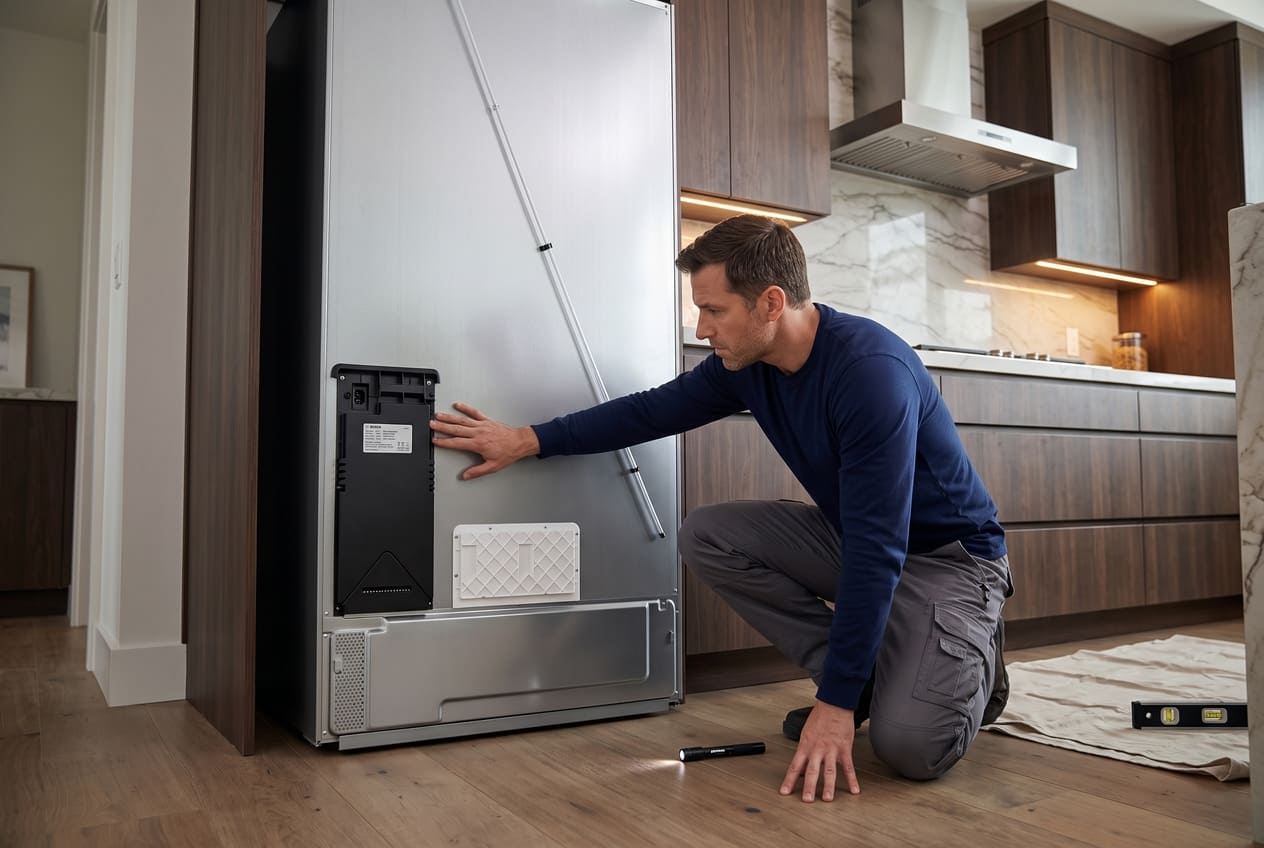
R600 Refrigerant Noise: Bubbling, Gurgling, Hissing
Many modern Bosch refrigerators use R600a refrigerant. Homeowners often search R600 refrigerant noise after hearing bubbling, gurgling, soft hissing, or pulsing.
Some flow sounds are normal. Refrigerant moves through narrow lines. During the cooling cycle, bubbles and pressure changes can create gurgles or light hiss. Quiet kitchens make those sounds easier to notice.
Still, context matters.
Usually fine Soft bubbling, light gurgling, brief hiss, normal temperatures, no odor, no damage. | Book service Sharp hiss, weak cooling, rising freezer temp, oily residue, unusual smell, or damaged tubing. | No DIY probing Don’t poke, cut, heat, bend, or test refrigerant tubing. Call trained technician. |
Simple rule: soft flow sound with normal cooling can be routine. Hissing plus poor cooling needs professional check.
Freezer Scraping or Grinding: Evaporator Fan May Be Talking
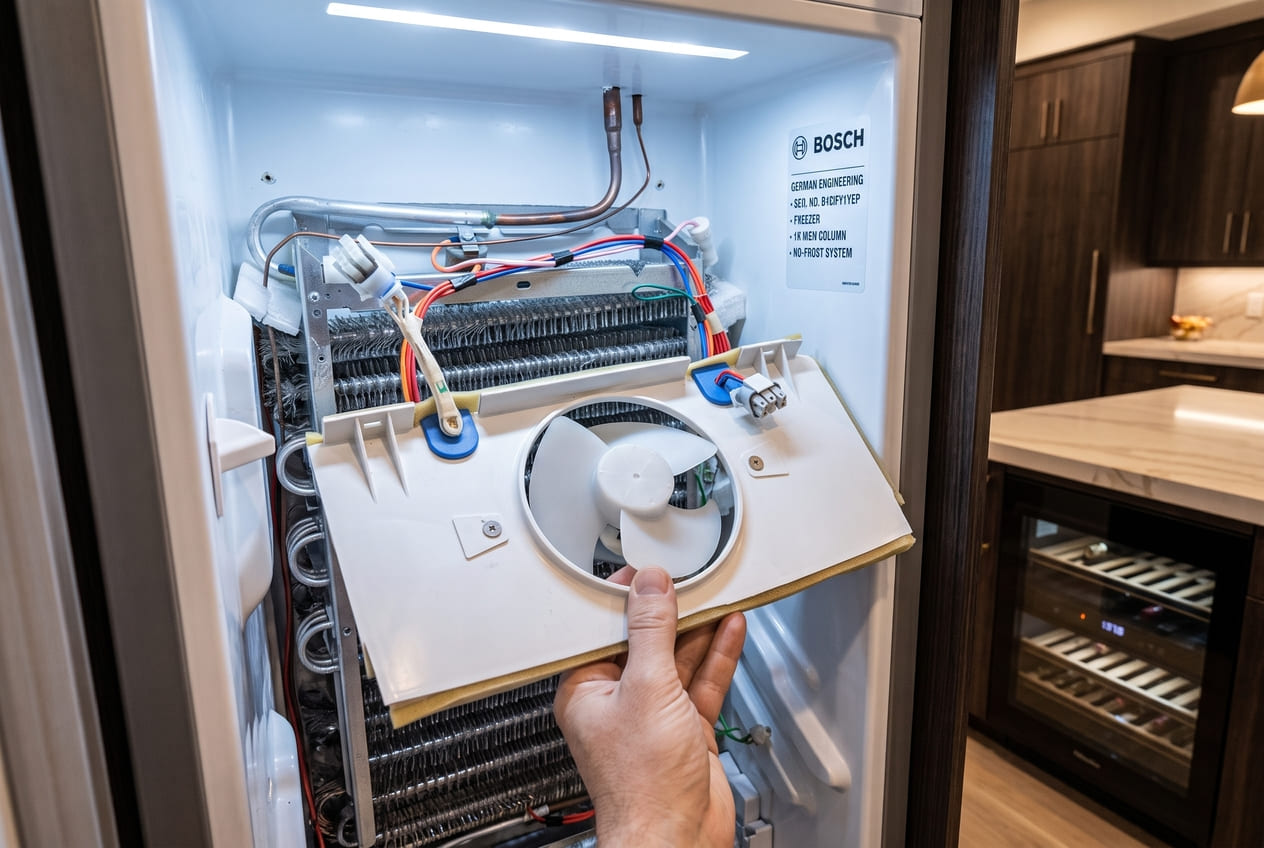
Noise from freezer wall often points toward evaporator fan area. Fan moves cold air through freezer and refrigerator compartments. If blade hits ice, frost, debris, or warped cover, sound can turn sharp fast.
- Scraping stops or changes when freezer door opens
- Noise comes from back freezer wall
- Frost buildup appears
- Airflow seems weak
- Freezer temperature swings
- Sound gets worse over time
- Clicking or fast ticking comes from fan area
Pro tip
Don’t chip ice with knife, screwdriver, or metal tool. One slip can damage the liner, cover, coil, or tubing. If ice returns after melting, fan isn’t whole story. Defrost issue, sensor problem, blocked drain, door seal, or airflow restriction may be involved.
Sound | Possible issue |
Fast ticking | Fan blade hitting ice or debris |
Scraping | Fan obstruction or warped cover |
Grinding | Fan motor wear |
Airflow roar | Blockage, frost, fan strain |
Noise stops with door open | Evaporator fan area likely involved |
Loud Noise from Back: Fan, Compressor, or Vibration?
Back-of-fridge noise creates confusion because fan, compressor, tubing, rear cover, and wiring sit close together. Sound bounces through cabinet and floor, so source can seem obvious while culprit sits two inches away.
Sound | Possible source |
Steady hum | Compressor or condenser fan |
Loud buzz | Fan motor, loose rear panel, vibration |
Metallic rattle | Tubing contact, drip tray, bracket, copper wire vibration |
Repeated clicks | Start component, inverter, compressor start issue |
Sharp whine | Compressor, inverter, fan motor, wire contact |
Soft gurgle | Refrigerant movement |
Hiss plus poor cooling | Sealed-system concern |
This is where repair experience matters. Replacing compressor because noise seems to come from lower rear can miss fan motor, dust, panel vibration, or wire contact. Correct diagnosis checks parts around sound, not just the loudest area.
Bosch 800/500 Series Noise: Model, Fit, and Kitchen Setup Matter
Bosch 800/500 Series refrigerators show up in many Atlanta kitchens. Noise behavior can change by installation, not only by model.
Tight cabinet opening can amplify normal compressor or fan sound. Uneven floor can shift vibration into grille or panels. Dust behind the unit can strain the fan. Rear clearance can affect airflow. Items on top can buzz. Bottles inside can rattle like loose hardware.
- Fridge sits too close to wall
- Cabinet trim touches side panel
- Toe grille isn’t secure
- Floor isn’t level
- Rear airflow is tight
- Dust collects behind unit
- Door alignment changed
- Ice maker activity echoes
- Shelves or bottles vibrate inside
60-second kitchen check
Use this as a quick self-check before calling. No tools, no panels, no risky troubleshooting.
Checkpoint | Yes / No |
Nothing on top vibrates | |
Bottles and glass containers aren’t rattling | |
Toe grille sits tight | |
Fridge isn’t pressed into wall trim | |
Rear area has some clearance | |
Noise isn’t from ice bin or shelves | |
Cooling still looks normal |
Which Bosch Fridge Noises Can Wait?
Usually normal Soft hum, short click, light gurgle, gentle airflow, brief water valve sound, occasional ice maker sound. | Watch closely Humming grows louder, buzz from back, new rattle after moving fridge, sound changes when door opens. | Call for service Grinding, strong scraping, persistent high-pitched compressor noise, loud buzzing, hissing plus weak cooling. |
Noise plus cooling trouble deserves quick service. That combo can turn small repair into a bigger one.
What Appliance Repair Master Checks During Bosch Noise Visit
Noise visits should do more than name a part. It should narrow the source, confirm the cause, and prevent unnecessary repair.
System area | What technician checks |
Model and series | Bosch model, Bosch 800/500 Series configuration, installation fit |
Noise location | Back, bottom, freezer, fresh-food section, top, compressor area |
Fan system | Condenser fan motor, evaporator fan motor, blade clearance, debris |
Airflow | Condenser dust, rear clearance, ventilation, frost or blockage |
Vibration points | Copper tubing, wire harness, rear panel, toe grille, drip tray, brackets |
Compressor area | Compressor operation, mount vibration, start or inverter behavior |
Cooling performance | Temperature behavior and sealed-system warning signs |
Clear path first
If the fix is simple, we’ll say so. If the fan motor needs work, we’ll explain. If the compressor area needs deeper testing, we’ll show the signals. Only transparent work and honesty is our interest.
Noise Tracker: Fill This Before You Call
Quick notes help technicians chase intermittent sounds faster.
Question | Your answer |
Where is sound the loudest: back, bottom, freezer, fresh-food section, or top? | |
Sound type: humming, buzzing, rattling, clicking, grinding, hissing, high-pitched? | |
Does sound change when door opens? | |
Is fridge cooling normally? | |
Did noise start after move, cleaning, outage, or repair? | |
Constant sound or cycle sound? | |
Bosch 800/500 Series or another Bosch model? | |
Do you have a short phone video of the noise? |
Why Atlanta Homeowners Call Appliance Repair Master
A noisy fridge gets old fast. More importantly, it leaves you wondering what’s next: fan repair, compressor issue, simple vibration, or normal operating sound.
Appliance Repair Master gives Atlanta homeowners practical answers without pressure.
- Bosch 800/500 Series refrigerator repair
- Bosch loud noise diagnosis
- Humming and buzzing checks
- Condenser fan motor cleaning
- Fan motor inspection
- High-pitched compressor noise checks
- Copper wire vibration and tubing contact
- R600 refrigerant noise evaluation
- Freezer scraping and evaporator fan diagnosis
- Rear panel, drip tray, and grille vibration
- Sealed-system inspection when needed
- Same-day service across Atlanta and Georgia
- 15+ years experience

Before We Arrive: Make Noise Easier to Catch
Refrigerator noises love bad timing. They vanish during service visits and return after the technician leaves. Beat that with quick prep:
- Record sound on phone.
- Note time of day.
- Check whether door opening changes noise.
- Move rattling bottles or loose containers.
- Clear items from top of fridge.
- Notice whether cooling changed.
- Mention recent move, cleaning, outage, or repair.
- Find Bosch model number if easy.
Pro tip
Don’t remove panels, bend tubing, cut wires, or poke around compressor area. Recording plus a few details is enough.

Bosch Making Noise Repair in Atlanta, GA
If your Bosch refrigerator is making loud noise, humming more than usual, buzzing from back, rattling near bottom, scraping in freezer, or producing high-pitched sound, call Appliance Repair Master.
We service Bosch refrigerators across Atlanta and Georgia, including Bosch 800/500 Series, French door models, bottom freezer units, freestanding refrigerators, and built-in refrigerators.
Strange noise doesn’t always mean big repairs. Sometimes it’s:
- cleaning,
- fan wear,
- vibration,
- or compressor area needs serious testing.
The best move is simple: find source before sound turns into bigger problem.
The Bottom Line
Bosch fridge noise shouldn’t send you straight into panic mode as well as it shouldn’t be ignored when sound changes.
Soft hum, quick click, or light gurgle can be normal. Loud buzzing, rough rattling, freezer scraping, persistent high-pitched compressor noise, strange R600 refrigerant noise, or any sound paired with weak cooling deserves a closer look.
Good diagnosis can turn confusing noise into clear repair plan. Maybe fridge needs condenser fan motor cleaning. Maybe loose panel or copper wire vibration is amplifying sound. Maybe fan motor is wearing out. Maybe compressor area needs testing. You shouldn’t have to guess.
Call Appliance Repair Master for Bosch refrigerator repair in Atlanta and across Georgia. We’ll trace sound, explain issue in plain English, and help you fix the right problem before it gets expensive.
Related guides
FAQ
1. Why is my Bosch refrigerator humming?
Soft humming can be normal during cooling cycles. Louder humming, longer runtime, vibration, or humming with weak cooling points toward airflow, condenser fan, compressor area, or loose-panel issue.
2. Is high-pitched compressor noise bad?
It can be, but it doesn’t automatically mean compressor failure. High-pitched compressor noise may come from compressor, inverter, fan motor, loose tubing, wire vibration, or rear panel. If the sound is new, loud, or paired with poor cooling, book service.
3. Can condenser fan motor cleaning reduce noise?
Yes, condenser fan motor cleaning can reduce buzzing, scraping, and humming if dust or debris affects fan area. If noise continues after cleaning, fan motor, compressor area, or vibration point may need repair.
4. What’s R600 refrigerant noise?
R600 refrigerant noise usually describes bubbling, gurgling, soft hissing, or pulsing from refrigerant movement. Some flow sound can be normal. Sharp hissing, weak cooling, tubing damage, oily residue, or unusual smell needs professional service.
5. Why does my Bosch fridge rattle?
Rattle can come from loose rear panel, drip tray, toe grille, uneven floor, items inside fridge, tubing contact, bracket movement, or copper wire vibration. Technician can trace vibration point and secure correct part.
6. Should I unplug Bosch refrigerator if it’s making noise?
Unplug it if you notice burning smell, smoke, severe grinding, electrical odor, or breaker tripping and it’s safe to do so. For ordinary humming or rattling, keep fridge available for diagnosis unless safety issue appears.
7. Do Bosch 800/500 Series refrigerators make normal sounds?
Yes. Bosch 800/500 Series refrigerators can hum, click, bubble, gurgle, and move air during normal operation. New loud noise, metallic sound, persistent high pitch, or noise with weak cooling should be checked.
8.Who repairs Bosch refrigerator noise issues in Atlanta?
Appliance Repair Master repairs Bosch refrigerator noise issues in Atlanta and across Georgia. Call (770) 766-3254 for same-day service.