
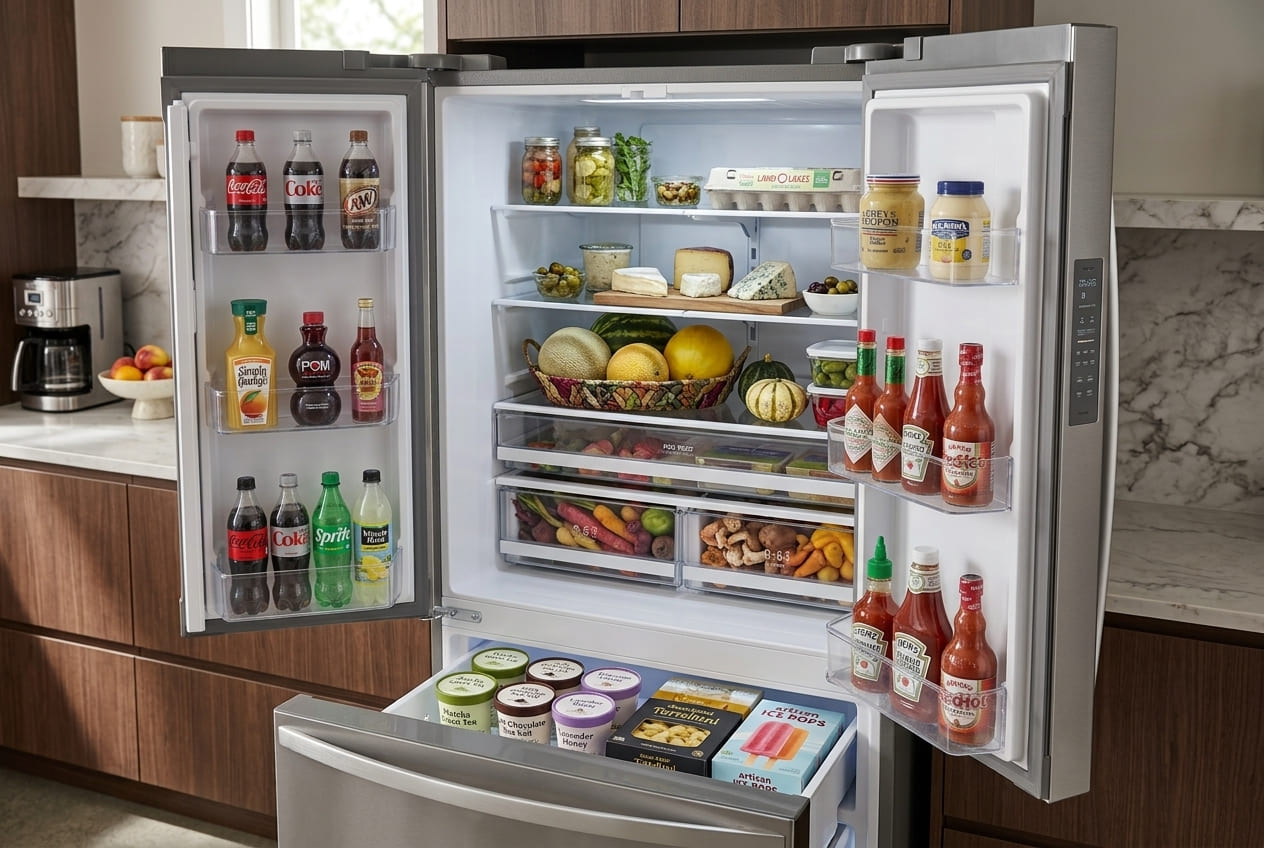
You open the refrigerator door, reach for something cold — and feel warm air. The shelves are at room temperature, the drinks aren’t chilled, and that familiar hum of a working appliance suddenly sounds suspicious. If your Kenmore fridge is warm, you’re not imagining things, and you’re definitely not alone.
A Kenmore not cooling situation is one of the most common service calls we handle at Appliance Repair Master in Atlanta. It’s not always a catastrophic failure — sometimes the fix is straightforward. But sometimes it points to a deeper mechanical issue that won’t resolve on its own. Either way, a fridge warm enough to spoil food is a problem that needs attention today, not next week.
The causes range widely. On one end of the spectrum: dirty condenser coils or a blocked vent — things a homeowner can address with minimal effort. On the other end: a failing compressor or a refrigerant leak — situations that require professional diagnosis and proper equipment.
This article walks you through the most likely culprits behind a Kenmore refrigerator that’s not cold, explains what’s actually happening inside the appliance, and helps you figure out whether this is a DIY situation or time to call in a technician.
We serve Atlanta and the surrounding GA areas, and we offer same-day or next-day service for refrigerator repairs — because when your fridge stops working, waiting isn’t really an option.
Why Is Your Kenmore Refrigerator Not Cold? Common Causes Explained
When a Kenmore refrigerator stops cooling properly, the root cause usually falls into one of a few well-known categories. Based on our service history, these three come up most often.
Dirty Condenser Coils
The condenser coils are responsible for releasing heat from the refrigerant into the surrounding air. Think of them as the exhaust system of your refrigerator — if they’re clogged, heat can’t escape, and the whole cooling cycle breaks down.
On most Kenmore models, the coils are located either along the back of the unit or underneath it behind a kick plate. Over time, dust, pet hair, and debris accumulate on the coil surface. When that layer gets thick enough, the refrigerator has to work harder to maintain temperature — and eventually, it can’t keep up.
Condenser coils dirty enough to cause cooling problems are more common in homes with pets or in kitchens that don’t get swept regularly. Cleaning them every 6–12 months with a coil brush or vacuum attachment is one of the simplest ways to prevent this issue.
Condenser Fan Motor Failure
The condenser fan pulls air across the coils to help dissipate heat. If the Kenmore condenser fan motor is not working, the compressor overheats and the refrigerator loses its ability to cool — even though the unit appears to be running normally.
A telltale sign: the fridge is humming, the interior light works, but the temperature keeps climbing. If you pull the unit away from the wall and the fan blade isn’t spinning (or spins only when nudged), the motor has likely failed. This is a part replacement job — not a repair.
Faulty Start Relay
The start relay is a small component that sits on the side of the compressor and gives it the electrical “kick” it needs to start each cooling cycle. When it fails, the compressor either won’t start at all or attempts to start and immediately shuts off.
Kenmore start relay replacement is one of the more accessible DIY repairs — but only if you’ve confirmed that’s actually the problem. The classic test: remove the relay from the compressor, shake it near your ear. If you hear a rattle, the relay is almost certainly defective. A functioning relay should be silent.
Symptoms to watch for: a clicking sound every few minutes (the compressor trying and failing to start), followed by silence — and a refrigerator that’s getting warmer by the hour.
Defrost System Failures and Ice Buildup in Kenmore Fridges
Here’s a scenario that surprises a lot of people: the freezer looks fine, maybe even has frost on the walls — but the refrigerator section is warm. That’s often a defrost system problem, not a compressor problem.
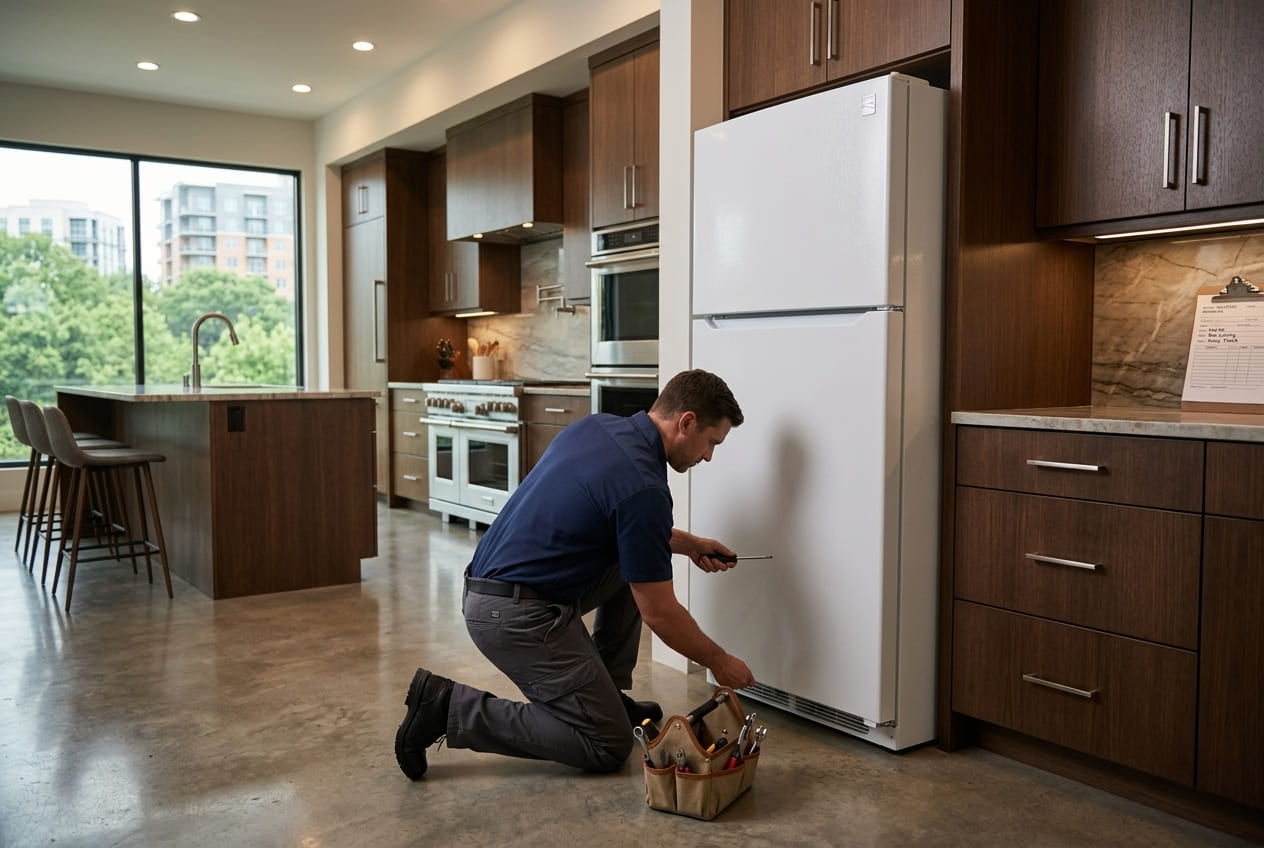
How the Defrost Cycle Works
Modern Kenmore refrigerators use an automatic defrost system to prevent ice from building up on the evaporator coils. The cycle typically runs every 8–12 hours and involves three main components:
- Defrost timer or control board — initiates the cycle
- Defrost heater — melts accumulated frost off the evaporator
- Defrost thermostat (bi-metal) — cuts off the heater once a safe temperature is reached
If any one of these components fails, frost accumulates unchecked — and that’s where the real trouble starts.
Evaporator Coils Iced Over — What It Means
The evaporator coils sit behind a panel in the freezer compartment. Their job is to absorb heat from inside the refrigerator. When the defrost system fails, ice builds up on these coils until they’re completely encased — and airflow stops.
When the evaporator is iced over, the fan behind it is still running, but it’s essentially blowing air into a wall of ice. Cold air can’t circulate into the fresh food section, so the fridge feels warm even though the freezer appears to be working.
Visual clues: heavy frost or a solid sheet of ice on the back wall inside the freezer, a faint humming sound, and a refrigerator section that’s noticeably warmer than it should be.
A Kenmore thermistor problem can contribute to this directly. The thermistor monitors temperature and sends that data to the control board. If it’s reading incorrectly, the board may never trigger the defrost cycle — or trigger it at the wrong time — leading to runaway ice buildup.
When to Call a Professional
Manual defrosting (unplugging the unit for 24–48 hours) will temporarily restore cooling by melting the ice. But it doesn’t fix anything. Within days or weeks, the ice will return — because the underlying component failure is still there.
Diagnosing a Kenmore defrost system failure properly requires a multimeter and familiarity with the unit’s wiring diagram. Testing the heater, thermostat, and thermistor individually takes time and the right approach. Guessing and replacing parts one by one gets expensive fast.
Temperature swings and inconsistent cooling can also point to thermistor issues — learn more in our guide to [Kenmore Temperature Problems].
The LG Linear Compressor Defect: What Kenmore Owners Need to Know
This section is specifically relevant to Kenmore refrigerators manufactured between roughly 2014 and 2020. If your unit falls in that range and it’s stopped cooling, this is worth reading carefully.
Why Kenmore Fridges Use LG Compressors
Kenmore is a Sears brand — it doesn’t manufacture appliances itself. For many years, a significant portion of Kenmore refrigerators were built by LG, including the internal components. The LG linear compressor was marketed as a technological step forward: quieter operation, better energy efficiency, fewer moving parts compared to traditional reciprocating compressors.
On paper, it was a compelling design. In practice, a pattern of premature failures emerged across a wide range of models.
The Known Defect
The core issue involves internal wear on the compressor’s moving components — specifically, the pistons and bearings — that occurs far earlier than expected. In a well-functioning compressor, these parts should last 10–15 years or more. In affected units, failures began appearing at 3–6 years of use.
The consequences: the compressor stops maintaining pressure, the refrigerant circuit loses efficiency, and in some cases, corrosion in the copper tubing leads to a refrigerant leak. Once refrigerant escapes the sealed system, the refrigerator simply cannot cool — no matter what else is functioning correctly.
Models most commonly affected were produced between 2014 and 2020, and the issue has been the subject of class action litigation in the United States.
Signs Your Compressor Is Failing
The symptoms don’t always appear all at once. Watch for:
- The refrigerator cools inconsistently — fine one day, warm the next
- The compressor starts, runs for a few seconds, then shuts off
- Clicking or buzzing sounds from the back of the unit, especially near the bottom
- The back panel of the refrigerator feels unusually hot to the touch
- The freezer maintains some temperature, but the fresh food section is noticeably warmer
If you’re seeing two or more of these signs together, the compressor is the likely culprit.
Refrigerant Leak Repair Requires EPA Certification
Working with refrigerant isn’t something that can be done casually or without proper credentials. Under Section 608 of the Clean Air Act, handling refrigerants is regulated at the federal level. Only technicians who hold EPA certification are legally permitted to recover, recycle, or recharge refrigerant in household appliances.
This matters because some refrigerants — including those used in older Kenmore units — are controlled substances with environmental implications. Any repair involving the sealed refrigerant system must be handled by someone with the appropriate EPA credentials.
For a deeper dive into compressor issues, including class action lawsuits and what your options are, read our full article on [Kenmore Compressor Failure].
Step-by-Step: What to Check Before Calling for Repair
Before scheduling a service call, it’s worth spending 10–15 minutes going through a basic checklist. In our experience, a surprising number of “not cooling” calls turn out to have a simple explanation.
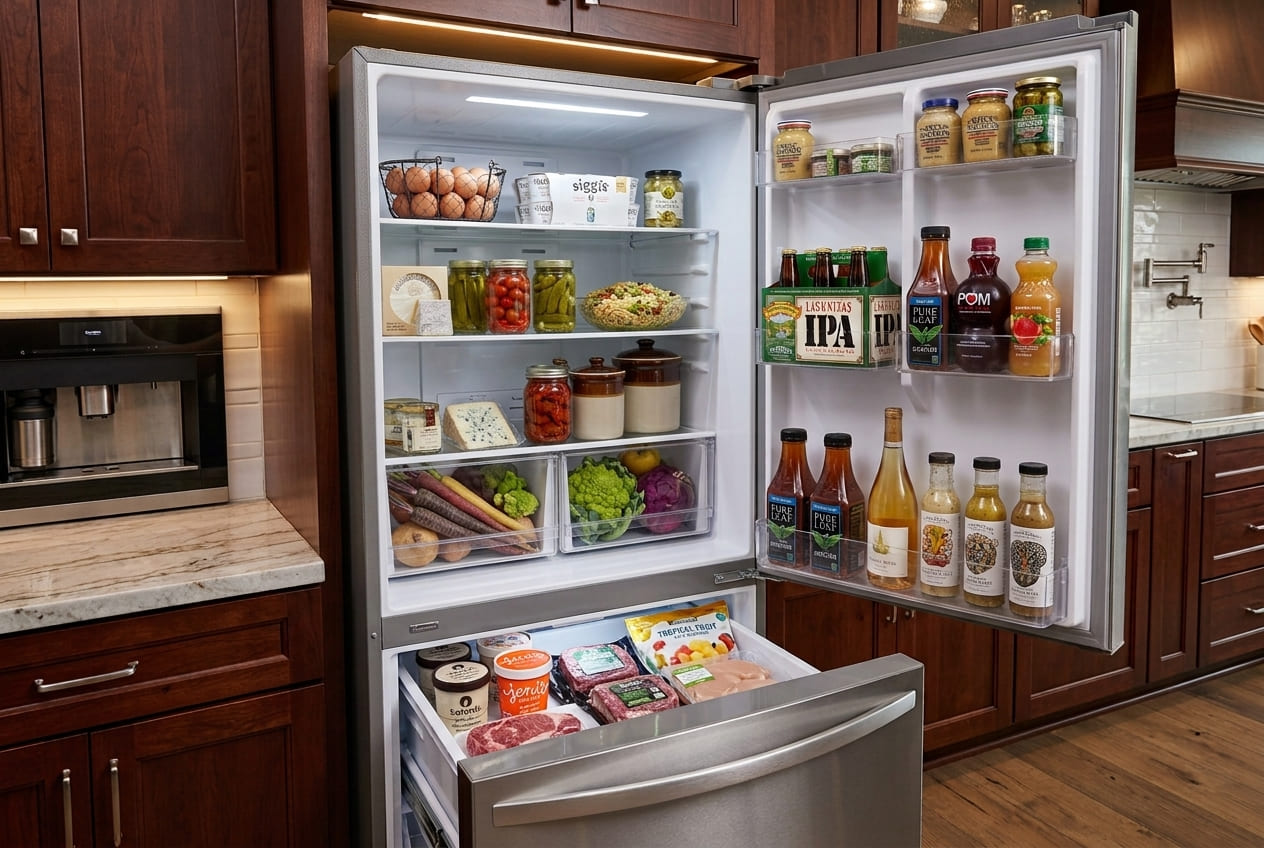
Work through these in order:
- Check the temperature settings. It sounds obvious, but control panels get bumped. Make sure the refrigerator is set between 35–38°F and the freezer between 0–5°F. Some Kenmore models have a “demo mode” that disables cooling entirely — check your manual if the display looks unusual.
- Look for blocked vents inside the cabinet. Air needs to circulate freely between the freezer and fresh food sections. If a bag of frozen vegetables is pressed against the rear vent, it can restrict airflow enough to cause Kenmore cooling problems in the lower compartment.
- Inspect the door gasket. Run your hand along the seal with the door closed. If you feel air escaping, or if the gasket is cracked or pulling away from the frame, warm air is getting in constantly — and the refrigerator can’t compensate.
- Check the condenser coils. Pull the unit away from the wall or remove the kick plate at the bottom. If the coils are visibly coated in dust or pet hair, that’s a likely contributor.
- Listen to the compressor. Stand near the back of the unit. You should hear a steady, low hum when the compressor is running. Silence, clicking, or short bursts followed by silence all suggest a compressor issue.
- Check the freezer’s back wall. Open the freezer and look at the rear panel. A thin layer of frost is normal. A thick sheet of ice — or a completely frozen-over surface — points to a defrost system failure.
If you’ve gone through all six steps and the refrigerator is still not cold, the problem is internal and requires proper diagnostic equipment to identify.
Conclusion
A Kenmore refrigerator that’s not maintaining temperature is rarely a mystery — it’s almost always one of a handful of known failure points. Dirty condenser coils, a failed fan motor, a defective start relay, a broken defrost component, or a compressor that’s reached the end of its service life. Each has its own signature, and each requires a different approach.
The key is not to wait. A Kenmore cooling problem that starts as a minor inconvenience can escalate quickly — spoiled food, a compressor running under stress, or a refrigerant leak that makes the repair significantly more complex. Early diagnosis almost always means a simpler, less costly fix.
If the basic checks in this article didn’t point to an obvious cause, or if you’ve identified a likely issue but aren’t comfortable tackling it yourself, that’s the right moment to call in a professional. A refrigerator that’s not cold isn’t just an appliance problem — it’s a household disruption that deserves a real solution, not a temporary workaround.
Our team at Appliance Repair Master is based in Atlanta and works across the GA area. We’ve seen every variation of this problem, and we know how to get to the root of it efficiently.
FAQ
1. How long does a typical Kenmore cooling repair take?
Most repairs are completed in a single visit. Straightforward issues — a faulty start relay, a failed condenser fan motor, or dirty coils — can often be resolved the same day. More involved repairs, such as defrost system component replacement, may require a follow-up visit if a specific part needs to be ordered.
2. Can cleaning condenser coils prevent my fridge from losing cooling?
Yes, and it’s one of the most underrated maintenance tasks for any refrigerator. Coils clogged with dust and pet hair force the compressor to work harder and run hotter. Cleaning them every 6–12 months takes about 20 minutes and can meaningfully extend the life of the appliance.
3. Is it worth repairing an older Kenmore refrigerator, or should I replace it?
It depends on the nature of the failure and the age of the unit. A defrost system repair or fan motor replacement on a 7–10 year old refrigerator is usually worth doing. A compressor replacement on a unit that’s already 12+ years old is a harder call — the repair cost may approach the value of the appliance itself.
4. What should I do with my food if the refrigerator stops cooling suddenly?
Move perishables to a cooler with ice as quickly as possible. The FDA recommends discarding refrigerated food that has been above 40°F for more than two hours. Frozen food that still contains ice crystals is generally safe to keep or refreeze. When in doubt, err on the side of caution.
5. How often should the defrost system be inspected on a Kenmore fridge?
There’s no fixed maintenance schedule for defrost components — they’re designed to run automatically without intervention. That said, if you notice frost accumulating on the freezer’s back wall more than usual, or if the refrigerator section starts running warmer, those are early signs worth investigating before a full failure occurs.