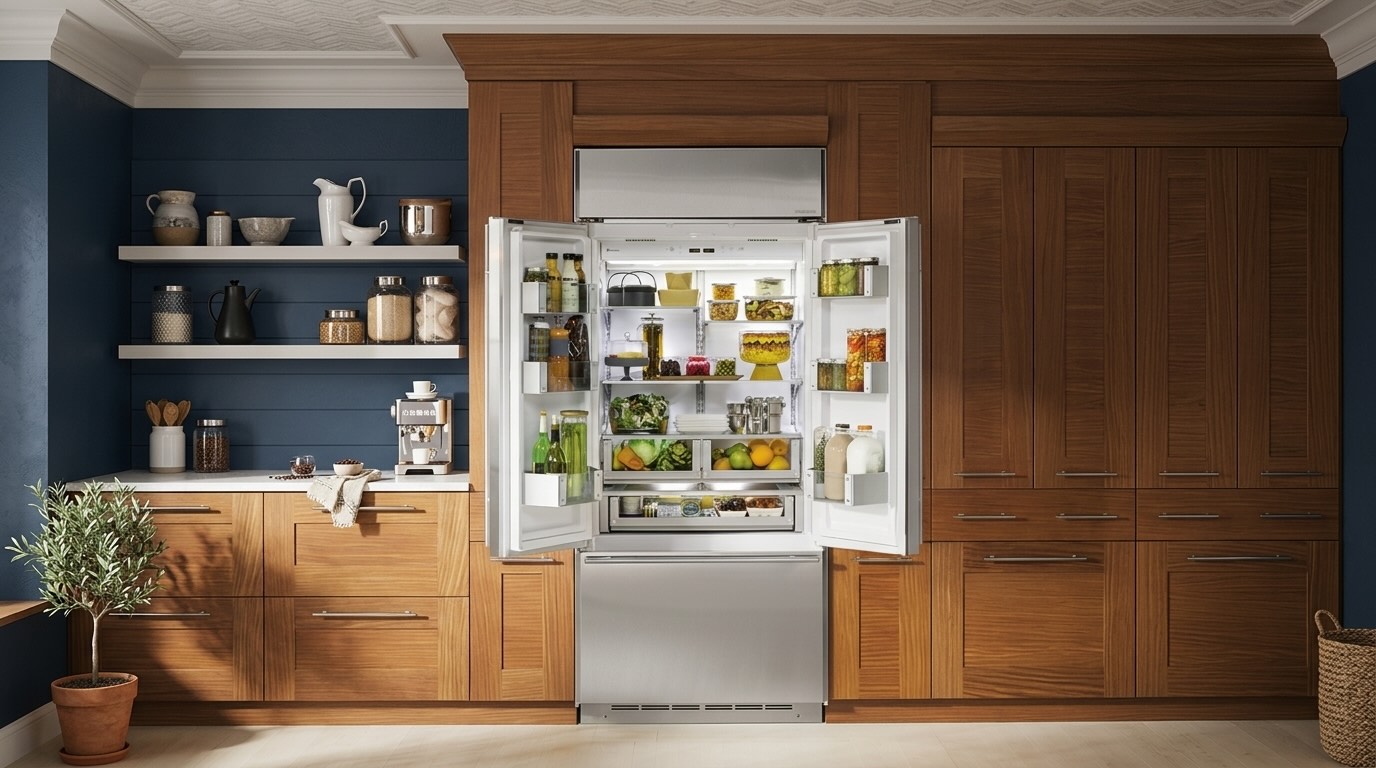
GE Monogram refrigerators are engineered to be the silent backbone of high-end kitchens — flush integration, premium insulation, and carefully balanced components mean most owners never hear more than a faint background hum. That’s why any new or persistent sound stands out immediately: it’s not just background noise; it’s the appliance telling you something inside has shifted, worn, or become obstructed.
Same symptom turns up on other brands too – start with our full write-up on LG making noise.
In Atlanta, where our Appliance Repair Master team works in luxury homes daily, we hear this concern often. Homeowners are particularly attuned to even subtle changes because the whole point of Monogram is discretion. A low hum that suddenly grows louder, a sharp rattle that wasn’t there last month, or a rhythmic buzz that interrupts conversation — these aren’t quirks to live with. They’re early warning signs.
The good news is that GE Monogram making loud noise is almost always traceable to one of a handful of components, and most can be addressed before they escalate into bigger failures. In the sections below, we’ll help you match the sound to its source, understand what’s normal versus what’s urgent, and decide whether a quick home check is enough or if it’s time to call in a specialist.
The Monogram Acoustic Benchmark: Designed for Discretion
GE Monogram refrigerators are built with silence as a core principle — especially important in open-concept kitchens or homes where every decibel counts. The engineering prioritizes vibration isolation, sound-dampening insulation around the compressor and fans, precision-balanced motors, and tightly controlled airflow to keep operating noise to a minimum.
In normal conditions, you should hear only subtle, predictable sounds:
- A steady, low hum from the compressor when it’s running (usually 30 – 40 dB, quieter than a whisper).
- Occasional soft clicks from relays or the defrost timer switching cycles.
- A gentle whir or whoosh from the evaporator fan motor or condenser fan motor during cooling or defrost.
- Brief rattling or clinking when the ice maker drops cubes or fills with water.
These sounds stay consistent, brief, and unobtrusive. What sets Monogram apart from standard refrigerators is how rarely owners notice them — many tell us they “forget the fridge is even running” until something changes. When a new noise emerges — whether it’s louder, sharper, or constant — it almost always means a component is working harder, obstructed, or wearing out. In our Atlanta service calls, that shift is the single most common reason people reach out: the quiet luxury they paid for has started speaking up.
The Anatomy of a Noise: Why Your Monogram is Speaking Up
In our Atlanta service calls, the noises that prompt Monogram owners to reach out almost always trace back to one of a few hardworking components under stress. Here’s what we see most often and why these parts start making themselves heard:

- Evaporator fan ice buildup — Frost or ice forms on the blades inside the freezer compartment, causing scraping, thumping, or grinding as the evaporator fan motor tries to spin through the obstruction.
- Condenser fan motor worn— The fan at the back or bottom pulls air over the coils. Worn bearings or a failing motor produce a high-pitched whine, rattling, or persistent low hum that grows louder over time.
- Water inlet valve buzzing— Every time the ice maker or dispenser calls for water, the solenoid valve opens and can buzz or hum loudly if the coil is aging or pressure is irregular.
- Compressor loud operation— The heart of the system. When mounts weaken, internal parts wear, or it’s overworking due to poor airflow, you get a deeper growl, knocking at startup/stop, or heavy vibration through the floor.
- Ice maker motor obstruction— Jammed ice, a stuck arm, or debris in the mechanism leads to grinding, clicking, or knocking during harvest or fill cycles — often requiring ice maker repair.
- Condenser coils cleaningneeded — Dust buildup forces both fans and the compressor to work harder and louder to maintain temperatures.
- Thermistor sensor issues — Faulty temperature readings cause erratic on/off cycling, leading to more frequent compressor starts and extra noise.
- Damper control stuck— The air damper between fridge and freezer sections can stick or fail to move smoothly, producing clicking, buzzing, or whooshing sounds from restricted airflow.
- Defrost system failure — Incomplete or failed defrost cycles allow heavy ice buildup, which then strains the evaporator fan motor and creates secondary scraping or rumbling.
These aren’t random failures — they’re usually the result of normal wear, dust accumulation, minor airflow restrictions, or age in a high-performance built-in. Spotting the pattern early lets us address the root cause before it turns into a bigger (and louder) problem.
Noise Decoder Table: Match the Sound to Its Source
The fastest way to narrow down what’s happening is to match the noise you’re hearing to its most likely origin. Below is a quick-reference table based on patterns we see constantly in Monogram built-ins (including ZIS420NM, ZISS420NN, and similar models).
Type of Noise & Location | Most Likely Culprit | Urgency Level |
Grinding/scraping/thumping from freezer compartment | Evaporator fan ice buildup or failing evaporator fan motor | High |
High-pitched whine or persistent hum from back/bottom | Condenser fan motor worn or dust forcing harder operation (needs condenser coils cleaning) | Medium-High |
Loud buzzing/humming for 5–10 seconds when ice/water is used | Water inlet valve buzzing | Medium |
Deep growl, knocking, or heavy vibration through floor/cabinet | Compressor loud operation (worn mounts or overworking) | High |
Rattling/knocking/grinding only during ice production | Ice maker motor obstruction | Medium |
Rapid clicking or whooshing from middle/upper interior | Damper control stuck failing to adjust airflow smoothly | Medium |
Irregular fan noise + frost buildup inside freezer | Defrost system failure leading to ice interference | High |
Erratic on/off cycling with extra compressor starts | Faulty thermistor sensor causing inaccurate readings | Medium-High |
Listen carefully: note when the sound happens (during cooling, defrost, ice making, door open), how long it lasts, and whether cooling is still normal. Those details help us zero in even faster when you call.
Normal Operation vs. Cry for Help: Knowing the Difference
GE Monogram refrigerators are engineered so well that many owners go years without consciously noticing any sound beyond the occasional soft cycle. Here’s a clear way to separate what’s expected from what deserves attention:
What’s usually normal (no cause for concern)
- Consistent, low-level compressor hum (30–40 dB) when the unit is actively cooling — steady and even, like distant traffic.
- Brief, soft whirring from the evaporator fan motor or condenser fan motor during regular operation or defrost.
- Short clicks or snaps from relays, the defrost timer, or the ice maker dropping cubes — predictable and infrequent.
- Gentle gurgling or hissing from refrigerant flow — quiet and momentary.
These sounds stay predictable, short-lived, and never demand your focus. If they’ve been the same since day one, they’re just the appliance doing its job.
What’s definitely not normal (time to investigate)
- Any noise that suddenly appears or noticeably increases in volume/intensity.
- Persistent or rhythmic sounds that continue for minutes at a time (e.g., constant whining, buzzing, or grinding).
- Metallic scraping, knocking, or rattling — especially if it vibrates cabinets or the floor.
- Irregular, erratic cycling (rapid on/off with loud compressor starts) or unusual smells/vibration accompanying the sound.
Ignoring these warning signs can lead to bigger problems:
- a strained condenser fan motor worn may overheat and fail,
- evaporator fan ice buildup can cause poor cooling and food spoilage,
- compressor loud operation often signals mounting wear that accelerates breakdown,
- unchecked defrost system failure leads to frost overload and eventual component damage.
In our experience, owners who act on the first change in sound usually avoid costly repairs and keep their Monogram running quietly for years longer.
Models in Our Care: From Established to Next-Gen
In Atlanta luxury homes, certain Monogram configurations tend to generate more noise-related calls than others — usually because of their size, component layout, or how heavily they’re used.
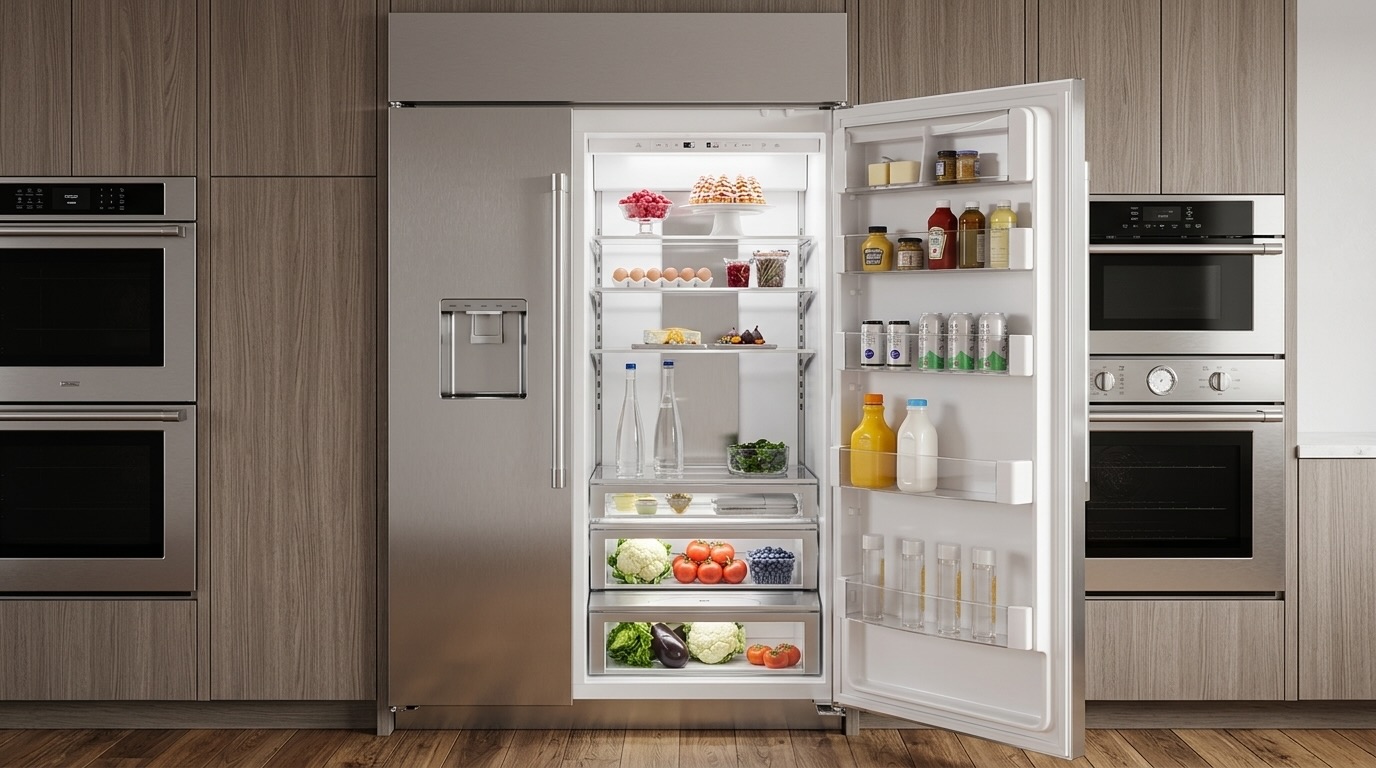
- Side-by-side built-ins like ZIS420NM and ZISS420NN — These larger units have bigger motor assemblies, plus active ice makers, so evaporator fan ice buildup, condenser fan motor worn, and ice maker motor obstruction show up frequently as they age.
- Undercounter models such as ZWE23ESH — Compact space amplifies even normal fan or compressor sounds, and restricted airflow can make condenser coils cleaning needs more noticeable sooner.
- Modern column and French-door lines (e.g., ZIRP360NHBRH, ZISS480DNSS, ZIP360NH) — They share the same core components (fans, valves, defrost systems) and follow similar noise patterns as older siblings when dust accumulates or parts wear.
No matter the model year, the repair approach stays consistent: we stock evaporator/condenser fan motor worn replacements, water inlet valve kits, and the diagnostic tools to read live data from the thermistor sensor or test the damper control stuck. That means faster, more accurate fixes without risking custom panel damage or cabinet scratches.
Your First Response: Safe and Simple DIY Checks
Many Monogram noise issues start small and can be quieted with basic home steps before they become serious. Here’s the safe sequence our technicians recommend trying first — no special tools needed beyond a vacuum, level, and flashlight:
Clean the condenser coils
Unplug the unit (or flip the breaker if hardwired). Pull the fridge out carefully (protect floors and cabinets). Vacuum dust from the condenser coils (rear or bottom grille) using a brush attachment. Built-up dust makes fans and compressor work harder and louder — regular condenser coils cleaning resolves a surprising number of hums and whines.
Verify leveling
Place a bubble level on a flat shelf inside (side-to-side and front-to-back). Adjust front legs if needed (turn clockwise to raise). Uneven stance causes vibration, rattling panels, or uneven fan operation that amplifies noise.
Inspect the ice maker area
Open the freezer and look at the ice maker tray/bin. Remove any jammed cubes, loose ice chunks, or debris. Temporarily turn the ice maker off (switch or arm up) for 24 hours — if the noise stops, the mechanism needs ice maker repair.
Manual defrost test (if freezer noise suspected)
If you hear scraping or thumping from inside the freezer, unplug the unit for 4–8 hours (or overnight) to allow natural melting of any evaporator fan ice buildup. Plug back in and listen. If the sound vanishes temporarily but returns quickly, it points to a deeper defrost system failure.
Important safety notes:
- Never remove interior panels, back covers, or attempt to access the evaporator fan motor yourself — sharp edges, refrigerant lines, and delicate wiring make this risky.
- If the noise is accompanied by poor cooling, unusual smells, or visible frost, skip DIY and call immediately.
These steps often reduce or eliminate minor noises. If the sound persists unchanged, it’s almost always time for professional diagnosis.
Time to Call Appliance Repair Master: The Professional Advantage
The DIY steps above can quiet down minor or external issues like dust buildup or slight tilting, but many Monogram noises originate from internal components that require specialized tools, parts, and experience to diagnose and fix safely. Here are the clearest signs it’s time to bring in a technician:
- The noise persists or returns unchanged after you’ve cleaned the condenser coils, checked leveling, and tried a manual defrost or ice maker shut-off.
- You hear sounds tied to internal mechanical/electronic parts: persistent whine or grinding from the freezer, deep knocking or growling , rapid clicking or whooshing, or irregular fan noise with frost.
- The thermistor sensor is suspected (erratic cycling, inconsistent temperatures), or the water inlet valve buzzing is constant and disruptive.
- Cooling performance is off — warmer sections, frost buildup, or poor ice production — alongside the noise.
- Your unit is a flush built-in (ZISS420NN, ZIS420NM, or similar) with custom panels — any disassembly risks scratches or misalignment without proper technique.
Our edge for these premium repairs:
- Specific diagnostic scanners that read live data from the thermistor sensor, test fan motors, and check defrost cycles without guesswork.
- Full stock of replacement parts: evaporator fan motor, condenser fan motor, water inlet valve, ice maker assemblies, damper controls.
- Training on built-in handling: protecting panels, preserving cabinet alignment, and restoring factory-level quiet without cosmetic damage.
- Same-day or next-day service in most Atlanta areas, with clear explanations and workmanship guarantees.
We treat every Monogram like the investment it is — quiet, reliable performance restored quickly and correctly.
Conclusion
A GE Monogram making loud noise is rarely just “the fridge getting older” — it’s almost always an early alert from one of the system’s key components working harder than it should. Whether it’s ice dragging on the evaporator fan motor, a worn condenser fan motor, or a buzzing water inlet valve, these sounds are diagnostic signals designed to protect the appliance before a small issue becomes a major failure.
From our years of quieting Monogram units in Atlanta homes, the pattern is clear: owners who respond to the first change in sound — through safe DIY steps or a quick call — keep their refrigerators running discreetly and reliably for many more years. Ignoring it often leads to progressive wear: a noisy fan strains the compressor loud operation, incomplete defrost system failure builds frost and more noise, and unchecked issues shorten component life.
Your Monogram was chosen for its silence and seamless integration. Restoring that quiet isn’t just about comfort — it preserves the premium performance and investment you made. If the noise persists after basic checks, or if cooling is affected, don’t wait for it to get worse. Professional diagnosis and repair bring back the hush you expect.
If the fix above does not hold, appliance repair across Metro Atlanta can take it from here.
Related guides
FAQ
1. A loud buzzing happens every time my dispenser is used, but ice/water come out fine. Should I worry?
This is a classic sign of water inlet valve buzzing. While it may function now, the increased noise usually indicates wear that can lead to leaks or complete failure — best to have it checked before it stops working.
2. My Monogram fridge started making a rhythmic clicking sound from the fresh food section. What is it?
Rhythmic clicking often points to a damper control stuck or struggling to modulate airflow between compartments. It can affect temperature consistency and usually needs adjustment or replacement.
3. Can a one-time power outage cause my fridge to become noisier?
Yes, power surges can stress electronic components like the thermistor sensor or relays, leading to erratic cycling and extra compressor or fan noise. If the sound started after an outage, diagnostic testing is recommended.
4. The freezer fan seems to be hitting something. I tried defrosting, but it came back quickly. Why?
Rapid return of noise after defrosting is a direct sign of defrost system failure — the heater or timer isn’t clearing ice properly, so frost rebuilds and interferes with the fan again. This needs professional repair.
5. Do you use genuine Monogram parts for repairs like fan motor replacements?
Yes. We use parts for critical components like the evaporator fan motor or condenser fan motor to ensure perfect fit, performance, and longevity — keeping your appliance’s original quality intact.
6. Is it safe to keep running the fridge if the noise is only occasional and cooling is fine?
Occasional noise can sometimes be benign (e.g., brief ice maker cycle), but if it’s new or changing, monitor closely. Persistent or increasing sounds often signal early wear — addressing them early prevents bigger issues.