
A Whirlpool door that won’t close properly is one of the most common yet deceptive issues we encounter being professionals at Appliance Repair Master. At first glance, the door looks fine: it shuts, the light turns off, and everything seems normal. But behind the scenes, cold air escapes, moisture enters, and your appliance begins to compensate, quietly straining its internal components.
Same symptom turns up on other brands too – start with more on GE freezer door not sealing.
With over 15 years of experience repairing Whirlpool refrigerators and freezers under our belt, we can safely say: a door not closing is rarely a simple issue. Whether it’s a French door model like the WRF555SDFZ, a side-by-side unit, or a bottom-freezer refrigerator, the problem usually involves multiple systems working together or failing together.
We have written this article to give homeowners a deep understanding of the problem, explain why it happens, guide safe DIY checks, and show why professional repair is often the most cost-effective solution. By the end, you will know how to recognize early symptoms, what to try at home, and when to call experts like us.
Why a Whirlpool Door That Looks Closed Isn’t Sealing
Many homeowners report that their Whirlpool door appears closed, but problems like frost, condensation, or spoiled food begin to emerge. This happens because a door does more than swing shut. Proper closure involves:
- Alignment with the cabinet frame
- Compression of the door gasket along all edges
- Engagement of self-closing mechanisms like the door cam and closing spring
- Maintaining suction to keep warm air out
When any of these elements fail, the door may seem shut but fail to seal completely. Even a small gap can cause:
- Frost or ice buildup in the freezer compartment
- Moisture collecting near shelves or drawers
- Temperature fluctuations that affect food storage
- Increased energy consumption as the compressor works harder
In our experience, most door-not-closing problems develop gradually. A slight sag in a French door, a warped gasket, or a failing door hinge may be subtle at first but have compounding effects over time.

Common Causes of a Whirlpool Door Not Closing
Through years of servicing WRF555SDFZ, French door, side-by-side, and bottom-freezer models, we have identified the most frequent causes of a door not closing properly. Understanding these issues can help homeowners identify what might be happening before calling a technician.
1. Obstructions
The simplest cause is often overlooked: obstructions inside the appliance. Over time, food storage changes, ice can build up, and bins may shift slightly. These minor blockages prevent the door from compressing the door gasket fully.
Common obstructions include:
- Overfilled freezer drawers or bins pushing against the door
- Ice buildup along rails or behind drawers
- Tall containers in French door refrigerators blocking door movement
- Misaligned shelves or baskets
Clearing obstructions may allow the door to close normally. However, if the issue persists after removing items, another underlying problem is likely contributing.
2. Leveling Issues
Even a slight tilt can prevent a door from sealing properly. Whirlpool units rely on gravity to help doors close. Over time, leveling issues can occur due to:
- Moving the appliance for cleaning or renovation
- Replacing flooring or cabinets underneath
- Subtle settling of the floor over years
Signs that leveling affects door closure include:
- Doors drifting open after being released
- Uneven closing pressure on French door models
- Bottom-freezer drawers not seating flush
While homeowners can check and adjust leveling feet, over-adjustment can twist the cabinet slightly, placing stress on the door hinges and closing spring, often worsening the problem.
Damaged Gasket: Why a Small Failure Has Big Consequences
The door gasket is one of the most critical yet misunderstood components in Whirlpool refrigerators and freezers. Its job goes beyond simply blocking air; it must flex, compress, and rebound thousands of times each year while maintaining a perfect seal.
For the wider picture on this brand, see more on Whirlpool error code ER.
From our experience repairing WRF555SDFZ, French door, side-by-side, and bottom-freezer models, we’ve seen how subtle gasket problems gradually lead to a door not closing.
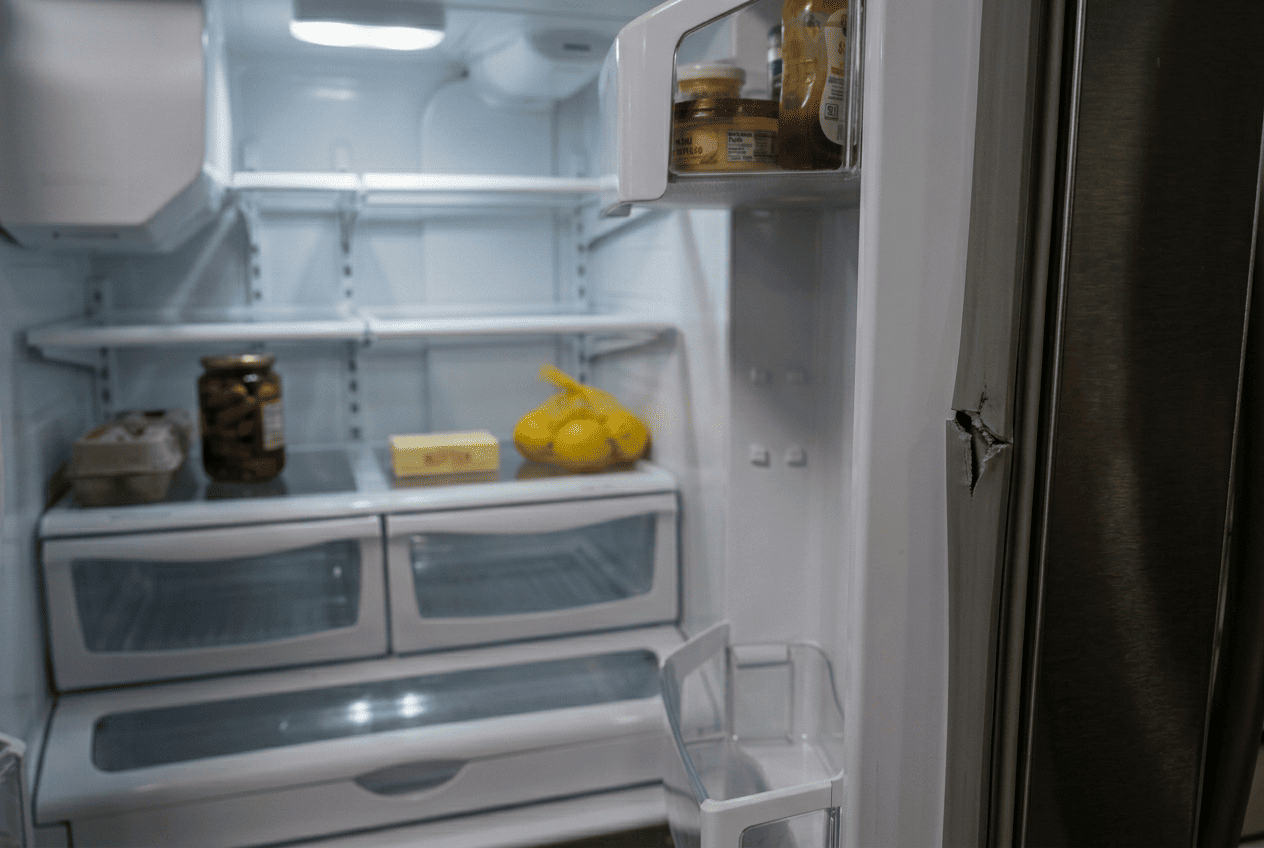
Signs of gasket issues include:
- The door pushes back slightly after closing
- Frost or condensation forms along the edges
- Uneven resistance when pressing along the door perimeter
- Increased energy usage as the compressor works harder
A common misconception is that cleaning alone will solve a gasket problem. While debris can prevent proper sealing, once the material warps, cracks, or stiffens, replacement is the only long-term solution. Improper DIY installation often leads to repeat service calls, which is why professional evaluation is usually the smartest course.
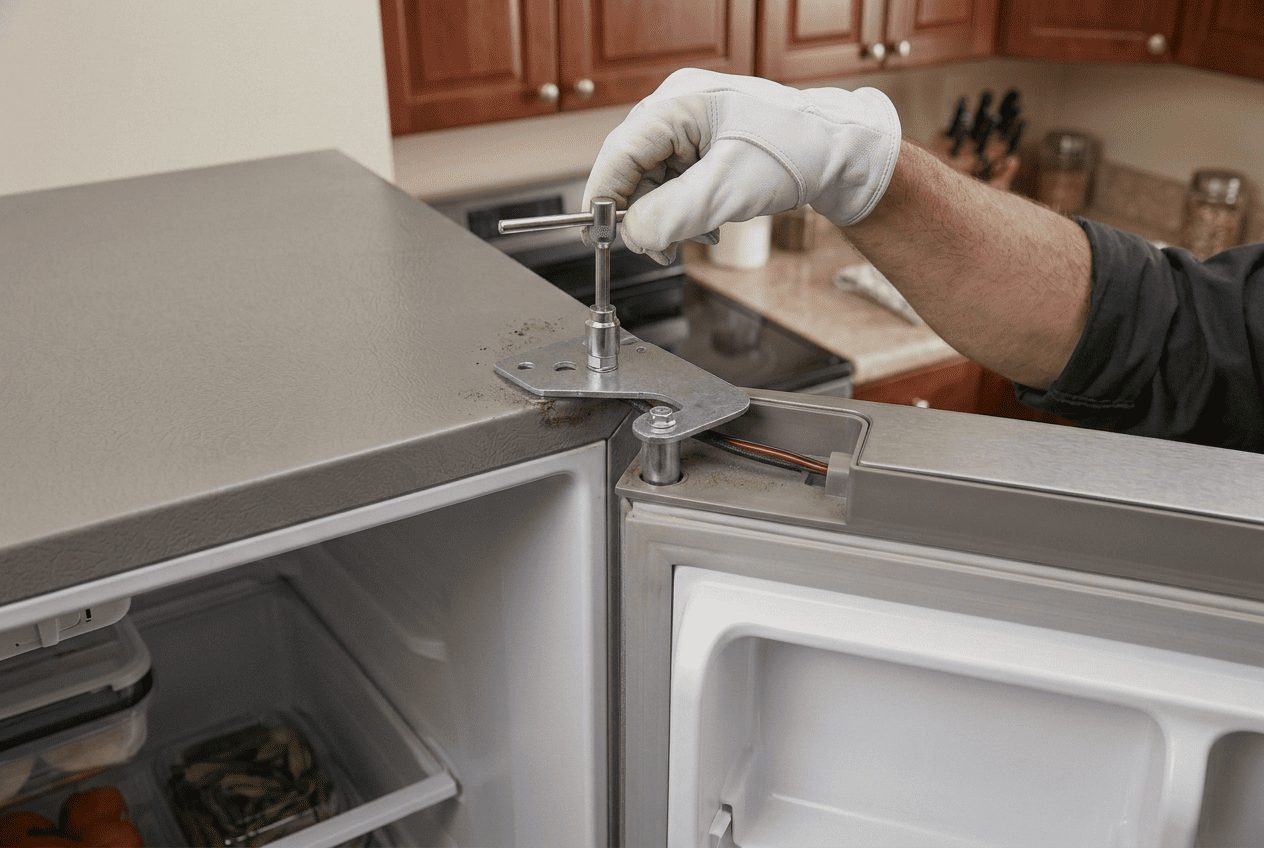
Worn Hinges: The Silent Cause of Sagging Doors
The weight of a refrigerator door is deceptively heavy, particularly in side-by-side and French door models. Over time, worn hinges can cause subtle sagging that prevents the door from compressing the gasket evenly.
Symptoms of hinge wear include:
- Slight misalignment along the top or bottom of the door
- Uneven pressure when closing, often noticeable on bottom-freezer drawers
- Increased strain on door cams and closing springs
From our Atlanta service experience, worn hinges rarely fail instantly. The problem develops slowly, often alongside gasket damage and minor leveling issues, which is why early professional intervention can prevent further deterioration.
Door Cam and Closing Spring Failures: The Invisible Problems
Many Whirlpool doors rely on a door cam and closing spring to guide the door into its sealed position. When these components wear out, a closing cams failure occurs.
Homeowners often notice:
- The door doesn’t self-close and requires extra force
- Clicking or grinding noises during the last few inches of closure
- Uneven seal along the door gasket
These failures are particularly common in bottom-freezer and older French door models. Because alignment is critical, attempting a DIY repair often worsens the issue. Our technicians in Atlanta routinely see doors that appear “fixed” but still fail to close because the door cam or closing spring was improperly adjusted.
Mullion Problems and French Door Issues
French door refrigerators present unique challenges. The vertical strip between the two doors, called the mullion, plays a vital role in sealing the appliance. Many models, including the WRF555SDFZ, feature a mullion heater flap designed to prevent condensation.
When mullions or heater flaps malfunction, we commonly see:
- One door closes fully while the other remains slightly open
- Frost buildup in the freezer compartment
- Moisture or leaks around the refrigerator doors
Because the mullion affects both doors simultaneously, DIY adjustments often fail. Professional technicians can realign the mullion heater flap, ensuring the French door issues are resolved and the seal is restored.
Why Freezer Doors Often Show Problems First
Even when a problem begins in the refrigerator section, the freezer doors frequently reveal symptoms first. Freezers are less forgiving because even a small gap allows warm air to enter, leading to:
- Rapid frost accumulation
- Ice clumping that prevents drawers from sliding
- Increased humidity and temperature fluctuations
Homeowners often misinterpret these symptoms as a failing freezer when the root cause is actually a misaligned refrigerator door, worn hinge, or mullion problem. Understanding this helps prevent unnecessary part replacements and ensures the real issue is addressed.
Safe DIY Checks for Homeowners
While some Whirlpool door problems require professional service, understanding your appliance can help you identify the issue early. From our experience, these are the safest DIY checks:
- Check for obstructions: Remove tall containers, drawers, or ice trays that may be blocking the door from seating properly.
- Inspect the door gasket: Look for cracks, warping, or stiffness. Clean debris and ensure the gasket compresses evenly.
- Verify leveling: Ensure the refrigerator or freezer sits slightly higher in the front. Small adjustments can help the door close fully.
- Observe closing behavior: Open and close the door slowly to watch if it self-closes. Pay attention to resistance, clicking, or uneven motion.
These checks allow homeowners to understand the problem and, in some cases, fix minor obstructions. However, we always recommend caution: forcing the door, bending hinges, or attempting cam replacement without expertise can worsen the issue.
Consequences of Ignoring a Door Not Closing
A Whirlpool door that doesn’t close properly may seem like a minor inconvenience, but the consequences grow over time:
- Increased energy consumption: The compressor works harder to maintain temperature, raising electricity bills.
- Accelerated mechanical wear: Fans, hinges, cams, and springs all experience extra stress.
- Food safety risks: Warm air and moisture can lead to faster spoilage and frost buildup.
- Repeated service costs: Minor issues left unaddressed can escalate, requiring more extensive repairs.
From our service experience, these risks often escalate silently. By the time homeowners notice frost or spoiled food, the underlying components, door hinge, door cam, closing spring, mullion heater flap, or damaged gasket, are already stressed and in need of repair.
Professional Repair: Why It Matters
At Appliance Repair Master, we treat a door not closing as a system problem, not just a cosmetic issue. Our professional repair approach involves:
- Comprehensive diagnosis: We evaluate all components — door hinge, door gasket, closing cams, closing spring, and mullion heater flap.
- Precision alignment: Ensuring French door issues are corrected and freezers and refrigerators seal perfectly.
- Replacement with parts: Using brand-specific gaskets, hinges, and cams for lasting performance.
- Same-day service across Atlanta and Georgia, minimizing downtime and preventing further damage.
Our approach restores your Whirlpool appliance’s original functionality, protects your food, and extends its lifespan. Homeowners frequently tell us that after professional repair, they finally understand the causes behind the door not closing — and appreciate the peace of mind our expertise provides.
The Bottom Line
A Whirlpool door not closing is never just an inconvenience. It is a signal that something in the appliance system is failing, whether it’s:
- Obstructions in drawers or shelves
- Leveling issues that misalign the door
- Damaged gasket that loses suction
- Worn hinges causing sag
- Closing cams failure or door cam misalignment
- Mullion problems in French door models
Understanding the causes allows homeowners to act wisely. Safe DIY checks can reveal obstructions or minor issues, but when mechanical wear or alignment problems are involved, professional repair is the smartest solution. At Appliance Repair Master, we provide expert same-day service in Atlanta, restoring your appliance to full performance while preventing costly future issues.
Related guides
FAQ
1. Why does my Whirlpool door look closed but still causes frost?
Even if it appears shut, a damaged gasket, misaligned door hinge, or failing door cam can allow warm air to enter, leading to frost and condensation.
2. Can a door cam or closing spring cause a door not closing?
Yes. Closing cams failure or a worn closing spring prevents the door from self-closing, requiring extra force to shut.
3. Are French door issues more complex?
Yes. Problems with the mullion heater flap or alignment between doors can make closure uneven, often requiring professional adjustment.
4. Is it safe to continue using the appliance temporarily?
Short-term use is possible, but ignoring a door not closing increases energy costs, stresses components, and risks food spoilage.
5. Do you repair Whirlpool freezer doors in Atlanta?
Absolutely. We service WRF555SDFZ, French door, side-by-side, and bottom-freezer models, restoring proper closure and sealing.