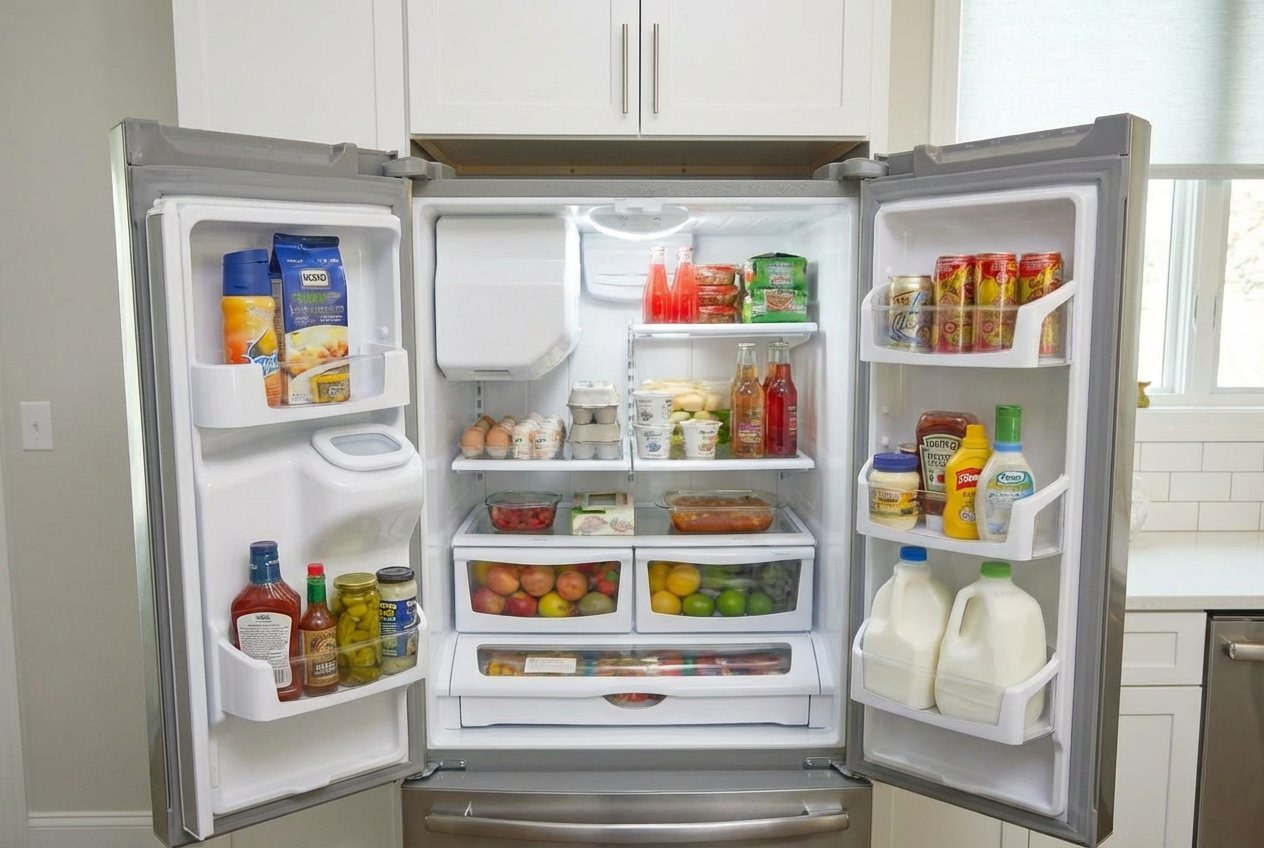
A Whirlpool freezer door that does not seal correctly is a failure in the basic thermal barrier that preserves frozen food, protects system efficiency, and prevents moisture intrusion. When that seal fails, the resulting humidity ingress leads directly to frost buildup, accelerated compressor run-time, and compromised temperature regulation.
Same symptom turns up on other brands too – start with what we’ve seen with GE freezer door not sealing.
In this article we show how to examine the mechanical, gasket and system-level causes of sealing failure, how technicians and owners confirm the root cause, and why expert repair is required to restore proper performance, especially in sophisticated units such as WRF555SDFZ, French door, side-by-side and bottom-freezer models.
Mechanical Anatomy of a Whirlpool Freezer Door
The sealing performance of a Whirlpool freezer begins with door shell rigidity. The door is designed to remain dimensionally stable under load. Any flex in the shell alters gasket compression patterns and reduces sealing consistency, particularly along corners and vertical edges.
The gasket channel design and retention method are critical. Whirlpool gaskets are seated into molded channels that maintain positional accuracy. If the channel loosens or deforms, the gasket may appear intact yet fail to apply uniform pressure.
Embedded within the gasket is a magnetic strip, engineered with defined polarity and pull force. This magnetic attraction is calibrated to draw the door inward during the final phase of closure. The magnet compensates for minor cabinet irregularities, but it cannot overcome structural misalignment or loss of elasticity. If the magnetic seal weak, the system loses its ability to self-correct.
In many Whirlpool freezers, gasket integrity appears visually intact while sealing performance deteriorates because the magnetic seal weak condition prevents the door from drawing fully into the cabinet face.
The door rotates on a defined hinge geometry and pivot axis. Hinges are not merely supported; they determine how the door approaches the cabinet face. Even slight hinge wear shifts the pivot axis, changing the angle at which the gasket contacts the frame.
At the base of many Whirlpool doors, a door cam introduces lift during opening and controlled descent during closure. The door cam lift angle and closing torque ensure the door settles into its sealing plane rather than stopping short. This action is assisted by a closing spring preload, which provides final inward force and prevents rebound.
All of this operates relative to cabinet face frame tolerances. The cabinet opening must remain square and level. When it does not, the system compensates until it no longer can.
Each component is designed to offset small deviations in the others. When multiple elements degrade simultaneously, compensation fails and sealing is lost.
How a Door Sealing Problem Develops Over Time
Door sealing failure is progressive.
Stage 1 begins with minor air leakage. The gasket contacts unevenly, often due to slight door misalignment or early material fatigue. There is no visible frost, and cooling performance appears normal.
Stage 2 introduces intermittent frost buildup, usually localized near gasket corners or along one vertical edge. Moisture enters only during door openings or temperature swings.
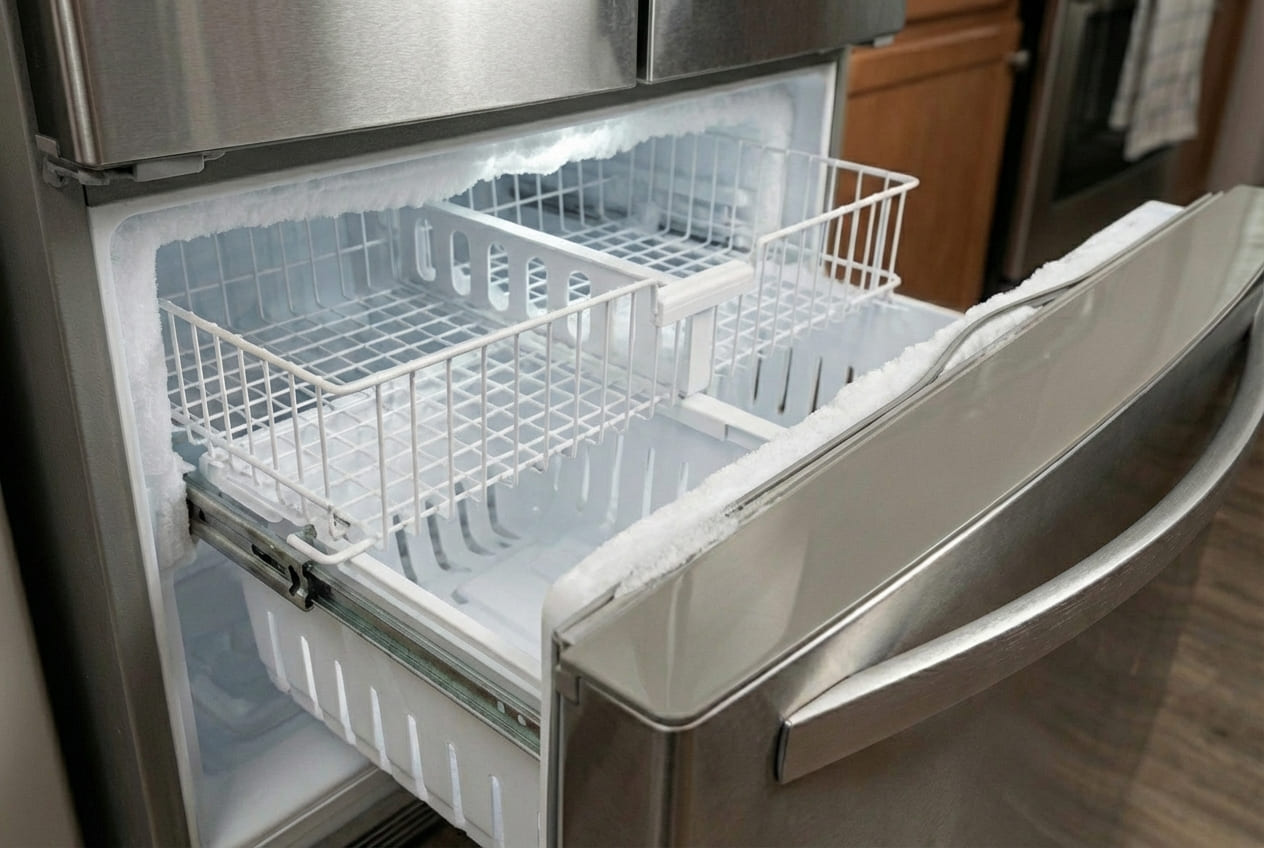
Stage 3 sees moisture migration into the cabinet liner and, in French door models, along the mullion interface. Ice begins to form in areas that affect door movement itself.
Stage 4 occurs when ice deformation physically prevents proper door closure. The door not closing fully becomes noticeable, and gasket compression deteriorates further.
Stage 5 involves secondary failures. Frost restricts evaporator airflow, fan motors operate under strain, and compressor run time increases. What began as a sealing issue becomes a cooling system problem.
Our best technicians recognize these stages immediately. Most homeowners do not see the progression until Stage 4 or 5.
For the wider picture on this brand, see our step-by-step on Whirlpool error code ER.
Why Door Seals Matter in Whirlpool Freezers
The freezer door gasket is designed to create an air-tight interface between the cold interior and ambient kitchen air. Even minor gaps allow humid air to enter. Warm, moisture-laden air condenses and freezes on evaporator surfaces or along edges of the liner, leading to visible frost, compromised cold retention and increased energy demand. Whirlpool acknowledges that improper door seals contribute to moisture accumulation and performance issues.
A failing seal is not merely a convenience issue; it is a system performance failure that can mask deeper problems in airflow, defrost control and mechanical alignment.
Primary Causes of Freezer Door Sealing Failure
1. Gasket Problems and Magnetic Seal Weak Issues

The gasket is the flexible rubber perimeter that contacts the cabinet frame when the door closes. Over time gaskets harden, shrink, crack, or accumulate debris and lose their ability to form a uniform contact area.
A door gasket that fails to make full contact is a direct cause of moisture and frost buildup.
The internal magnetic seal weak with age. When the embedded magnet loses strength, the door no longer draws firmly into the frame. Our clients have also reported success reshaping and improving seal contact by reforming gasket with hairdryer heat before installation.
Signs of gasket failure include:
- Surface cracks or brittleness
- Loose attachment where the gasket pulls back from the door
- Dollar bill test showing easy withdrawal of paper when pinched at the seal
A failing gasket often leads directly to frost buildup because warm, humid air is drawn inward. Even minor air leakage can condense and freeze on contact.
2. Door Misalignment and Hinge Wear
Mechanical alignment issues are as common as gasket failure.
Whirlpool rated parts manuals and repair pages confirm that worn or bent door hinge, center hinge components, or mispositioned brackets can offset the closure path. When the door does not seat squarely, gaskets never contact evenly.
Whirlpool owners often encounter misalignment causing uneven sealing or gap differences between upper and lower edges. In some cases a slight adjustment of hinge tension or replacement is required.
Door cam and closing spring parts are additional mechanical components that influence how the door settles into place. When these wear, the door may not lift and drop properly into the sealed position with its own weight and closing motion.
3. Unlevel Freezer Installation
A seemingly minor but frequently overlooked cause of a door not sealing is an unlevel freezer. Most Whirlpool freezers require a level plane for doors to have consistent gasket contact. A tilt can bias gravity and torque to one side, opening a gap even though the door appears closed.
This often shows up in side-by-side models or bottom-freezer drawer units when flooring or installation inconsistencies disturb vertical alignment.
4. Obstructions and Loading Interference
Interior obstruction can also keep doors ajar. Oversized containers, bins set back improperly, ice buildup in corners, or ice maker parts protruding can physically prevent full closure, undermining even a perfect gasket. Whirlpool owner manuals include warnings to remove internal blockages as part of basic troubleshooting.
5. Ice Buildup, Moisture and Defrost System Interaction
Frost buildup is not only a symptom of warm air intrusion; it can become a mechanical barrier to closure itself. Ice that forms on the gasket, mullion, or door edges can physically prevent the airtight seats from contacting, creating a self-reinforcing failure pattern.
Excessive moisture can also originate from unrelated issues such as defrost timer or heater failure. Whirlpool technical bulletins list ice accumulation from trapped humidity and faulty thermistor operation as contributors to poor cooling and frost near the freezer door area.
Symptoms That Confirm a Sealing Failure
Professionals identify these reliable indicators:
- Frost buildup along the door perimeter and interior freezer walls
- Condensation forming outside on gasket edges
- Heat or humidity felt near gasket when door is closed
- Door that seems to fit but pulls away with minimal resistance
- Compressor running continuously or longer than expected
If a dollar bill test slides out with little resistance at multiple gasket points, the seal is inadequate.
Model-Specific Patterns
Whirlpool WRF555SDFZ
This popular French door with bottom-freezer design often shows seal failure and frost due to:
- Multizone airflow paths that magnify small gaps
- Wear on hinge and cam assemblies
- Excess humidity trapping between French doors and freezer
French Door and Side-by-Side Designs
Forums show users of these layouts more frequently reporting uneven pressure along gasket surfaces and sealing failures away from the magnetic strip contact points.
Bottom-freezer drawer units present unique alignment challenges since the drawer must lift on tracks before sealing, and any misadjustment alters contact force.
Professional Diagnosis vs. DIY

As we know from our clients, many of them initially try cleaning and alignment checks. Clean gaskets thoroughly with mild detergent and water to remove debris. Slight warming of the gasket with a hairdryer can make it more pliable for correct seating.
However, our professional repair ensures:
- Accurate measurement of hinge alignment and level plane
- Assessment of door cam, hinge and closing spring wear
- Verification of gasket integrity and magnetic pull strength
- Inspection for moisture paths caused by frost barriers or defrost faults
Incorrectly matched replacement gaskets, poorly seated hinges, or temporary fixes often only delay the reoccurrence of frost and air leakage problems.
Conclusion
A Whirlpool freezer door not sealing arises from specific mechanical or environmental causes:
- Gasket deterioration and magnetic seal weak issue
- Door misalignment or hinge component wear
- Cabinet not level
- Interior obstruction or ice buildup
- Moisture infiltration and defrost system interaction
These failures disrupt the thermal envelope, lead to frost buildup, lower efficiency, and can shorten component life. Precise diagnosis and repair are essential.
If your Whirlpool freezer door is not sealing in Atlanta or anywhere in Georgia, contact Appliance Repair Master. With over 15 years experience repairing Whirlpool gaskets, hinges, cams and alignment issues, we guarantee expert evaluation and professional restoration. Call (770) 766-3254 for same-day service.
Related guides
FAQ
1. Why do I see frost around the freezer door?
Frost indicates warm air entering through a poor gasket contact area. Warm moist air condenses and freezes inside the cold compartment.
2. Can I reshape a freezer gasket myself?
Minor reshaping using a hairdryer can restore flexibility. This works only with gaskets that are not torn or permanently deformed.
3. Is frost always caused by gasket failure?
Not always. Ice buildup can also originate from defrost system faults or moisture condensation from other internal sources.
4. How can I check if my freezer is correctly levelled?
Use a carpenter’s level across the top surface. Adjust feet or shims until vertical alignment is achieved. Proper level improves seal contact.
5. What tools do technicians use for diagnosis?
We use precision levels, door alignment gauges, magnet pull testers, and component measurement tools to assess wear and seal failure.